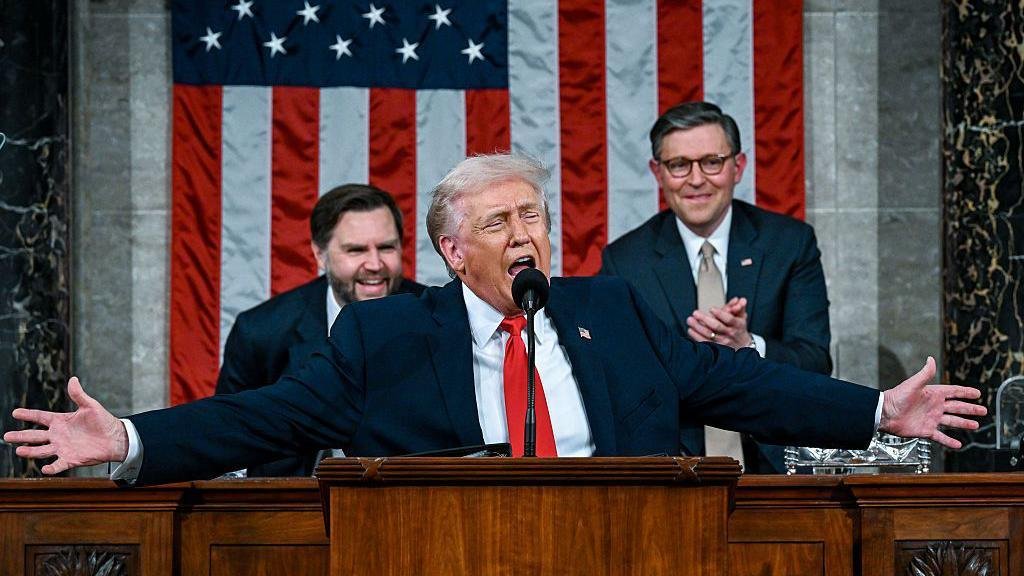

United States President Donald Trump delivered the longest State of the Union speech in US history on Tuesday night, speaking for 1 hour and 48 minutes before Congress in Washington, DC. The first address of his second term surpassed the previous record set by Bill Clinton in 2000.
Covering the economy, immigration, trade, crime, and foreign policy, Trump declared a national “turnaround for the ages,” while Democrats staged protests and rebuttals. The high-stakes speech comes months before critical midterm elections that could shape his legislative agenda.
This news article breaks down the major implications of the Trump’s State of the Union and Pakistan, analyzing foreign policy signals, trade prospects, security cooperation, and regional dynamics.
A Historic Night in Congress
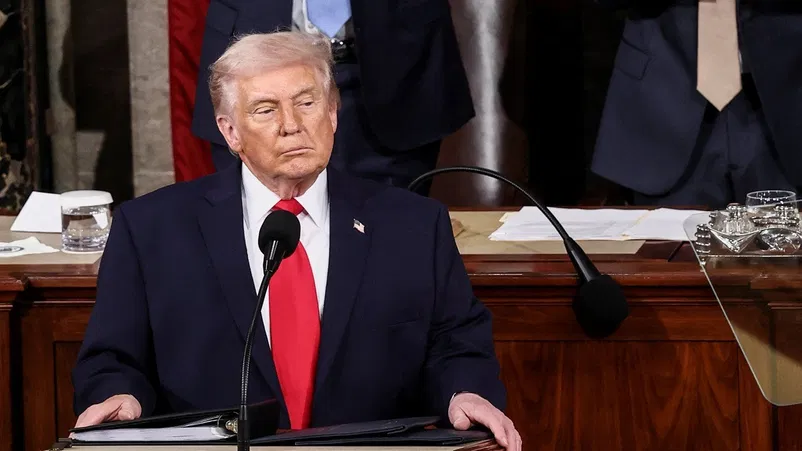
The Trump State of the Union address immediately made history for its length. Clocking in at nearly two hours, it exceeded Clinton’s 1 hour and 28 minute record from 2000.
“Our nation is back: bigger, better, richer and stronger than ever before,” Trump said at the outset. He ended with a similar flourish, promising a “bigger, better, brighter, bolder and more glorious” future.
The speech was delivered amid slipping approval ratings and mounting political pressure. With midterm elections scheduled for November, both Republicans and Democrats view the coming months as decisive.
Security Cooperation in South Asia
Pakistan’s strategic importance stems largely from its location and its role in regional security, particularly regarding Afghanistan. Under Trump’s administration, US–Pakistan relations experienced both tension and tactical cooperation.
In previous addresses and statements, Trump highlighted:
- The need for stronger action against militant groups
- Accountability in US foreign aid spending
- Strategic alignment in Afghanistan peace efforts
Although Pakistan was not always mentioned directly in major speeches, policy shifts indicated Washington’s desire for measurable outcomes from Islamabad.
Trump Says the Economy Is ‘Roaring’
A central pillar of the Trump State of the Union address was the economy. Trump painted a picture of robust growth, citing:
- Strong Wall Street performance
- Solid job creation numbers
- Easing inflation
He argued that his administration engineered a dramatic turnaround.
However, economic data presents a more nuanced picture. Growth in 2025 has been slower than expected. While inflation has moderated, costs remain elevated in key sectors. January data from the Bureau of Labor Statistics showed food prices were still 2.9 percent higher year-over-year.
Affordability Concerns Persist
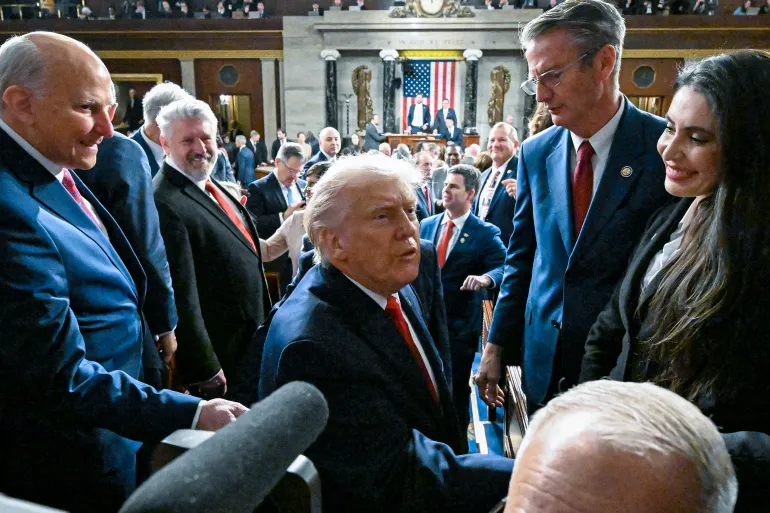
Affordability remains a sensitive political issue. Polls show declining public confidence in Trump’s handling of everyday costs.
Trump blamed Democrats and former President Joe Biden for high prices, stating: “Their policies created the high prices; our policies are rapidly ending them.”
He also promoted:
- The TrumpRx website for discounted medicines
- An executive order limiting bulk purchases of single-family homes by investment firms
- Agreements with tech companies to prevent spikes in utility costs linked to AI data centers
Democrats argue these measures have yet to significantly ease financial strain for average Americans.
Supreme Court Tariff Ruling Sparks Defiance
Another flashpoint in the Trump State of the Union address was trade policy. Just days earlier, the Supreme Court of the United States ruled that large portions of Trump’s reciprocal tariffs were illegal.
Calling it an “unfortunate ruling,” Trump signaled he would not retreat.
A new 10 percent global tariff has since taken effect under alternative legal authorities, with Trump indicating he may raise it to 15 percent. He insisted congressional approval would not be necessary.
Trade policy remains central to Trump’s “America First” doctrine, but critics warn that expanded tariffs could hurt businesses and consumers alike.
Economic Policy Signals in the Trump State of the Union and Pakistan
Economic nationalism was central to Trump’s speeches. He stressed American manufacturing revival, trade renegotiations, and reducing trade deficits. For Pakistan, this raised important questions about bilateral trade ties.
US–Pakistan Trade Relations
The United States remains one of Pakistan’s largest export destinations. Textile and apparel exports form a significant share of this trade relationship. Any change in US tariff policy or trade preferences can directly impact Pakistan’s economy.
Key considerations include:
- Tariff Structures: Stricter import policies could affect textile exports.
- Investment Climate: US investor confidence often aligns with political messaging.
- Aid vs. Trade Balance: Trump favored trade over traditional foreign assistance.
Pakistan’s policymakers have consistently aimed to strengthen trade-based engagement rather than relying heavily on aid packages.
Regional Stability and Afghanistan Factor
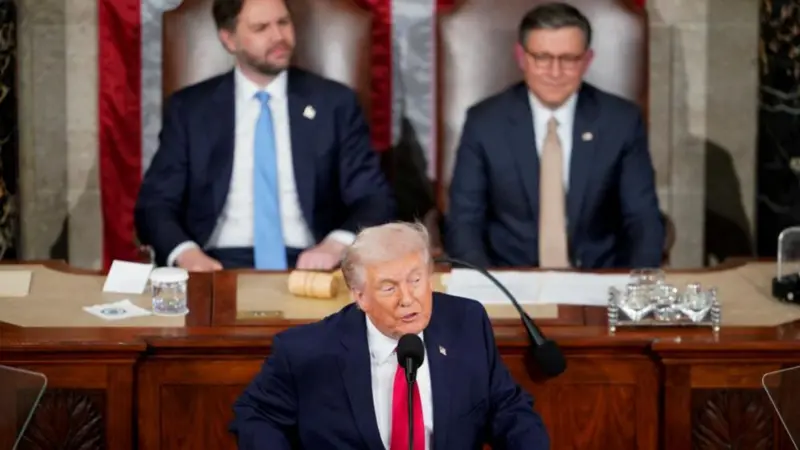
The Afghanistan conflict was central to US foreign policy discussions during Trump’s tenure. The speech reinforced America’s desire to end “endless wars,” a statement with direct relevance to Pakistan.
Pakistan played a diplomatic role in facilitating dialogue between the US and Afghan stakeholders. The peace negotiations eventually led to the Taliban–US agreement during Trump’s presidency.
Implications for Pakistan
Pakistan’s involvement positioned it as a strategic intermediary. However, the relationship remained complex due to historical mistrust.
The Trump state of the union and Pakistan dynamic can be summarized through three pillars:
- Strategic necessity
- Diplomatic caution
- Economic recalibration
Counterterrorism and Military Aid
One of the most debated aspects of US–Pakistan relations under Trump was military assistance. Early in his presidency, Trump suspended certain security aid programs, citing concerns about counterterrorism performance.
This move marked a turning point in bilateral engagement.
Shift from Aid to Accountability
Trump’s approach emphasized:
- Performance-based cooperation
- Reduced unconditional financial assistance
- Greater diplomatic leverage
While the decision strained ties initially, both countries continued security dialogue through military and diplomatic channels.
Pakistan’s Strategic Calculations
Islamabad responded to shifting US policies by broadening its foreign partnerships. Closer ties with China, especially under the China-Pakistan Economic Corridor (CPEC), reflected diversification efforts.
At the same time, Pakistan maintained communication with Washington to preserve strategic balance.
Diplomatic Engagement
During Trump’s tenure, meetings between US and Pakistani officials sought to rebuild trust. High-level discussions addressed:
- Afghan peace negotiations
- Counterterrorism commitments
- Regional stability
Despite political rhetoric at times, backchannel diplomacy remained active.
Domestic Messaging vs. Foreign Policy Reality
State of the Union speeches are often designed for domestic audiences. However, international observers analyze them carefully for policy cues.
In the Trump’s State of the Union and Pakistan context, it is important to separate political messaging from practical diplomacy.
For example:
- Strong language on national security did not eliminate cooperation.
- Aid reductions did not end security engagement.
- Trade nationalism did not halt bilateral commerce.
Foreign policy implementation often moves more gradually than political speeches suggest.
Broader Geopolitical Context
The Trump administration’s South Asia strategy also included managing relations with India and countering China’s influence in the Indo-Pacific region.
Pakistan found itself navigating a complex triangle:
- US strategic interests
- India’s growing US partnership
- China’s expanding regional footprint
This balancing act required careful diplomacy to avoid isolation while protecting national interests.
How Markets and Analysts Reacted
Financial markets in Pakistan have historically reacted to major US policy shifts. Statements affecting trade, sanctions, or security cooperation can influence investor confidence.
Following Trump’s major foreign policy speeches, analysts typically assessed:
- Possible changes in export conditions
- Security cooperation outlook
- Regional political stability
Although no immediate policy overhaul followed the address, long-term strategy remained under review.
Media and Public Reaction in Pakistan
Pakistani media outlets closely examined Trump’s tone and policy hints. Commentators debated whether the speech indicated:
- Renewed cooperation
- Continued pressure tactics
- A transactional relationship
Public opinion remained divided, reflecting broader debates about Pakistan’s foreign policy direction.
The Long-Term Impact on US–Pakistan Relations
While State of the Union speeches set a tone, lasting impact depends on policy execution. Under Trump, relations experienced ups and downs but avoided complete breakdown.
Key long-term developments included:
- Continued diplomatic engagement
- Support for Afghan peace talks
- Reassessment of foreign aid frameworks
The Trump’s State of the Union and Pakistan narrative reflects a broader evolution in US foreign policy moving from aid-heavy relationships toward strategic accountability.
Outlook: A Relationship in Transition
The Trump state of the union and Pakistan highlights a period of recalibration in bilateral ties. The Trump’s State of the Union and Pakistan was as much a campaign rally as a constitutional tradition. It showcased economic optimism, hardline immigration rhetoric, defiance on trade policy, and dramatic foreign policy claims.
Supporters see it as evidence of strong leadership and decisive action. Critics argue it glossed over economic vulnerabilities and deepened political polarization.
With midterm elections approaching, the speech may serve as a defining moment of Trump’s second term. Whether voters embrace his message of resurgence or seek an alternative vision will shape the next chapter of American politics.
What are your thoughts on the address and its potential impact? Share your perspective below.