
The Sindh government has decided to seek NCCIA support in its fight against fake news, directing the provincial Information Department to build a formal working relationship with the cybercrime agency. The decision followed a high-level meeting in Karachi this week.
What the Sindh Government Decided

Senior Minister Sharjeel Inam Memon chaired the meeting and directed the Information Department to seek assistance from the National Cyber Crime Investigation Agency to prevent and address the spread of fake and misleading information. He made clear that attempts to harm any individual or institution through false or misleading information would not be tolerated.
Information Secretary Kashif Gulzar Sheikh and Director General Information Moez Pirzada attended, along with directors from across the department. Memon told them to treat fake news as an urgent, ongoing problem rather than something handled case by case.
Inside the Meeting: Key Directives
Memon issued several instructions during the session, all aimed at tightening how Sindh tracks and responds to misinformation across digital and traditional platforms. The directives covered monitoring, technology, legal action and coordination with federal cybercrime authorities.
Key points from the meeting included:
- Daily monitoring of mainstream and social media using modern technology
- Strengthened cooperation between the Sindh Information Department and the NCCIA
- NCCIA assistance sought for legal action against those creating or spreading fake news
- A dedicated system to identify, verify and respond to false content in a timely manner
What Is the NCCIA?
The National Cyber Crime Investigation Agency was established by the Government of Pakistan on 3 May 2024 to investigate cyber crime within the country, replacing the Cybercrime Wing of the Federal Investigation Agency. It was formed under Section 51 of the Prevention of Electronic Crimes Act, 2016, with the FIA ceasing its designated role under that law.
READ MORE: Pakistan Reaffirms Makkah Defense Pact as Houthi Attacks Escalate
Headquartered in Islamabad and operating under the Ministry of Interior, the agency now handles cybercrime complaints nationwide, including online fraud, harassment, digital blackmail, identity theft, fake websites and social media crimes. Syed Ali Nasir Rizvi currently serves as its Director General.
NCCIA at a Glance
| Detail | Information |
|---|---|
| Full name | National Cyber Crime Investigation Agency |
| Formed | 3 May 2024 |
| Replaced | FIA Cybercrime Wing |
| Legal basis | Section 51, PECA 2016 |
| Headquarters | Islamabad |
| Parent ministry | Interior |
| Current DG | Syed Ali Nasir Rizvi |
Why Sindh Is Turning to NCCIA Now
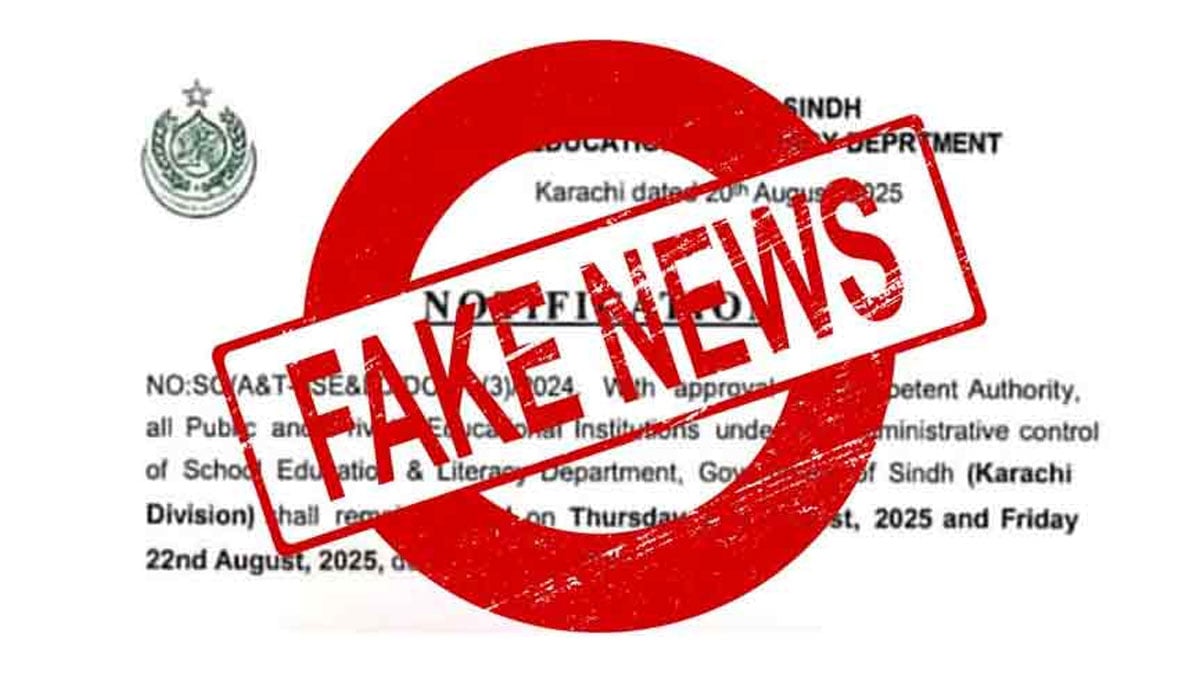
Provincial information departments can monitor content, but they generally lack the legal powers needed to trace anonymous accounts or pursue prosecutions. Partnering with the NCCIA gives Sindh access to investigative tools it does not otherwise have.
Memon said the Sindh government’s narrative was built on peace, tolerance, inter-provincial harmony and national unity, framing the crackdown as part of a wider effort to protect that message from distortion during a sensitive political period.
Legal Action and the Fake News Crackdown
Beyond monitoring, Sindh wants the NCCIA’s involvement to translate into consequences. Memon directed that assistance be sought specifically for legal action against individuals involved in creating and disseminating fake news.
This marks a shift from passive tracking toward active enforcement. Officials did not specify a timeline for when formal coordination with the NCCIA would begin, or how flagged content would be routed to the agency for action.
Sindh’s Broader Communication Strategy

The anti-fake-news push sits inside a larger communication plan. Memon directed the Information Department to take additional measures to make the provincial government’s narrative more effective and robust, using modern communication platforms.
He also said representatives of all segments of society should be incorporated into the government’s communication efforts, asking the department to balance fact-checking duties with actively publicising the provincial government’s initiatives.
What This Means for Journalists and the Public
Independent press-freedom monitors have previously raised concerns about how Pakistan’s cybercrime laws are applied to online speech, given the country’s low global ranking on such indexes. An expanded NCCIA role in flagging state-linked “fake news” is likely to draw similar scrutiny.
For ordinary social media users, the practical impact depends on how “fake news” is defined once the Information Department and NCCIA formalise cooperation, and whether the process includes clear verification and appeal steps before legal action follows.