
The Kohat attack has pushed Pakistan’s dispute with Kabul into open confrontation. Islamabad now says the Afghan Taliban regime has failed to rein in militants, even as funerals continue in Khyber Pakhtunkhwa.
What Happened at Kohat Police Lines

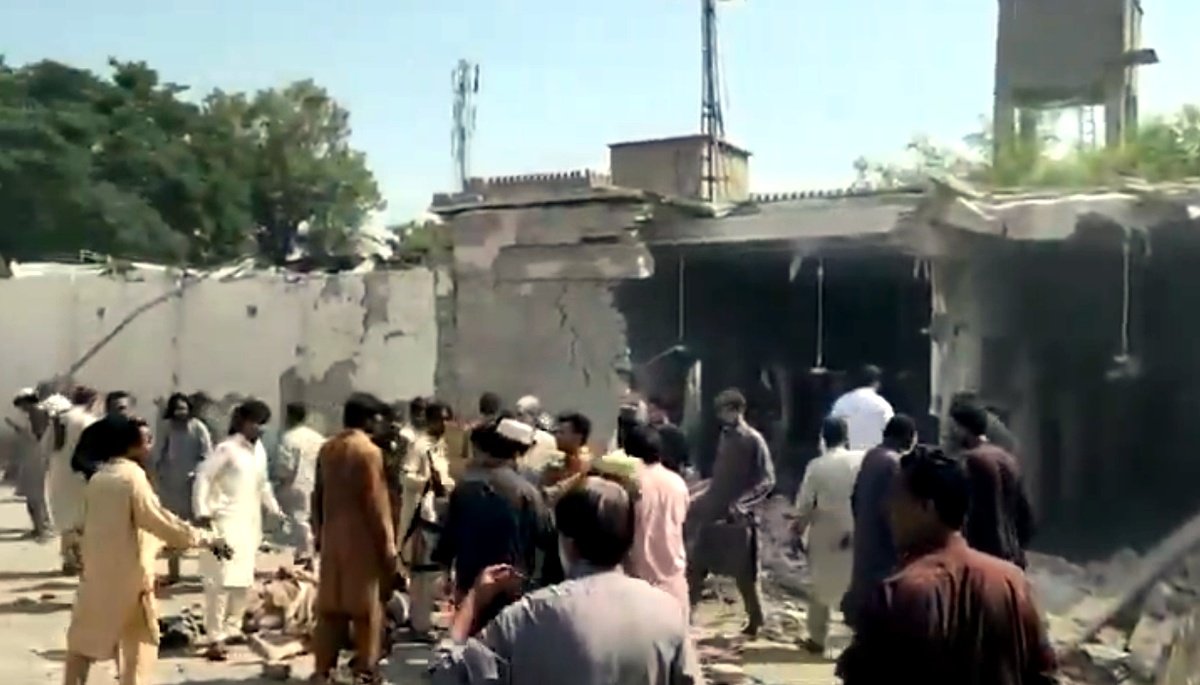
The Kohat attack began when a vehicle packed with explosives was rammed into the Old Police Lines on Hangu Road at about 1:20pm on Friday, September 18, 2026. Worshippers were at prayer in the mosque inside the compound.
Five to seven gunmen then stormed the compound, which houses Counter Terrorism Department and Special Branch offices. A second suicide blast followed near the Special Branch building as police returned fire.
Attack Timeline: Blast, Assault, 22-Hour Clearance
Police say the clearance operation lasted about 22 hours. Elite Force commandos, Counter Terrorism Department teams and security forces cleared the buildings, and all eight attackers were killed, according to Khyber Pakhtunkhwa’s police chief.
- 1:20pm, Sept 18: Vehicle bomb detonates at the mosque.
- Afterwards: Gunmen enter the compound, and a second suicide blast hits near Special Branch.
- Next 22 hours: Gunfire continues, and the Additional IG of the Counter Terrorism Department is injured by a grenade.
- Sept 19: Police announce all eight attackers dead, and funeral prayers are held.
The Kohat attack kept a compound housing district counter-terrorism and Special Branch offices under fire for nearly a day. That length of siege points to how far the attackers got inside.
Kohat Attack Casualties: What Is Confirmed
Provincial police put the death toll at 23: 17 police personnel and six civilians. Among the dead were a superintendent, a deputy superintendent and an inspector, and the toll rose over Saturday.
| Figure | Reported |
|---|---|
| Deaths (provincial police) | 23: 17 police, 6 civilians |
| Attackers killed | 8 |
| Injured | 80+ (district health officer) to 103 (hospital tally) |
| Time of blast | About 1:20pm, Sept 18 |
| Claimed by | Ittehadul Mujahideen Pakistan |
Hospitals received 103 injured people, 13 at Liaquat Memorial and 90 at the district headquarters hospital, per an official report. Dr Israel Khan Orakzai, a senior paediatric specialist, was among the civilians killed.
Why the Toll Figures Differ

Reports of the Kohat attack toll diverge. A wire agency quoted a senior police official putting it at 31, including 16 police. An earlier account gave 27, counting at least six attackers.
READ MORE: Kohat Mosque Terror Attack: At least 21 Killed
Neither figure matches the police tally of 23 victims. One reading is that the higher numbers include the eight attackers, since 23 plus eight equals 31. No official source has confirmed that.
Ittehadul Mujahideen Pakistan Claims Responsibility
Ittehadul Mujahideen Pakistan, led by Afghanistan-based Hafiz Gul Bahadur, claimed the Kohat attack, according to the Information Ministry. Wire reports describe it as a faction linked to the Tehreek-e-Taliban Pakistan, or TTP.
The TTP is separate from the Afghan Taliban but allied with them. Pakistan accuses Kabul of allowing these groups to operate from Afghan territory, and Taliban officials deny the accusation.
Pakistan’s Rebuke of the Taliban Regime

On Saturday, Pakistan’s Information Ministry said the Kohat attack was carried out by militants with roots in Afghanistan and accused the Taliban regime of actively sponsoring terrorism. It said Kabul must confront the militant network flourishing under its watch.
The statement noted that Kabul’s foreign ministry condemned the attack and sympathised with victims’ families but did not mention terrorism. “Condemnation must be matched by concrete action,” Islamabad said, urging the international community to press the Taliban.
Islamabad’s Demands: Credible, Verifiable, Sustained Action
Pakistan’s stated position pairs pressure with engagement. Officials say Islamabad has consistently pursued dialogue with the Taliban, yet it also claims the will and capability to eliminate terror threats wherever they are.
- Dismantle terrorist sanctuaries
- Disrupt recruitment and training networks
- Stop groups planning, facilitating or launching attacks on Pakistan
Each demand is measurable in principle. Sanctuaries can be located, training camps closed, and cross-border movement tracked. Whether Kabul can or will deliver any of it is the real question.
Kabul’s Denial and Warning
Taliban spokesman Zabihullah Mujahid denied that Kabul harbours or supports the TTP, saying such groups have operated in Pakistan’s border region for years. He warned Islamabad against further military action.
Pakistan’s ministry says Mujahid threatened a crushing response. Other reports say he threatened retaliation for cross-border strikes and asked Saudi Arabia to mediate. His exact words remain unverified in this reporting.
Doha Agreement Obligations Under Scrutiny
Pakistan invokes the Doha Agreement, arguing that Taliban counterterrorism obligations include preventing Afghan territory from being used to threaten other countries. The ministry says deflecting responsibility cannot hide that duty.
The Doha Agreement was signed in 2020 between the United States and the Taliban. Pakistan was not a party, so its appeal to the accord is a diplomatic argument, not an enforceable claim.
Expert View: Cross-Border Sanctuaries
Michael Semple, a visiting professor at Queen’s University Belfast and former EU representative in Afghanistan, says the armed groups aim to “overthrow the Pakistan government”. He has negotiated with the Afghan Taliban.
Semple argues that an attack of Kohat’s sophistication needs planning, logistics and training, and fits a pattern of Afghan Taliban sanctuary for al-Qaeda and TTP factions. That is his assessment, not an established finding.
Rising Militancy in Khyber Pakhtunkhwa
Kohat lies close to the Afghan border and on the route to North Waziristan, Bannu and Dera Ismail Khan. A correspondent reporting from Islamabad says deadly attacks have hit all those areas in recent months.
A roadside bomb reportedly killed six soldiers in Hangu the day before, and troops killed 10 suspected fighters in raids on Thursday, the military and police said. Pakistan blames this surge on militancy emanating from Afghanistan.
What Happens Next
Pakistan has signalled it can strike threats wherever they are and has asked the international community to press Kabul. The provincial police chief has vowed to pursue every terrorist, and investigators are tracing the attackers’ network.
Three questions will shape the weeks after the Kohat attack Kabul acts, Islamabad strikes across the border again, and Saudi mediation gains traction. Each carries risk for a region already trading blows.