
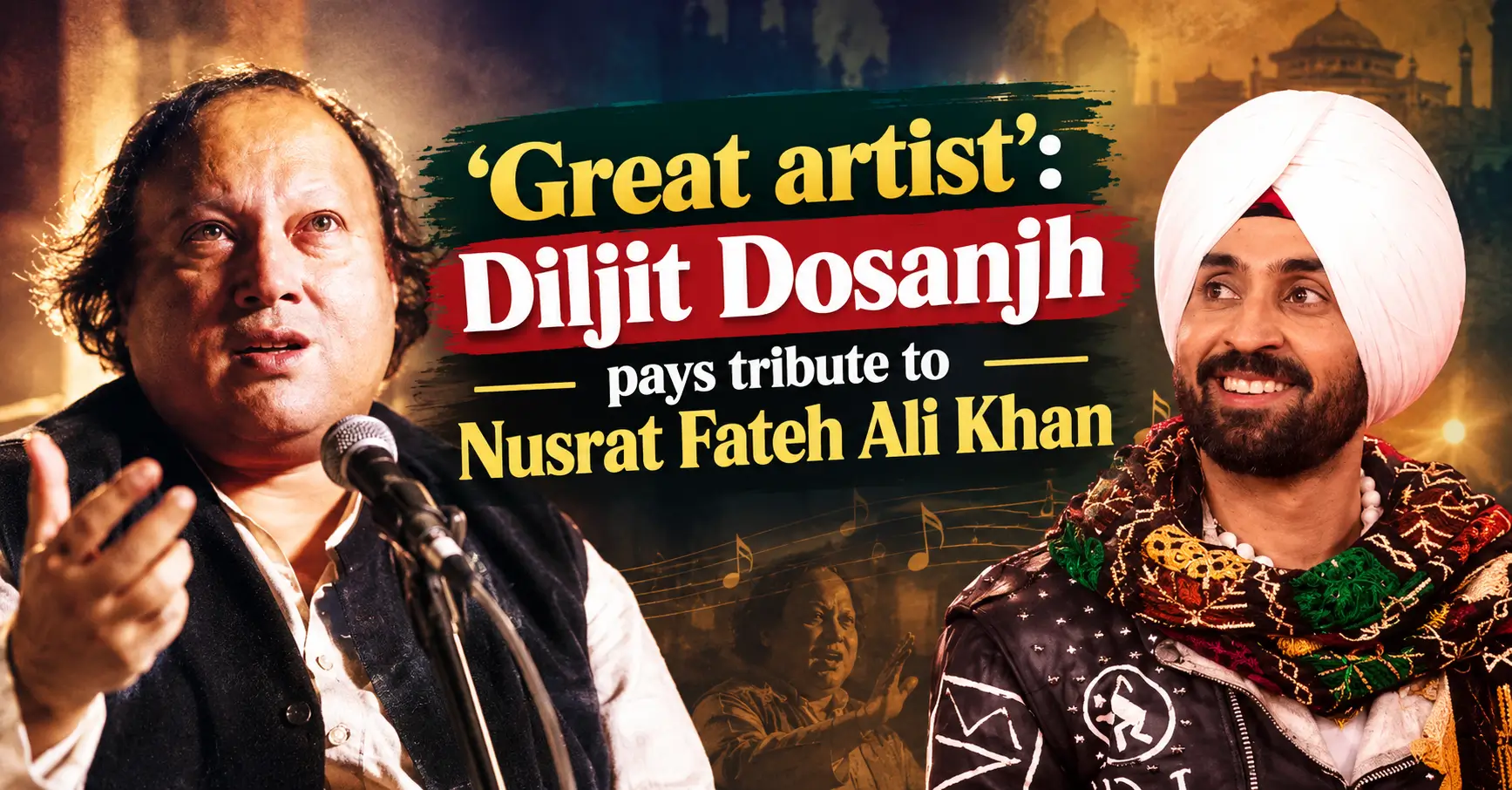

Diljit Dosanjh pays tribute to Nusrat Fateh Ali Khan tribute moment turned into the talking point of an entire concert. Midway through a sold-out night at Wembley Stadium, the Punjabi superstar paused his hit-heavy setlist and slipped into something older, slower, and heavier with meaning.
He didn’t announce it with fireworks. He simply began singing Sanso Ki Maala, the devotional qawwali made immortal by Nusrat Fateh Ali Khan. Ninety thousand phone lights answered him back.
What Happened at the Wembley Stadium Show

The Diljit Dosanjh pays tribute to Nusrat Fateh Ali Khan unfolded on September 12, when Dosanjh became the first Punjabi artist to headline Wembley Stadium. His Aura World Tour stop drew a crowd his own team estimated at around 90,000 people.
He opened with his trademark line, “Punjabi aa gaye oye,” before shifting gears entirely. Stripping the production back to near-silence, he let his voice and Nusrat’s melody carry the stadium on their own.
- Date: September 12, 2026
- Venue: Wembley Stadium, London
- Tribute song: Sanso Ki Maala (Sanson Ki Mala)
- Crowd estimate: roughly 90,000–92,000 attendees
Key Facts at a Glance
Here’s a quick breakdown of the night’s most reported details, cross-checked across multiple outlets covering the show.
| Detail | Information |
|---|---|
| Artist | Diljit Dosanjh |
| Tour | Aura World Tour |
| Milestone | First Punjabi artist to headline Wembley Stadium |
| Tribute artist | Nusrat Fateh Ali Khan |
| Song performed | Sanso Ki Maala |
| Next announced show | Narendra Modi Stadium, Ahmedabad — November 21, 2026 |
Who Was Nusrat Fateh Ali Khan?

The Diljit Dosanjh Nusrat Fateh Ali Khan tribute only lands because of who Nusrat was Born in Faisalabad in 1948, he inherited a 600-year-old qawwali tradition and reshaped it for global audiences before his death in 1997.
He earned the title “Shahenshah-e-Qawwali,” worked with Western musicians including Eddie Vedder and Peter Gabriel, and remains one of South Asia’s most sampled and covered voices decades after his passing.
Why Diljit Dosanjh Chose This Song

Speaking after the show, Dosanjh explained his decision plainly. In a live social media session, he admitted the song wasn’t an easy pick for any singer to attempt.
ALSO READ: Tauseeq Haider AI Wedding Hoax Leaves Him ‘Disturbed’ 2026
“Nusrat Sahab was a great artist, and singing his song was not easy for anyone,” he said, adding that he wanted to honour a legend and apologising in advance for any imperfections in his rendition.
Fan and Media Reaction
Clips of the performance spread across social platforms within hours. Fans described goosebumps and called it the emotional peak of the night, well ahead of the chart-topping tracks that followed.
Coverage from outlets including Geo News, The Express Tribune and Outlook India all singled out the same moment — the crowd’s phone-light wave — as the show’s defining image, not the pyrotechnics or the hit songs.
The Bigger Cultural Picture
A Sikh-Punjabi artist performing a Sufi devotional song by a Pakistani legend, on a British stage, in front of a diaspora crowd, is not a small gesture. It’s a reminder that Punjabi and Sufi musical traditions cross borders more easily than politics does.
Dosanjh has referenced Pakistan on major stages before, and this wasn’t an isolated tribute. It fits a pattern of South Asian artists using global platforms to bridge audiences that geopolitics keeps apart.
What’s Next for the Aura World Tour
Hours after the Wembley show, Dosanjh announced his next major date: a concert at Ahmedabad’s Narendra Modi Stadium on November 21, 2026, addressing part of the crowd in Gujarati as he made the reveal.
He called the Wembley night one that “will go down in the history books.” With ticketing details for the rest of the tour’s India leg still pending, fans are now watching for further stops to be confirmed.