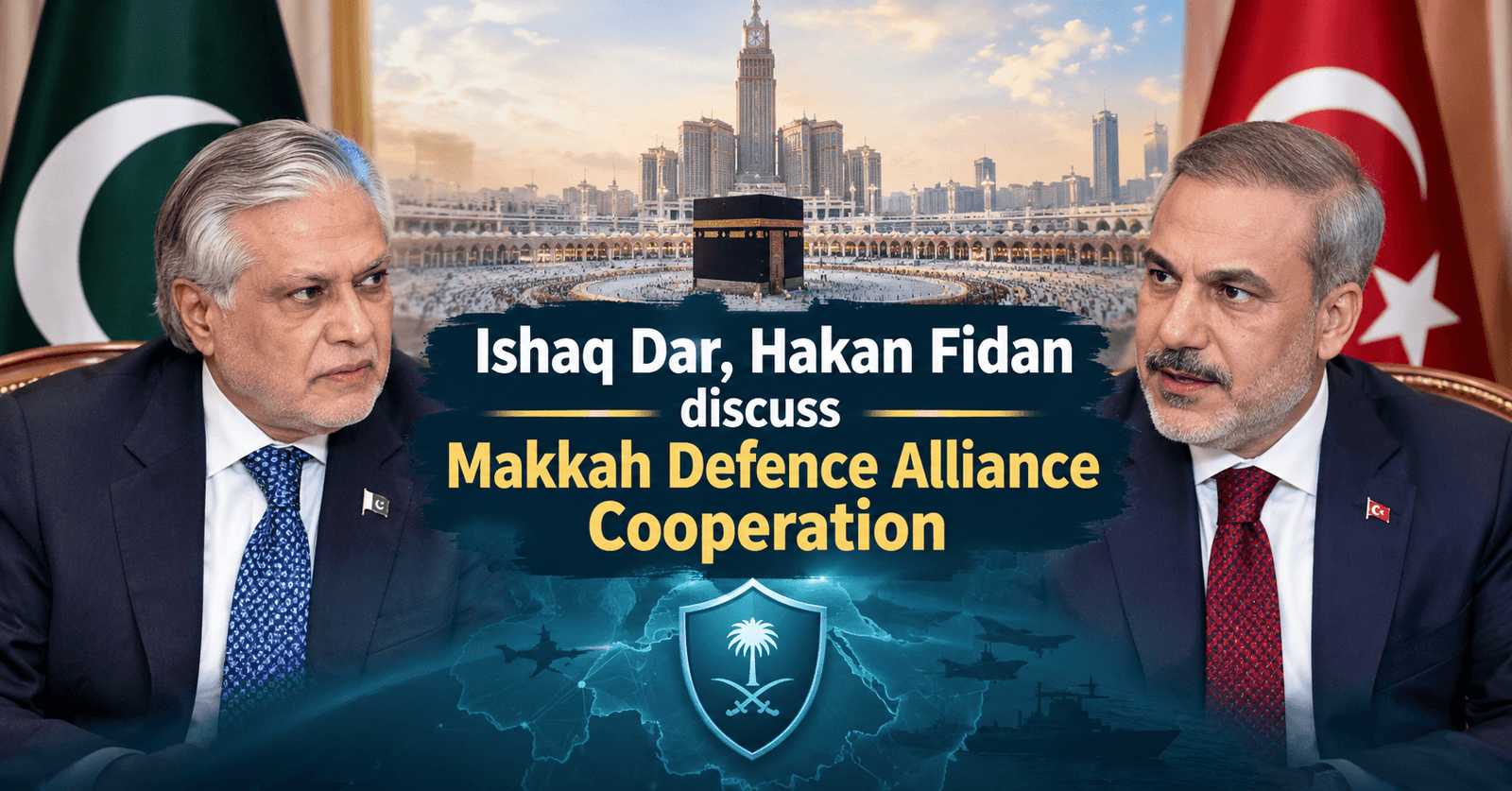

The Makkah Defence Alliance is no longer just a signing-ceremony headline. It’s now a working relationship — and Sunday’s phone call between Pakistan’s Deputy Prime Minister Ishaq Dar and Turkiye’s Foreign Minister Hakan Fidan proves it.
The two men didn’t just exchange pleasantries. They picked up exactly where things left off in Istanbul, going through the fine print of a pact that could reshape security cooperation across three continents.
What Happened in the Dar-Fidan Phone Call
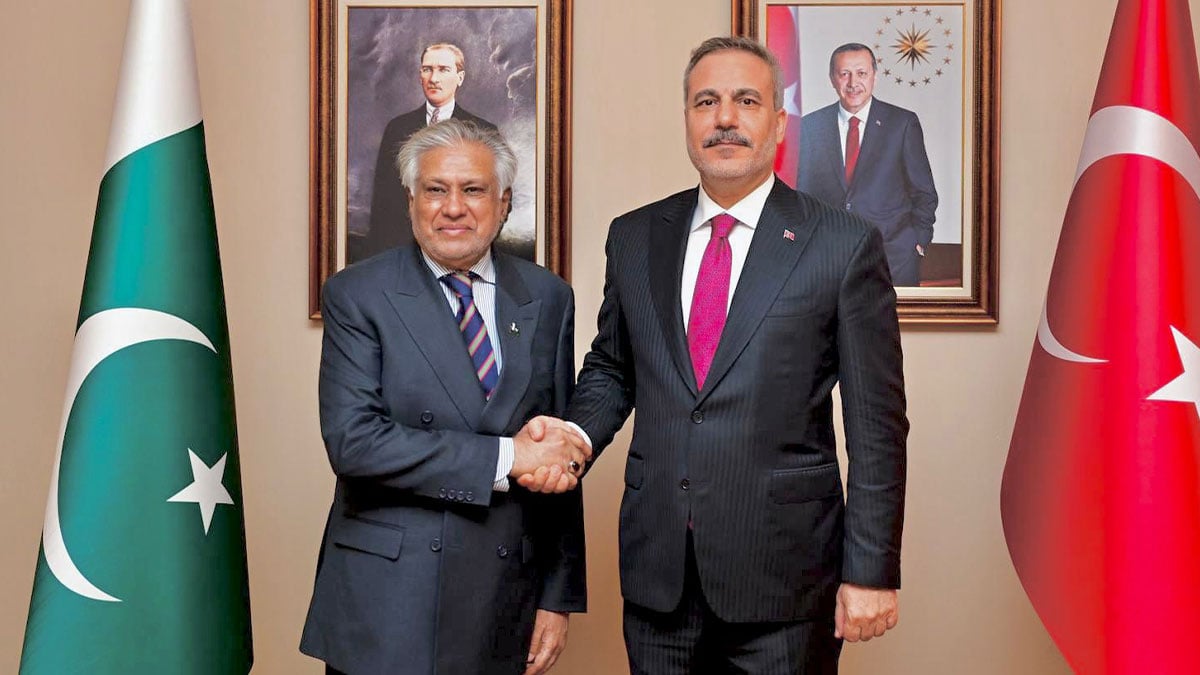
Dar thanked Fidan for hosting the inaugural meeting of the Strategic Political and Defence Committee under the Makkah Joint Defence Agreement, held in Istanbul. That gratitude wasn’t just diplomatic courtesy — it set the tone for a substantive follow-up conversation.
According to Pakistan’s Foreign Office, the two ministers reviewed progress on understandings reached during that Istanbul session and discussed concrete ways to push the alliance forward. They also touched on:
- Regional and international developments of shared concern
- Opportunities to cooperate at multilateral forums
- A commitment to “remain in close contact” going forward
Dar held a separate call the same day with Saudi Foreign Minister Prince Faisal bin Farhan, covering nearly identical ground — a sign that Islamabad is actively managing all three legs of the trilateral relationship in parallel, not sequentially.
Inside the Makkah Defence Alliance: Key Facts

For readers catching up, the Makkah Defence Alliance is the formal name given to a tripartite defence pact between Pakistan, Saudi Arabia and Turkiye. It was signed on August 7, and its defining clause is a mutual-defence guarantee: an armed attack on one member is treated as an attack on all three.
Here’s a quick breakdown of who’s involved and what role each side plays:
| Country | Key Representatives | Role in Alliance |
|---|---|---|
| Pakistan | Ishaq Dar, Khawaja Asif, Field Marshal Asim Munir | First Secretary General of the secretariat |
| Turkiye | Hakan Fidan, Yasar Guler, Gen. Selçuk Bayraktaroglu | Hosted inaugural committee meeting |
| Saudi Arabia | Prince Faisal bin Farhan, Khalid Bin Salman | Secretariat to be based in Riyadh |
The secretariat arrangement is notable in itself. Pakistan will head it for an initial three-year term, while the physical headquarters sits in Riyadh — a split structure that spreads institutional weight across two capitals rather than concentrating it in one.
From Signing to Secretariat: The Alliance’s Timeline
The Makkah Defence Alliance didn’t emerge overnight. It moved through distinct stages, each adding institutional weight to what began as a bilateral-style understanding.
- August 7: The original joint defence agreement was signed
- August 31: The first Strategic Political and Defence Committee meeting was held in Istanbul’s Ciragan Palace, where the “Makkah Defence Alliance” name was formally adopted
- Early September: Follow-up phone diplomacy between Dar, Fidan and Prince Faisal bin Farhan to keep momentum going
That pace — a major institutional meeting followed within days by ministerial phone calls — signals the three governments want this alliance operational quickly, not left to gather dust as a symbolic document.
Why Turkiye, Saudi Arabia and Pakistan Formed This Pact
Fidan used his Istanbul press conference to frame the alliance around collective deterrence and regional stability rather than any single adversary. He also revealed something bigger is planned: a roadmap is being prepared for other countries to eventually join.
READ MORE: May 9 riots: PTI leader Hammad Azhar ‘arrested’ from Multan
That detail matters. It suggests Islamabad, Riyadh and Ankara see this less as a closed trilateral club and more as the founding core of a broader security architecture — one built around shared military cooperation, joint activities, and coordinated armed-forces cohesion.
Is the Alliance Aimed at Iran?

Speculation about Iran has followed the Makkah Defence Alliance since its inception, largely due to the geography involved and the timing of its signing. Fidan directly addressed this at the Istanbul press conference.
He stated the alliance is not directed against any specific state and remains open to friendly countries willing to adhere to its principles. Whether regional actors accept that framing at face value is a separate question — but the official Turkish position is unambiguous on this point.
What This Means for Regional Security
For Pakistan, holding the first secretary-generalship of a trilateral alliance with two influential Muslim-majority powers is a diplomatic win with real strategic value. It places Islamabad at the institutional center of an arrangement that could eventually expand well beyond three members.
For Fact File readers tracking South Asian and Middle Eastern security dynamics, the pattern to watch is simple rapid follow-through. Agreements that move from signing to secretariat to sustained ministerial contact within a month tend to have real institutional backing behind them — not just headline value.
The coming months will show whether other nations respond to Fidan’s roadmap invitation, and whether the alliance’s mutual-defence clause is ever tested in practice.