
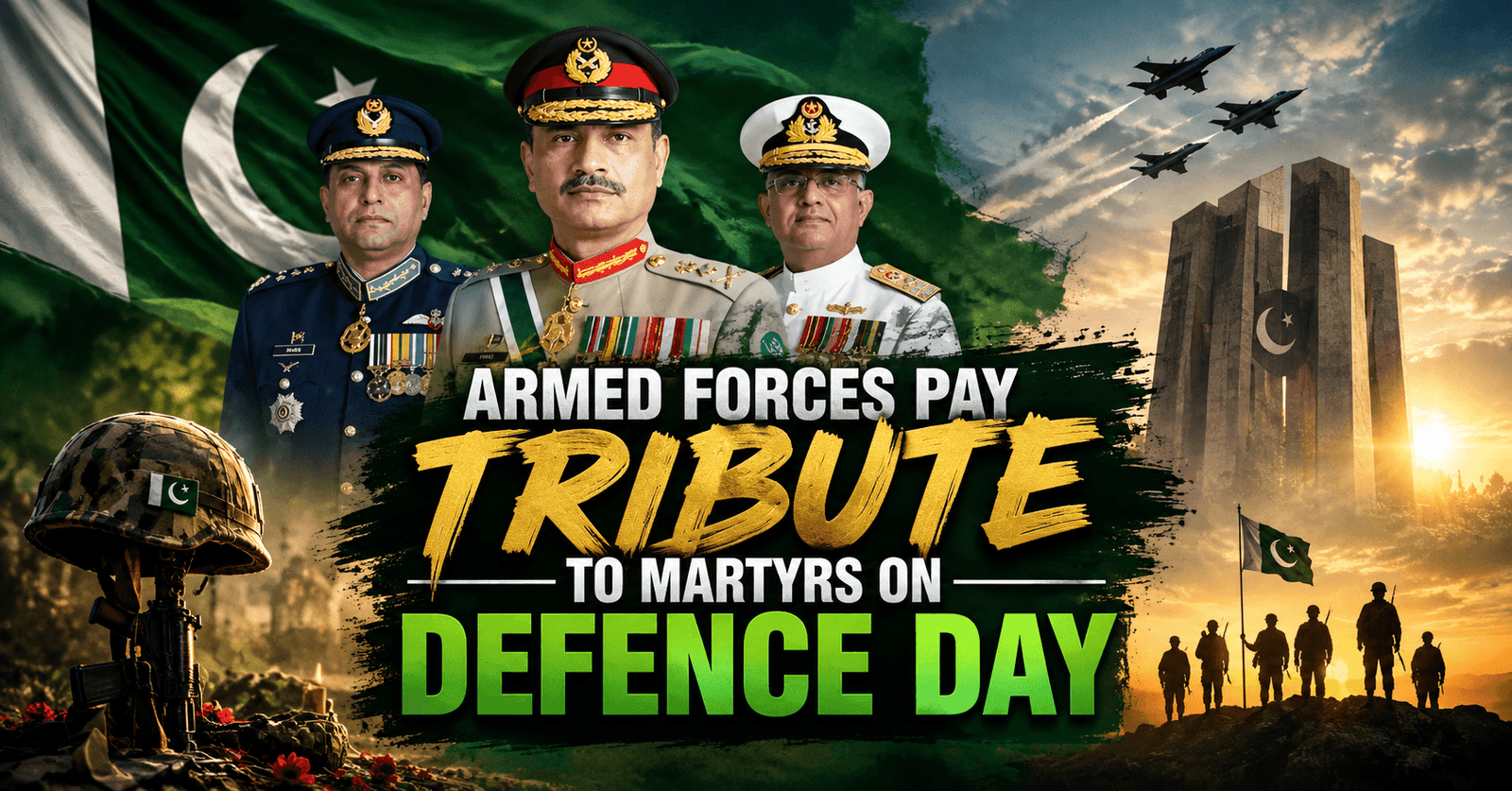

The Defence Day martyrs tribute paid across Pakistan on September 6, 2026, was not a routine ceremony. It was a reminder, repeated in gun salutes and presidential speeches, that a nation’s memory of war shapes how it sees itself six decades later.
Sixty-one years after the 1965 war, Pakistan’s civil and military leadership converged on a single message: sacrifice must be remembered, and resolve must be renewed.
Defence Day Martyrs Tribute Marks 61st Anniversary of 1965 War
This year’s 61st Defence and Martyrs’ Day was observed as President Asif Ali Zardari and Prime Minister Shehbaz Sharif highlighted Pakistan’s growing role in regional security. The date is fixed, but its weight shifts with the times.
- September 6 commemorates the 1965 war, when Indian forces crossed the international border at night in an attempt to strike Pakistan
- The armed forces and the nation are said to have rallied together to frustrate that offensive
- The 2026 tributes carried added resonance, arriving months after the Marka-e-Haq standoff earlier in the year
President Zardari said the spirit of September 6 had once again been reflected in the success of Operation Bunyanum Marsoos, adding that victory in Marka-e-Haq had continued the spirit of patriotism and freedom embodied by the day. It’s a deliberate thread — connecting 1965 to 2026, so that Defence Day reads less like a fixed anniversary and more like a living argument about deterrence.
How Pakistan’s Leadership Paid Tribute This Year
Both the President and Prime Minister issued formal messages, a customary but closely watched ritual. President Zardari called the unity and spirit of faith demonstrated by the Armed Forces and the nation on September 6, 1965, a manifestation of the country’s collective strength, adding that “this day reminds us that when a nation stands united in defence of its freedom, sovereignty and homeland, no power can defeat its resolve.”
READ MORE: Maj Gen Faisal Naseer appointment puts NACTA back in focus
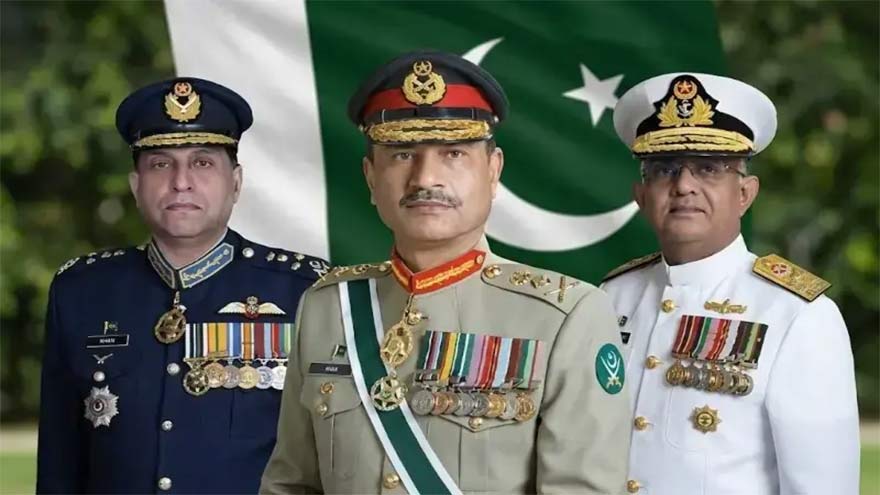
Prime Minister Shehbaz Sharif went further, naming names. He credited the professional strategy of Chief of Defence Forces Field Marshal Syed Asim Munir, Air Chief Marshal Zaheer Ahmad Babar Sidhu and Naval Chief Admiral Naveed Ashraf for a response that would be remembered for generations.
He also stated plainly that the challenges confronting Pakistan today demand greater national unity and solidarity — a line that reads as much about domestic politics as external threats.
Inside the Day’s Official Observances

Defence Day follows a fixed choreography every year, refined but rarely changed. Here’s how September 6, 2026 unfolded nationwide:
| Observance | Detail |
|---|---|
| Gun salute (federal capital) | 31-gun salute in Islamabad |
| Gun salute (provincial capitals) | 21-gun salute at provincial capitals |
| Main national ceremony | Held at General Headquarters (GHQ), Rawalpindi |
| Karachi ceremony | Change-of-guard at Mazar-e-Quaid, with Pakistan Air Force Academy cadets presenting the Guard of Honour |
| Religious observance | Special prayers held in mosques nationwide |
| Public status | Marked as an official “observance,” not a public holiday |
It’s worth noting: Defence Day is often confused with Pakistan’s main military parade, but that event is traditionally associated with Pakistan Day on March 23, whereas September 6 is primarily a day of remembrance.
The 1965 War That Gave Defence Day Its Meaning
To understand why the Defence Day martyrs tribute still carries such institutional weight, you have to go back to the war itself. In September 1965, Pakistan faced what its official accounts describe as an unprovoked assault — and the state’s framing of that moment has barely shifted in 61 years.
- The conflict is remembered as a defence against the enemy’s undeclared aggression and numerical superiority
- Official messaging continues to describe the outcome as a humiliating and resounding defeat inflicted on the adversary across all fronts
- The day has since evolved from a purely military anniversary into what state media now regularly calls Defence and Martyrs’ Day
That naming shift matters. It moves the emphasis from strategy and victory toward loss and remembrance — a softer, more emotionally resonant frame for a state occasion.
Names That Define the Sacrifice

Every Defence Day tribute leans on a handful of figures whose stories have become shorthand for the day itself. Two names recur most often in Pakistan’s military memory of 1965.
Squadron Leader Muhammad Mahmood Alam — universally known as MM Alam — is remembered for shooting down five enemy aircraft in less than a minute during the war, a feat still cited in aviation folklore. Major Raja Aziz Bhatti Shaheed, meanwhile, was awarded the Nishan-e-Haider, Pakistan’s highest military honour, for his defence of the Bedian-Jassar sector near Lahore.
These aren’t just historical footnotes. They’re the human anchor for an otherwise abstract idea — sovereignty — and that’s precisely why official speeches return to them year after year.
Military Leadership’s Message on National Unity
The Inter-Services Public Relations (ISPR) issued its own statement, distinct from the civilian government’s messaging, and arguably carrying more institutional weight. It named the country’s top brass directly: Chief of Army Staff and Chief of Defence Forces Field Marshal Syed Asim Munir, Chief of Naval Staff Admiral Naveed Ashraf, Chief of Air Staff Air Chief Marshal Zaheer Ahmed Baber Sidhu, and Commander National Strategic Command General Syed Aamer Raza, all of whom paid tribute to the martyrs and their families.
The statement described the martyrs as representing the highest ideals of honour, duty and sacrifice, and framed September 6 as a lasting symbol of national unity, courage and determination. Notably, the military also used the occasion to reaffirm its unwavering resolve to protect Pakistan’s sovereignty and respond firmly to any aggression — language that reads as a message aimed outward as much as inward.
Why Defence Day Still Matters in 2026
Sixty-one years on, the Defence Day martyrs tribute isn’t just ceremonial nostalgia. It functions as an annual reset — a moment when the state recalibrates its own narrative of sacrifice, deterrence and unity, and tests whether that narrative still lands with the public.
This year’s tributes were unusually layered, threading a 1965 war anniversary through 2026’s own military flashpoints. That’s a deliberate continuity strategy: linking old sacrifice to new resolve keeps the emotional stakes of Defence Day from fading with each passing decade.
That framing shapes public sentiment the way it once did is a separate question — one that depends less on speeches and more on what Pakistanis feel about security, governance and unity in the months between one September 6 and the next.