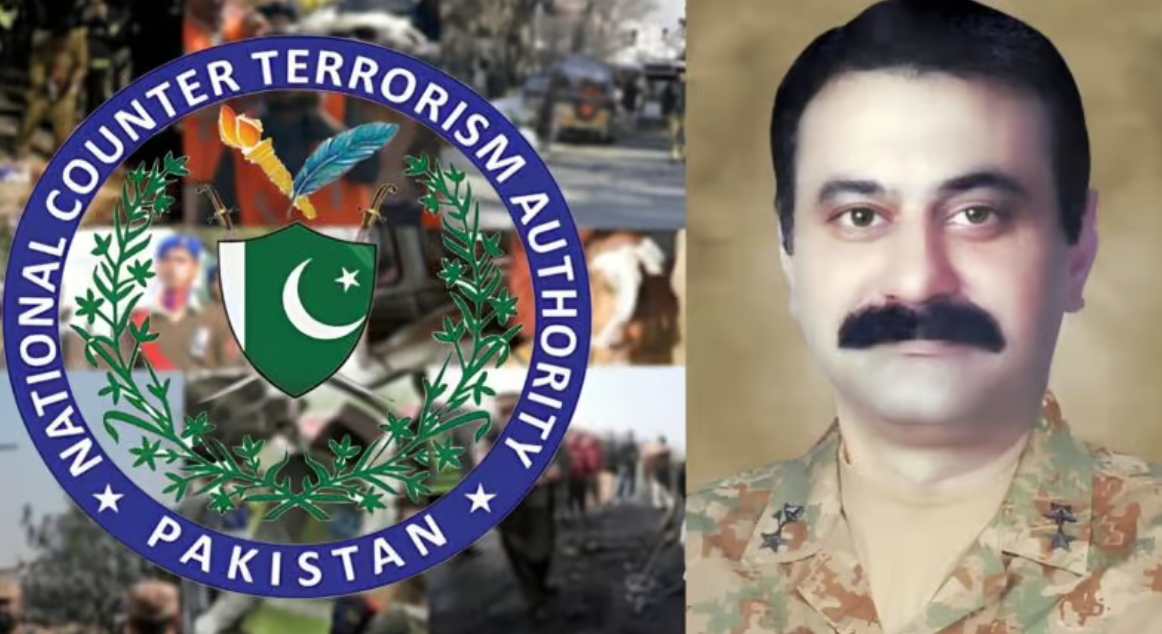

Pakistan’s counter terrorism setup just got a new appointment and it is not the usual one. On Friday, the Federal government appointed Major General Faisal Naseer as the new National Coordinator of the National Counter Terrorism Authority, NACTA.
Who Is Faisal Naseer?
Major General Faisal Naseer joined the Pakistan Army back in 1992, and he has spent over three decades building a career centered on intelligence and internal security. He promoted through the ranks steadily. In 2022, he was promoted to the rank of Major General.
Since that promotion he has served as Director General of Counter-Intelligence at the Inter-Services Intelligence, commonly known as the ISI. That role, oversees the ISI’s Internal Wing, the branch responsible for domestic security matters.
His service record includes recognitions like the Hilal-i-Imtiaz (Military) and Tamgha-i-Basalat, honors tied to distinguished performances. He was trained at the Pakistan Military Academy. Major General Faisal Naseer is a man whose entire professional life has revolved around counter terrorism and intelligence work, not general army command.
The Appointment Itself: What the Notification Says
According to the notification issued by the Establishment Division, Faisal Naseer has been appointed under Section 9(1) of the NACTA Act, 2013. The posting is on a “secondment basis,” meaning he remains a serving army officer temporarily assigned to a civilian institution. His term runs for three years.
The wording of the official order was fairly direct. It stated the appointment would take effect “with immediate effect and until further orders.”
Here is the part that has spread confusion. NACTA has had more than a dozen National Coordinators since it was created in 2008, and the overwhelming majority came from the police service, not the military. Faisal Naseer’s appointment changes that pattern entirely. It is the first time someone with a purely military intelligence background, and is directly from the ISI is taking charge of the NACTA.
Why This Could Matter for Pakistan’s Security
NACTA is not a common name for most citizens, but its job is significant and authoritative. It is set up under the Ministry of Interior, NACTA is tasked with designing national strategies against terrorism and extremism, then coordinating how federal and provincial institutions actually carry them out. On paper, it is supposed to be holding Pakistan’s broken counter terrorism machinery together.
NACTA has often struggled with exactly that coordination. Provinces move at their own pace. Federal agencies do not always share information smoothly. There is also one more point that affects the authority’s effectiveness. It depends heavily on who is steering it and how much political backing it carries.
That is the point where Maj Gen Faisal Naseer’s background could shift things. His years inside the ISI’s internal security system mean he arrives with direct access to intelligence networks. Given that Pakistan is currently running active counter terrorism operations in Balochistan and Khyber Pakhtunkhwa, and facing rising militant activity linked to cross border movement from Afghanistan, timing matters here more than usual.
One official notification circulated to senior government bodies described the process plainly, noting the appointment carried the “approval of Federal Government.” It is a short phrase, but it signals this was not a lower level administrative call.
Many people are saying that an experienced intelligence officer at NACTA’s helm could finally bridge the gap between planning and execution. Some people also question and worry about further blurring the line between civilian oversight and military influence in domestic security policy.
One thing seems clear in all this situation, Pakistan’s counter terrorism strategy is entering a new chapter. Led by Maj Gen Faisal Naseer someone whose entire career has been built around exactly the kind of threats NACTA was designed to fight.
Whether this appointment translates into better coordination on the ground or simply reshuffles the chain of command remains to be seen. For now, Major General Faisal Naseer chooses to guide the authority through what continues to be a tense and unpredictable security climate.