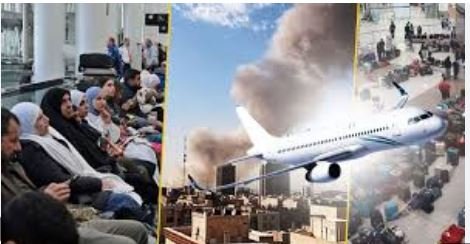
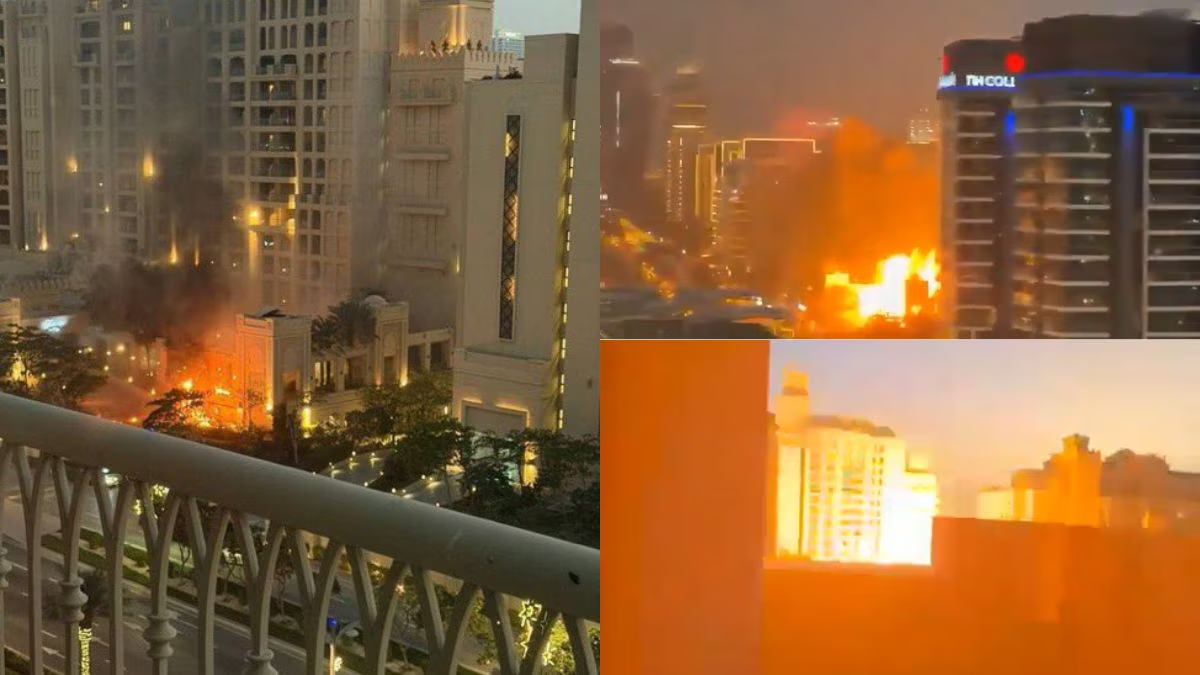
UAE intercepting missiles and drones became the focus of regional security concerns after explosions were reported near Abu Dhabi International Airport late Wednesday night. Authorities confirmed that the attack attempt was successfully foiled, preventing potential damage near one of the country’s busiest aviation hubs.
Officials said the incident occurred when air defense units detected multiple aerial threats approaching Abu Dhabi. The defense systems were immediately activated, intercepting the projectiles before they could reach their intended targets. Residents reported hearing loud explosions and seeing flashes in the sky as defense missiles neutralized the incoming threats.
Authorities reassured the public that the situation was under control and that investigations were underway to determine the origin and nature of the attack.
Explosions Reported Near Abu Dhabi Airport
Witnesses living near Abu Dhabi International Airport described hearing multiple explosions shortly before midnight. The sounds were believed to be linked to interception operations carried out by UAE defense forces.
Residents took to social media to share videos showing bright flashes in the sky and the sound of powerful blasts echoing across parts of the capital. However, officials quickly clarified that these explosions were part of defensive operations and not the result of a successful strike.
Authorities also confirmed that airport operations remained largely unaffected, though security protocols were temporarily heightened as a precaution.
UAE Air Defense Responds to Missile and Drone Threat
The United Arab Emirates Armed Forces confirmed that their air defense systems successfully neutralized the incoming threats. According to official statements, multiple drones and missiles were intercepted before they could cause damage.
Modern air defense technologies deployed by the UAE include radar tracking, missile interception systems, and coordinated monitoring of airspace. These systems allow rapid detection of threats and swift response to protect key infrastructure.
Security analysts say the UAE intercepting missiles and drones demonstrates the country’s preparedness to counter evolving aerial threats in the region.
Key elements of the defense response included:
- Early detection through advanced radar systems
- Rapid launch of interceptor missiles
- Coordination between air defense units and aviation authorities
- Immediate safety measures around sensitive locations
Such measures are designed to ensure that critical infrastructure, including airports and energy facilities, remain protected.
Regional Tensions Raise Security Concerns
The incident has once again highlighted rising security concerns in the Middle East, where drone and missile technology has become increasingly common in modern conflicts.
The United Arab Emirates has previously faced similar threats targeting strategic locations. Security experts believe that attacks involving drones and missiles have become a preferred tactic because they can travel long distances and are relatively inexpensive compared to conventional military operations.
Although authorities have not officially confirmed who was responsible for the attempted attack, investigations are ongoing. Analysts say regional tensions and geopolitical rivalries often play a role in such incidents.
Safety Measures Implemented Across Abu Dhabi

Following the explosions, security agencies across Abu Dhabi activated precautionary measures to ensure public safety.
Emergency services and law enforcement units were placed on high alert while aviation authorities monitored the situation closely. Officials also conducted inspections around sensitive locations to ensure no debris or unexploded remnants posed any danger.
Authorities emphasized that daily life in the city continued normally, with transportation networks and public services operating without major disruptions.
Residents were advised to rely on official updates and avoid spreading unverified information online.
Impact on Aviation and Airport Operations
Although explosions were heard near Abu Dhabi International Airport, airport officials confirmed that flights continued with minimal disruptions.
Air traffic control teams coordinated with defense authorities to ensure aircraft safety during the interception operation. Some flights were briefly delayed as a precautionary measure while the airspace was monitored.
Aviation experts say airports are often among the most sensitive locations during security incidents because of the large number of passengers and international flights.
Key aviation precautions typically include:
- Temporary airspace monitoring
- Adjustments to flight routes
- Increased security screening
- Coordination with military defense units
These measures help ensure passenger safety and prevent panic during unexpected events.
Growing Threat of Drone Warfare
The use of drones in military and paramilitary operations has significantly increased over the past decade. Small unmanned aerial vehicles can travel long distances, carry explosive payloads, and evade traditional defense systems if not properly detected.
Countries across the Gulf region, including the United Arab Emirates, have invested heavily in advanced air defense technologies to counter such threats.
Experts say counter-drone systems typically include:
- Radar detection systems
- Electronic jamming technology
- Interceptor missiles
- Integrated air defense networks
These systems work together to identify and neutralize potential threats before they reach populated areas.
The incident involving UAE intercepting missiles and drones highlights the growing importance of these technologies in modern security strategies.
International Reactions and Security Monitoring
Global observers are closely monitoring the situation as governments assess potential implications for regional stability.
Several international security analysts noted that the quick response by UAE defense forces prevented what could have been a serious security incident.
Airspace monitoring and intelligence sharing among allied nations often play a critical role in detecting threats early. Cooperation between regional security partners helps improve preparedness and response times.
Diplomatic sources also indicated that discussions regarding regional security and air defense cooperation may intensify following the incident.
Investigation Into the Source of the Attack
Authorities have launched a detailed investigation to determine the origin of the missiles and drones intercepted near Abu Dhabi.
Military experts will analyze debris recovered from interception sites to identify:
- The type of drone or missile used
- Possible launch location
- Technical characteristics of the weapons
- Any links to known militant groups or state actors
Such investigations can take several days or even weeks before definitive conclusions are reached.
Officials emphasized that they would release further information once the investigation is complete.
Outlook!
The incident involving UAE intercepting missiles and drones near Abu Dhabi International Airport has drawn international attention and raised fresh concerns about regional security. Thanks to rapid action by the United Arab Emirates Armed Forces, the incoming threats were successfully neutralized before causing damage or casualties.
Authorities continue to monitor the situation while conducting a thorough investigation into the source of the attack. Meanwhile, life in Abu Dhabi has returned to normal, with officials assuring residents and travelers that safety remains the top priority.
As drone and missile technology becomes more widespread, incidents like this highlight the importance of advanced air defense systems and international cooperation to protect critical infrastructure and civilian populations.