

Hamza Farrukh has been appointed chairperson of the Pakistan Climate Change Authority, taking charge of the federal body tasked with coordinating the country’s response to a worsening climate crisis. Prime Minister Shehbaz Sharif approved the appointment on a two-year contract.
The Establishment Division notification, issued on Tuesday, confirmed the appointment takes immediate effect and will remain in place until further orders. Hamza Farrukh will draw pay equivalent to the maximum of Special Professional Pay Scale-I, the government’s top contractual tier.
Who Is Hamza Farrukh?
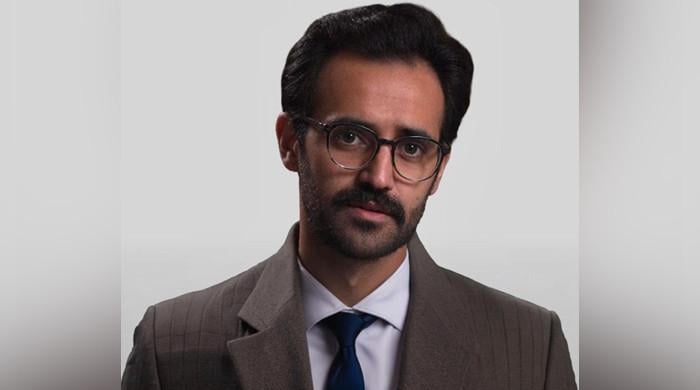
Farrukh is a Pakistani climate-technology entrepreneur whose career spans international finance and grassroots humanitarian engineering. He grew up in Pakistan, where early exposure to water scarcity shaped much of his later professional direction, according to his own published biography.
His credentials blend elite academic training with field-tested development work. Key details from his public profile include:
- Bachelor’s degree in Economics, Political Science and Leadership Studies from Williams College
- Bachelor’s degree in Philosophy, Politics and Economics from the University of Oxford
- Additional study at Stanford University; holds an MBA
- Recipient of the Points of Light Award, the Diana Award, and named to Forbes 30 Under 30
From Goldman Sachs to Climate Technology
Before entering public service, Hamza Farrukh spent close to eight years at Goldman Sachs in London, working as a vice president in macro rates sales roughly between 2016 and 2023. That stint gave him direct exposure to global capital markets and carbon-linked financial instruments.
He has described trading ESG bonds during that period as formative to his later thinking on climate finance. Hamza Farrukh has said too little international climate action arrives too late for countries like Pakistan, which he has called deeply climate-vulnerable.
Hydrosun Technologies and the Solar Water Project

Alongside his finance career, Hamza Farrukh founded the Solar Water Project, branded locally as Bondh-e-Shams, in July 2014. The clean-water charity uses renewable energy and IoT-enabled systems and has reportedly supplied more than 100 million cups of safe drinking water.
READ MORE: Hangu Operation: ISPR Reports 8 Killed, 6 Personnel Martyred
He later founded Hydrosun Technologies, which combines voluntary carbon markets with renewable infrastructure to expand clean water access. The venture has reportedly reached several hundred villages, positioning Hamza Farrukh as a builder rather than purely a policy figure entering the PCCA chairmanship.
Understanding the Pakistan Climate Change Authority
The PCCA was not created by this appointment; its legal basis dates back to the Pakistan Climate Change Act 2017, which also established the Pakistan Climate Change Council and a dedicated Climate Change Fund. The authority itself was only formally activated in 2024, following a Supreme Court directive to the federal government.
Despite that activation, independent assessments, including an International Monetary Fund staff report, have described the authority as largely non-functional due to operational delays and unclear division of labour with the Ministry of Climate Change and Environmental Coordination.
| PCCA Quick Facts | Detail |
|---|---|
| Legal basis | Pakistan Climate Change Act, 2017 |
| Authority activated | 2024, after Supreme Court order |
| Sanctioned posts | 24 |
| Oversight body | Senate Standing Committee on Climate Change |
| New chairperson | Hamza Farrukh, two-year contract |
A Mandate Under Scrutiny in the Senate
Just weeks before this appointment, the Senate Standing Committee on Climate Change questioned whether the PCCA should exist at all. Committee chairperson Senator Sherry Rehman argued its functions substantially overlap with the ministry’s, calling the duplication hard to justify.
“The question is what additional value is this Authority creating when the functions listed under its mandate are already the responsibility of the Ministry?” Rehman said, according to committee proceedings, while noting the ministry’s own development budget had shrunk to roughly Rs2.478 billion.
A Question of Spelling: Farrukh or Farooq?

Coverage of this appointment has not been uniform. Some reports on the same Establishment Division notification refer to the new chairperson as “Hamza Farooq” rather than “Hamza Farrukh,” creating confusion for readers trying to verify his identity and background.
Cross-referencing his LinkedIn profile, his listing on Stanford’s Emergence programme, and his corporate biography at Hydrosun Technologies all consistently use “Farrukh,” matching the career and education details reported alongside the appointment. The weight of evidence favours that spelling.
What the Appointment Means for Pakistan’s Climate Governance
Hamza Farrukh appointment installs a private-sector, finance-trained operator atop an authority whose own relevance is being actively debated by lawmakers. That combination could push the PCCA toward measurable outputs, or it could simply place fresh leadership inside an institution still fighting for its mandate.
His background in voluntary carbon markets may prove directly useful if Pakistan pursues climate-finance mechanisms under Article 6 of the Paris Agreement, an area where the country has so far struggled to attract meaningful capital at scale.
The Road Ahead
Much now depends on how quickly Hamza Farrukh can respond to the Senate committee’s demand for a “comprehensive justification” covering staffing, financing and international linkages. Without that clarity, the authority risks being abolished or absorbed rather than strengthened.
His two-year contract gives him a defined window to demonstrate value beyond what the Ministry of Climate Change and Environmental Coordination already delivers, at a moment when Pakistan’s climate-adaptation financing needs run into tens of billions of dollars.