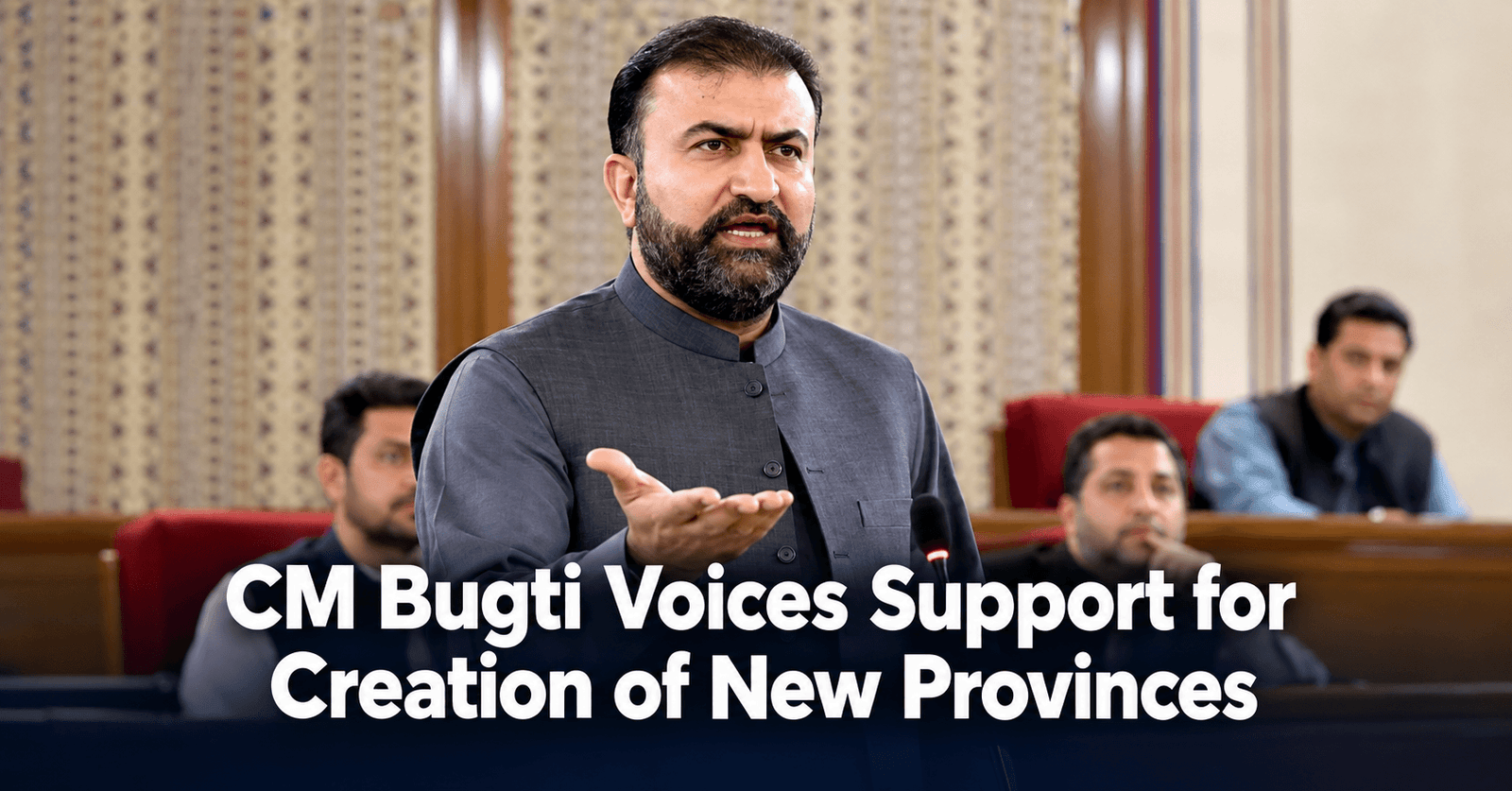

CM Bugti new provinces remarks have added fresh fuel to one of Pakistan’s most contentious political debates. Speaking to senior journalists via video link from Quetta on Saturday, Balochistan Chief Minister Sarfraz Bugti said he supports carving out new provinces — but only if they’re drawn along administrative lines, not linguistic or ethnic ones.
It’s a carefully worded position. Bugti isn’t rejecting the idea outright, nor is he rushing to embrace it either.
Bugti’s Remarks Reignite the New Provinces Debate
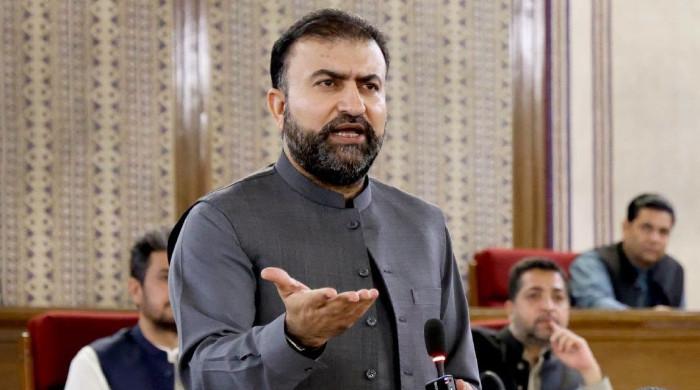
The CM Bugti new provinces statement lands at a moment when the issue is already dominating national headlines. He told reporters that political parties within Balochistan “have no objection” to the proposal in principle, though he stressed that any restructuring must first win consensus at the federal level.
That caveat matters. Bugti isn’t promising action — he’s signaling conditional openness while keeping the decision firmly in Islamabad’s court, where the real fight over provincial boundaries is playing out.
Why CM Bugti Wants Administrative Lines, Not Ethnic Ones
Bugti was blunt about his red line: “If new provinces are to be created in Balochistan, they should be on administrative rather than linguistic grounds.” That single sentence separates his position from the more combustible ethnic-nationalist framing that has doomed similar proposals in the past.
Splitting a province along language or tribal identity tends to trigger resistance almost instantly — just look at Sindh’s reaction to a similar suggestion. Bugti appears determined to avoid that trap by keeping the conversation technical rather than emotional.
Quetta Can’t Run It All: Balochistan’s Governance Problem
Balochistan covers roughly 44% of Pakistan’s landmass, yet it’s governed as a single administrative unit from Quetta. Bugti argues that’s simply unworkable at that scale, and he has a point worth weighing:
- Balochistan spans over 347,000 square kilometers — the largest province by area
- Its population is scattered across remote, mountainous, and border-adjacent districts
- Security operations, development funds, and service delivery all funnel through one provincial capital
- Response times for policing, healthcare, and disaster relief suffer accordingly
Bugti framed new provinces as a governance fix, not a political favor — a way to bring administration physically closer to citizens who currently wait weeks for basic services.
Where the Debate Actually Began

This didn’t start with Bugti. Interior Minister Mohsin Naqvi lit the fuse on July 30, telling the Pakistan Economic Summit that the country’s governance system had “collapsed” after seven decades of the same four-province structure.
ALSO READ: Referendum on new provinces subject to parliament’s nod: Rana Sanaullah
Naqvi’s remarks triggered immediate backlash, especially in Sindh, where Chief Minister Murad Ali Shah dismissed the idea as outdated. The Sindh Assembly responded on September 3 with a unanimous resolution declaring the province “one and shall remain one” — a clear signal that not every region shares CM Bugti relatively measured tone.
Where Every Major Party Stands
The politics here are anything but unified. Coalition partners disagree sharply on both the need for new provinces and how they should be created.
| Party / Leader | Position |
|---|---|
| CM Sarfraz Bugti (Balochistan) | Conditional support, administrative grounds only |
| Interior Minister Mohsin Naqvi | Originated the proposal, calls system “collapsed” |
| PPP / CM Murad Ali Shah (Sindh) | Firmly opposed to dividing Sindh |
| PML-N Govt (Tariq Fazal Chaudhry) | Confirms parliamentary debate, no personal stance yet |
| Bilawal Bhutto-Zardari | Wants it settled in parliament, not on TV |
That table alone explains why the issue has stalled for six weeks despite constant media coverage — everyone agrees it should be discussed, almost no one agrees on the outcome.
No Talks With Militants, Bugti Insists

Bugti used the same briefing to draw a hard line on security. He said Balochistan’s fight against terrorism would continue “until the last terrorist,” ruling out negotiations with armed groups under any circumstances.
He also pushed back on reports of a supposed “two-and-a-half-year government arrangement” in Balochistan, calling the claim unfounded. According to him, civil and military leadership remain aligned, with no confusion over the state’s counterterrorism approach.
What Comes Next in Parliament
Nothing here is finalized. Parliamentary Affairs Minister Tariq Fazal Chaudhry has confirmed the National Assembly and Senate will formally debate new provinces in October, after September’s sessions were postponed.
Separately, a high-level committee has already proposed a 27-member elected assembly for Islamabad Capital Territory — suggesting the government may move on smaller administrative reforms even before the bigger provincial question is resolved.