
Baker Hughes signs landmark energy agreement with OGDCL, marking one of the most significant foreign technology partnerships in Pakistan’s upstream energy sector this year. The contract was formalised at OGDCL’s headquarters in Islamabad, bringing a US energy technology giant directly into the country’s push to squeeze more output from its oldest wells.
For a company sitting on some of Pakistan’s largest hydrocarbon reserves but grappling with natural decline, the timing matters. Islamabad has spent years trying to trim its energy import bill, and this deal signals a fresh — if incremental — step toward that goal.
Inside the Deal: What Mature Assets Solutions Means
Under the agreement, Baker Hughes will deploy its Mature Assets Solutions (MAS) platform, a technology and consulting package built specifically for oilfields past their production peak. It combines diagnostics, engineering expertise, and digital monitoring to squeeze extra barrels out of wells many assumed were winding down.
For OGDCL, that means access to tools it doesn’t currently have in-house. The company said the initiative fits into its wider Production Optimization Drive, an internal strategy aimed at maximising output from existing assets rather than chasing costly new exploration.
- Baker Hughes will bring technical expertise, advanced technologies, and integrated engineering capabilities
- The focus is squarely on established fields showing natural production decline
- The project will explore new technology applications suited to Pakistan’s specific reservoir conditions
Who Was in the Room: Officials and Executives
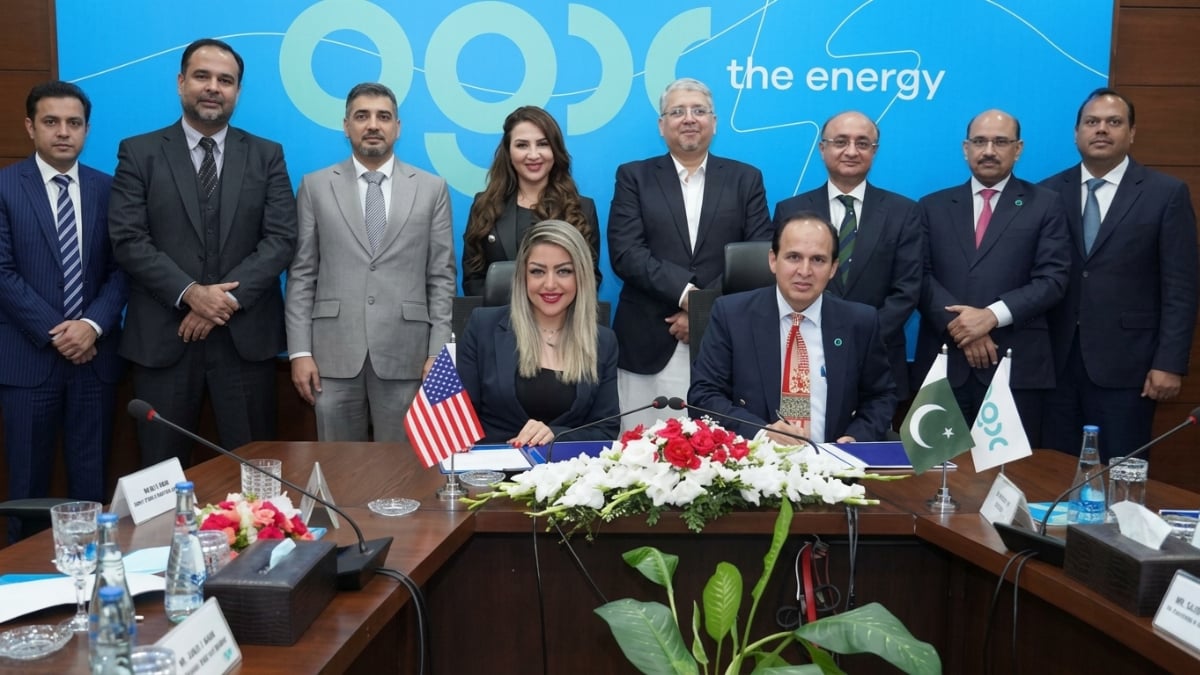
The signing ceremony carried real diplomatic weight. Special Secretary Petroleum Mirza Nasiruddin Mashood Ahmad and US Chargé d’Affaires Natalie A. Baker attended as chief guests, alongside OGDCL Managing Director and CEO Ahmed Hayat Lak.
READ MORE: PM Shehbaz meets Xi, Putin, Erdogan on SCO sidelines
Senior leadership from both organisations rounded out the room, underscoring that this wasn’t a routine vendor contract. Lak said OGDCL was “pursuing meaningful engagements with world-class service providers” to optimise output and strengthen energy security — language that signals more such deals may follow.
Why OGDCL’s Ageing Fields Need Help

OGDCL is Pakistan’s largest exploration and production company, but a large share of its portfolio is old. Its mature assets span 12 oil fields and six gas and condensate fields, many of which have been producing for decades and are now past peak output.
Natural decline curves are unforgiving. Without intervention, wells lose pressure and yield less crude and gas every year. That’s precisely the gap MAS is designed to close — not by drilling new wells, but by extracting more value from what’s already there.
OGDCL’s Current Production Snapshot
| Metric | Current Output |
|---|---|
| Crude oil | ~40,000 barrels per day |
| Natural gas | ~815 million standard cubic feet per day |
| LPG | ~780 metric tonnes per day |
| Mature oil fields covered | 12 |
| Mature gas/condensate fields covered | 6 |
These numbers represent a meaningful chunk of Pakistan’s domestic hydrocarbon supply. Even modest efficiency gains from the Baker Hughes partnership could translate into measurable barrels and cubic feet added to the national grid.
A Milestone for the US-Pakistan Energy Partnership
US Chargé d’Affaires Natalie A. Baker didn’t undersell the moment. She called the agreement a milestone in the US-Pakistan energy partnership, adding that energy security is a foundation of economic security for both nations.
Special Secretary Ahmad echoed that framing, saying the partnership would directly support efforts to raise indigenous oil and gas production. Coming amid broader US-Pakistan economic engagement, the deal reads as much like diplomacy as it does oilfield engineering.
What the Deal Means for Pakistan’s Energy Security

Pakistan imports a substantial share of its energy needs, and every barrel produced domestically chips away at that dependence. This agreement won’t transform the country’s energy balance overnight, but it targets a real structural problem: declining output from legacy fields.
- Reduces reliance on costly energy imports over time
- Extends the productive life of existing infrastructure instead of requiring new capital-intensive exploration
- Signals continued foreign investor confidence in Pakistan’s oil and gas sector despite broader economic headwinds
Analysts tracking Pakistan’s upstream sector will likely watch whether output figures actually move in the coming quarters, since similar “optimization” partnerships have had mixed records elsewhere.
What Comes Next
Implementation timelines haven’t been publicly detailed, and neither company has confirmed the contract’s financial value. That’s typical for framework-style service agreements, where scope often expands once initial diagnostics are complete.
What’s clear is that Baker Hughes signs landmark energy agreement with OGDCL at a moment when Pakistan badly needs production wins. Whether this becomes a template for similar international partnerships across the sector remains the question worth watching.