
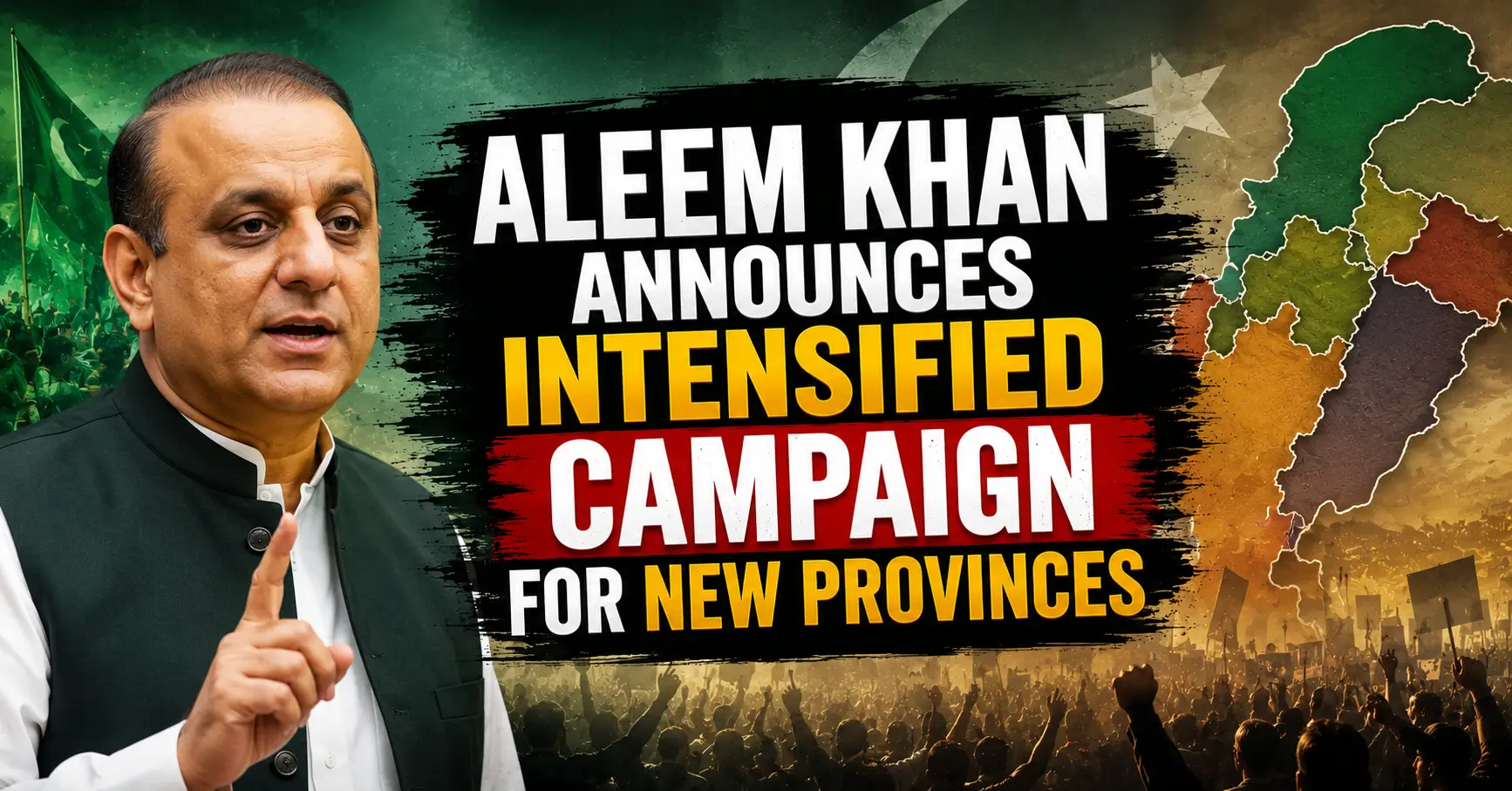

The Aleem Khan new provinces campaign is back at the centre of Pakistan’s political conversation. This week, the Istehkam-e-Pakistan Party (IPP) chief told party delegations that the outreach drive for carving out new administrative units would be “further intensified,” with fresh consultations planned across the country.
It’s not a new position for Khan. But the tone has shifted — from occasional statements to what he’s now framing as a sustained, organised movement, complete with new party infrastructure and a travel schedule to match.
What Aleem Khan Announced This Week
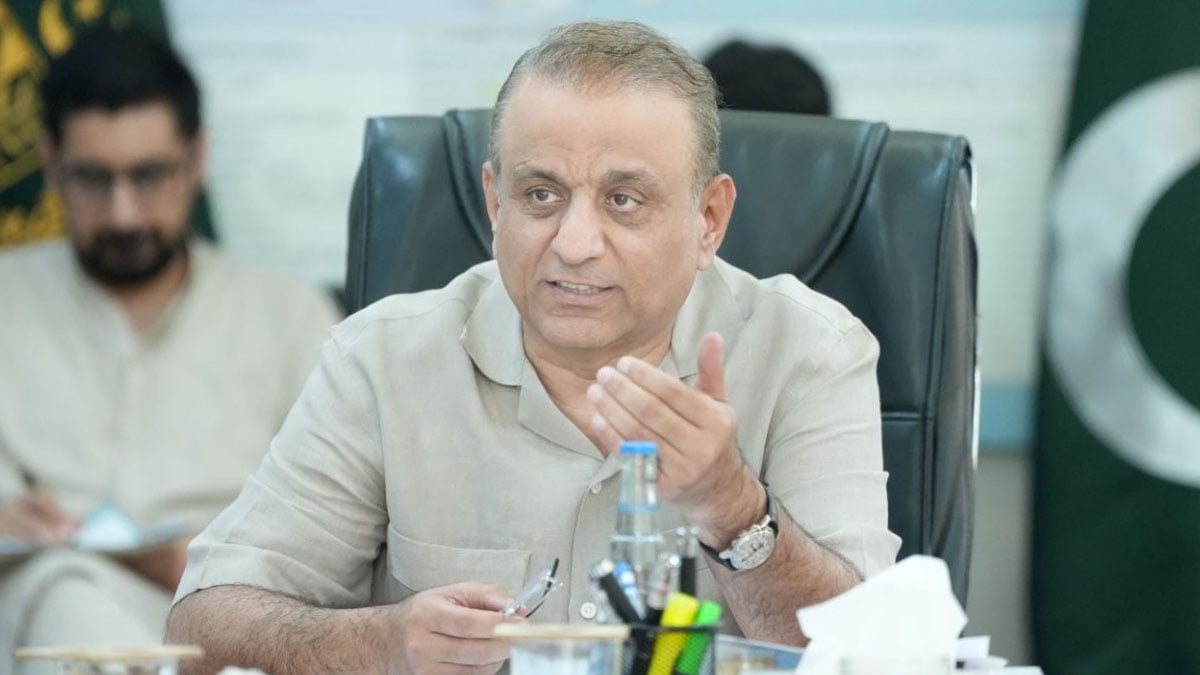
Meeting with delegations, Aleem Khan said the Aleem Khan new provinces campaign would move beyond slogans and into active political outreach, with meetings planned to build consensus among “like-minded” figures across the political spectrum.
READ MORE: Naqvi leads drive to make Islamabad encroachment-free
He said the demand had already earned public support, and that it was time to turn the phrase “new provinces, new system” into something real. The existing administrative setup, he argued, cannot be fixed without smaller, more manageable units.
- IPP will establish a central office in Multan to organise South Punjab activities
- Party plans consultations with political and social figures nationwide
- Khan says public opinion has “already developed” in favour of new provinces
- He credited recent IPP gains in Gilgit-Baltistan as added momentum
Proposed New Provinces: The Full Picture
Khan hasn’t limited his proposal to one region. Over recent statements, he’s floated a broader restructuring that touches all four existing provinces, not just Punjab.
The clearest version of his plan splits Punjab into four zones while keeping the province’s identity intact, alongside long-standing demands from Khyber Pakhtunkhwa and southern Punjab.
| Proposed Province | Carved From | Status of Demand |
|---|---|---|
| South Punjab / Saraiki Province | Punjab | Decades-old demand, revived by IPP |
| Bahawalpur | Punjab | Historical princely state, active push |
| Hazara | Khyber Pakhtunkhwa | Assembly resolutions since 2010 |
| North/West/East Punjab | Punjab | Broader four-way split floated by Khan |
Khan has also said Sindh and Balochistan could see similar divisions, arguing that population growth alone has made the current provincial map outdated.
The Multan, Bahawalpur and Hazara Outreach Plan

Concrete travel plans separate this phase from earlier statements. Khan said he would visit Multan and Bahawalpur first, followed by a trip to Hazara — regions at the heart of three separate provincial demands.
The Multan office isn’t symbolic. It’s meant to function as an operational base for South Punjab politics, suggesting the IPP intends to build lasting organisational presence rather than raise the issue only around elections.
Khan was pointed about past attempts. He said leaders who campaign on new provinces before elections often “remain silent for four and a half years afterwards” — a comment aimed squarely at rival parties with a history of raising, then shelving, the same demand.
Why Creating New Provinces Is Constitutionally Difficult
Here’s what most political statements skip: the legal bar for creating a new province in Pakistan is extremely high. Under Article 239(4) of the Constitution, any change to provincial boundaries requires a formal constitutional amendment.
That amendment needs a two-thirds majority in both the National Assembly and the Senate — and, separately, a two-thirds majority resolution from the assembly of the province whose boundaries would change.
- No single party currently holds a two-thirds majority in parliament
- Punjab’s own assembly would need to approve any split affecting it
- Legal experts note Pakistan’s Constitution, unlike India’s, has no dedicated provision for creating entirely new states
- Some analysts suggest lawmakers may instead try amending Article 239 itself to lower the threshold
Constitutional lawyers who’ve studied the process describe it as far harder than a political announcement suggests — parliamentary arithmetic, not public sentiment, ultimately decides whether new provinces happen.
A Demand With a Long, Unfulfilled History

The Hazara province demand alone traces back to resolutions in the Khyber Pakhtunkhwa Assembly since 2010. South Punjab and Bahawalpur movements go back further still, resurfacing around nearly every election cycle.
What’s different this time, according to Khan, is cross-party interest — he’s pointed to support from MQM and other parties for the broader principle, even if specifics remain unsettled.
Critics have pushed back on the lack of a detailed plan. Some political voices have questioned whether proposals floating numbers as high as 20 or even 32 provinces amount to serious policy or just talking points aimed at building public profile ahead of future elections.
What Comes Next
The Aleem Khan new provinces campaign now has a travel calendar, a Multan office, and a stated intent to build consensus but it still lacks the one thing that matters constitutionally a two-thirds majority.
This round of outreach produces an actual legislative proposal, or fades the way earlier campaigns did, will likely depend on whether larger parties like PML-N and PPP engage seriously — something that hasn’t happened yet.
For now, Khan’s message is consistent: administrative units closer to the people, delivered “at all costs.” Whether Pakistan’s parliament agrees is a very different question.
What do you think would new provinces actually fix Pakistan’s governance problems, or just add another layer of political complexity?