


Scientists have uncovered fascinating evidence that dinosaurs used sunlight and their own body heat to Dinosaur Egg Hatching around 70 million years ago. The discovery, made through fossil analysis and modern scientific modeling, sheds light on how certain species survived in varying climates during the late Cretaceous period.
Researchers believe this dual incubation method allowed dinosaurs to regulate temperature more effectively, ensuring higher survival rates for their offspring. The findings also reveal surprising similarities between dinosaur behavior and modern-day reptiles and birds.
How Dinosaurs Hatched Their Eggs Using Sunlight
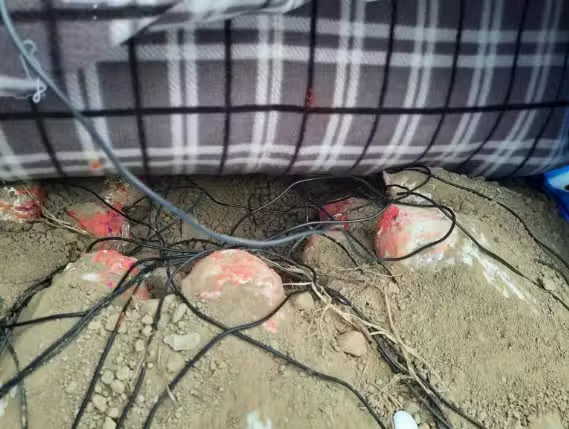
For decades, scientists debated whether dinosaurs relied solely on environmental heat or actively incubated their eggs like birds. Recent studies now suggest a hybrid strategy—dinosaur egg hatching sunlight combined with body warmth.
Unlike modern birds that sit directly on eggs, many dinosaurs likely buried their eggs in sediment or vegetation. These natural materials absorbed sunlight during the day and retained heat, creating a stable incubation environment.
Researchers found fossilized nests indicating that dinosaurs carefully selected nesting sites exposed to sunlight. This behavior allowed solar energy to play a crucial role in maintaining optimal temperatures.
The Role of Body Heat in Egg Incubation
While sunlight provided a baseline temperature, body heat added an extra layer of control. Certain dinosaur species are believed to have stayed close to their nests, transferring warmth when needed.
Evidence suggests that these dinosaurs may have exhibited early forms of parental care. This challenges earlier assumptions that dinosaurs were largely indifferent to their eggs.
Key insights include:
- Dinosaurs likely adjusted their position to regulate egg temperature
- Body heat helped stabilize conditions during cooler nights
- This method reduced the risk of embryo failure
This combination of strategies shows a level of sophistication previously underestimated in dinosaur behavior.
Fossil Evidence Supporting the Discovery
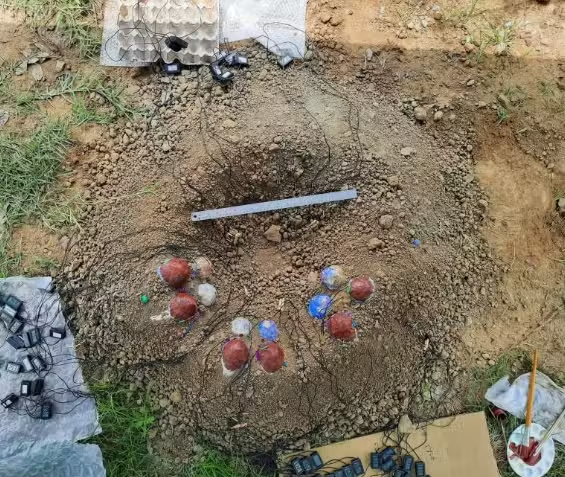
The breakthrough comes from detailed fossil studies, particularly from well-preserved nesting sites. Scientists analyzed egg shells, nest structures, and surrounding sediment layers to reconstruct ancient conditions.
In some fossils, researchers found signs of consistent heat exposure, suggesting controlled incubation rather than random environmental heating. The arrangement of eggs in clusters also indicates deliberate nesting patterns.
Advanced imaging and chemical analysis allowed scientists to determine how heat moved through these nests millions of years ago. This interdisciplinary approach has been key to confirming the dinosaur egg hatching sunlight theory.
Comparison With Modern Animals
Interestingly, this behavior is not entirely extinct. Several modern species use similar incubation methods, bridging the gap between ancient dinosaurs and today’s wildlife.
Examples include:
- Crocodiles, which rely on environmental heat from decomposing vegetation
- Turtles, which depend heavily on sunlight-warmed sand
- Some bird species that use both body heat and environmental warmth
These parallels strengthen the argument that dinosaurs were more closely related to modern birds and reptiles than previously believed.
Why This Discovery Matters
Understanding how dinosaurs reproduced offers deeper insights into their survival and evolution. The ability to combine sunlight and body heat likely gave them a significant advantage in changing climates.
This discovery also contributes to broader scientific fields such as:
- Evolutionary biology
- Climate adaptation studies
- Animal behavior research
It highlights how ancient species adapted to their environments in complex and efficient ways.
Implications for Climate and Survival
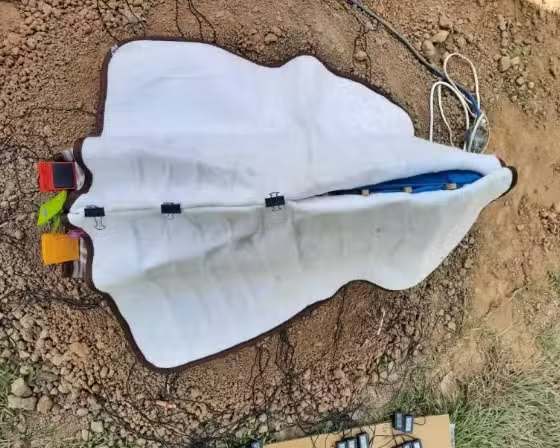
The late Cretaceous period was marked by fluctuating temperatures and environmental challenges. Dinosaurs that could regulate egg incubation had a better chance of ensuring their species survived.
By using sunlight as a natural energy source, dinosaurs reduced dependency on constant body heat. This energy-efficient strategy may have allowed them to thrive in diverse habitats.
Scientists believe this adaptability played a key role in the widespread success of many dinosaur species before their eventual extinction.
Future Research Directions
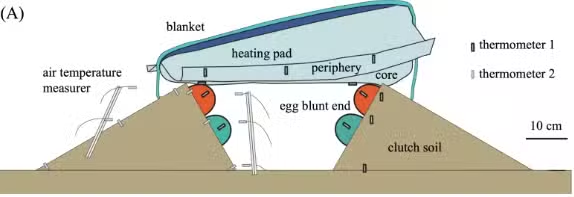
Researchers plan to explore more fossil sites to determine how widespread this behavior was among different dinosaur groups. Not all species may have used the same method.
Future studies may focus on:
- Identifying species-specific incubation strategies
- Reconstructing ancient climates in greater detail
- Comparing nesting behaviors across regions
With advancing technology, scientists expect even more revelations about dinosaur life and behavior.
Outlook!
The discovery that dinosaurs used sunlight and body heat to hatch their eggs offers a remarkable glimpse into life 70 million years ago. It reveals a level of adaptability and parental care that reshapes our understanding of these ancient creatures.
The concept of dinosaur egg hatching sunlight not only bridges the gap between prehistoric and modern species but also highlights nature’s timeless strategies for survival. As research continues, we may uncover even more secrets that bring us closer to understanding the fascinating world of dinosaurs.
For more fascinating details on how dinosaurs incubated their eggs, read more on FactFile