
A rare diplomatic opening between Washington and Tehran closed almost as quickly as it appeared. On Saturday, President Donald Trump confirmed he had rejected a detailed Iranian proposal aimed at reopening the Strait of Hormuz and restarting stalled nuclear talks.
Just a day earlier, Iranian officials had sounded genuinely hopeful that shipping through the critical waterway could resume within a week.
What was Offered by Iranian Government
The proposal came from Iranian Foreign Minister Abbas Araghchi, delivered on the sidelines of this week’s United Nations General Assembly in New York. Speaking to reporters on Friday, he laid out the terms plainly.
“If certain conditions are met, the Strait of Hormuz will be open at the end of seven days, and talks will be restarted,” he said.
According to Iranian officials, that seven day roadmap had already been formally submitted to Washington through Qatar, the country serving as mediator between the two sides. Tehran’s conditions were not minor asks either.
They included an end to what Iran calls US “acts of aggression,” a lifting of the naval blockade around Iranian ports, waivers on sanctions targeting Iranian oil exports, and a ceasefire extending as far as Lebanon.
Araghchi framed the moment as one where responsibility now sat squarely with the American side. “The choice now rests with the United States,” he told reporters, adding a pointed line, “You cannot bomb a country, threaten its annihilation, impose a maritime blockade, and coercive measures, and expect automatic restoration of security and navigation.”
How Trump Responded
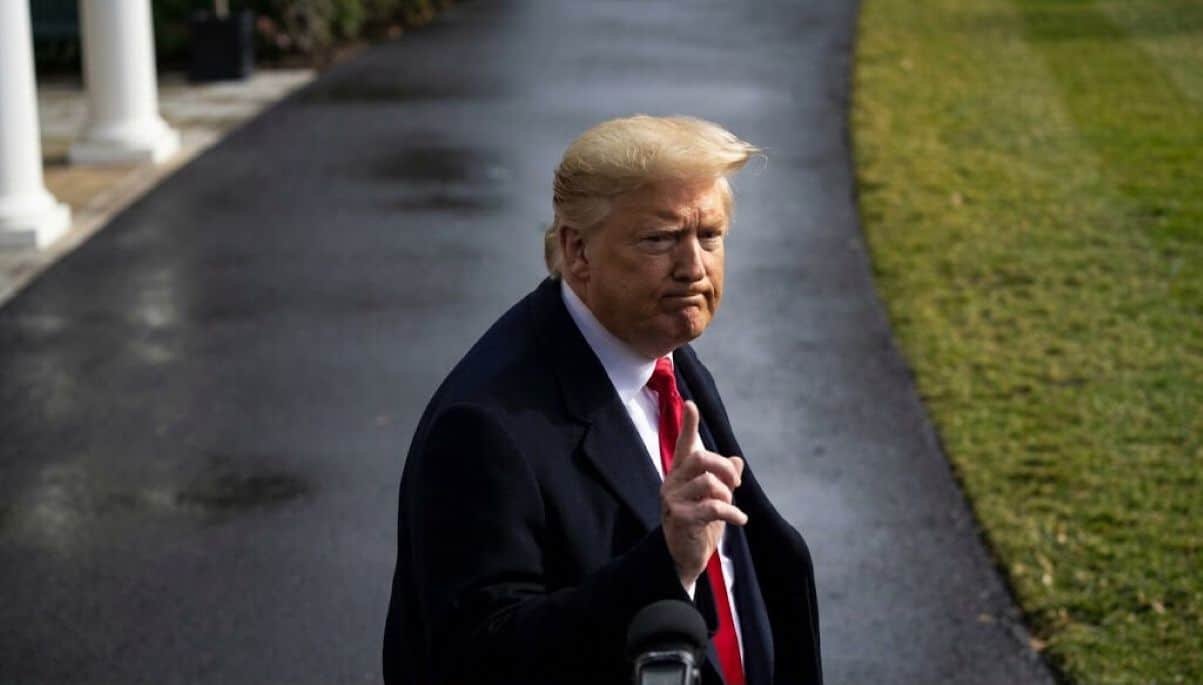
Speaking to reporters as he departed the White House on Saturday, “I rejected their deal,” he said, before offering his own read on Iran’s motivation behind the offer.
“They want to make a deal where they open the strait immediately because they are losing so badly,” Trump continued, framing Iran’s proposal as a sign of weakness rather than genuine compromise. He went further still, painting a picture of total American dominance over the waterway itself.
“We are winning tremendously, we have total control of the Hormuz Strait, massive amounts of oil are coming out of the Hormuz Strait, last night we had 29 ships come out.”
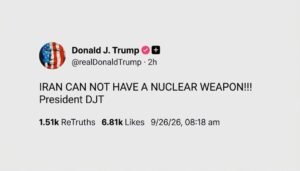
According to reporting from The Wall Street Journal citing unnamed US officials, Trump has privately expressed skepticism that Iran would actually follow through on its side of any agreement.
A Symbolic Gesture Amid the Standoff
Trump added an unusual touch to the standoff on Friday, posting an image online that relabeled the Strait of Hormuz as the “Trump Strait.” The waterway carries enormous global significance, responsible for roughly one-fifth of the world’s total oil supply passing through between Iran and the Arabian Peninsula.
Not every signal coming out of Washington sounded quite as combative, though. Earlier in the week, a White House official had described the indirect discussions taking place through Qatar as “positive and constructive,” while also making clear there was no rush on the American side.
“The United States is in a very strong position with control of the Strait of Hormuz, so we are not in a rush,” the official told CNN, a statement that seemed to contrast somewhat with the sharper tone Trump himself used just days later.
Adding further context to that same week of diplomacy, Araghchi had also met directly with Trump’s envoy Steve Witkoff before publicly announcing the seven-day plan, suggesting genuine groundwork had gone into the proposal before it ultimately fell apart in public view.
Why This Standoff Matters For the World
This latest failed exchange does not exist in isolation from the wider regional picture either. The war between the US, Israel, and Iran began back on February 28, when American and Israeli forces launched airstrikes against Iranian targets, triggering a conflict that has since drawn in other regional players.
Just as this diplomatic exchange was unfolding, a Saudi-led coalition reported intercepting Houthi drones and ballistic missiles aimed at Riyadh and the Khamis Mushait region also took place, this parallel escalation illustrates just how tangled this broader conflict has become.
For now, whether the renewed mediation efforts through Qatar can revive talks before tensions escalate further remains genuinely uncertain. But for the moment, both the Strait of Hormuz and the broader war show no clear signs of resolution.