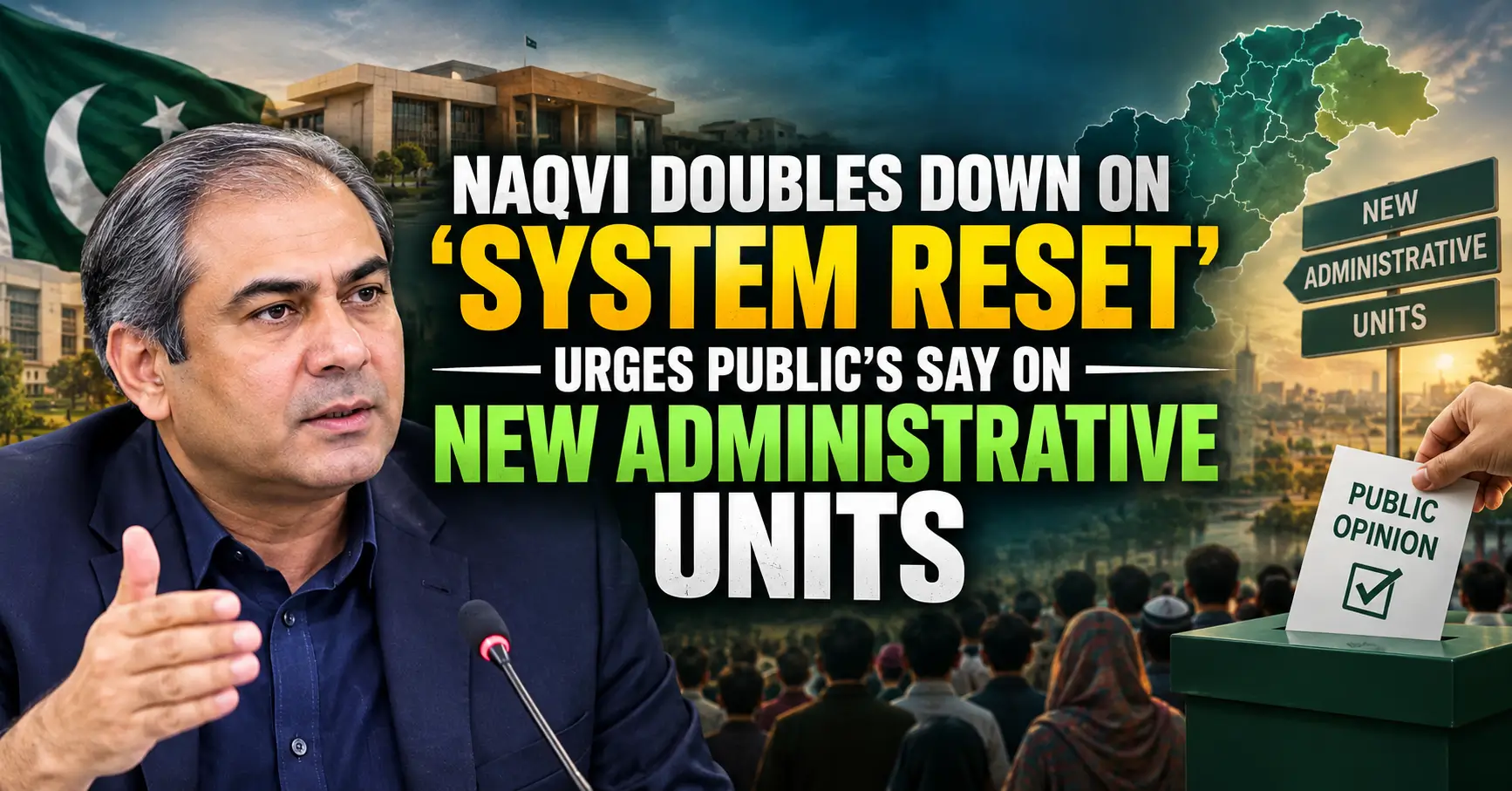

A system reset in Pakistan’s governance structure cannot happen without the public’s direct say, Interior Minister Mohsin Naqvi said this weekend, doubling down on a proposal that has divided political opinion since July.
Speaking at the National Policy Dialogue held at the University of Management and Technology in Lahore, Naqvi repeated his call for restructured administrative units and insisted the final word must rest with citizens, not a single government or party.
Naqvi Renews ‘System Reset’ Push at Lahore Policy Dialogue
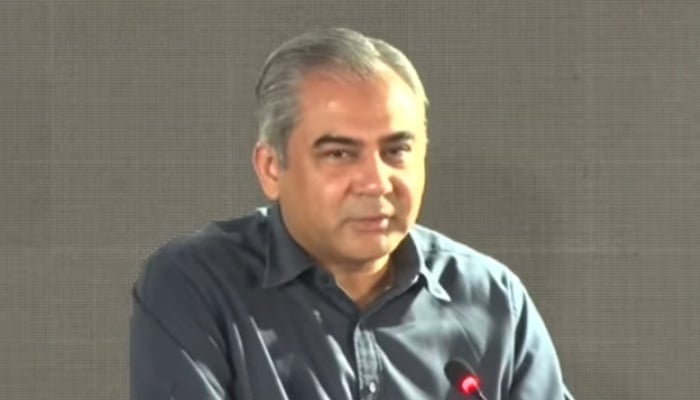
The system reset comment first surfaced in July, when Naqvi described Pakistan’s governance framework as “collapsed.” At Saturday’s dialogue, he softened the wording without softening the message.
“There is a need for a system reset, but it does not mean breaking the system. It means correcting its mistakes,” he told the audience, adding that recent commentary on the issue had turned into “emotional speeches” rather than serious debate.
What Does a ‘System Reset’ Actually Involve?
Naqvi was careful to draw a line between reform and rupture. A system reset, in his framing, targets inefficiency — not the Constitution, not provincial boundaries, and not the federation itself.
READ MORE: Naqvi leads drive to make Islamabad encroachment-free
He pointed to failing outcomes in education, health and justice as proof that the current setup underperforms. He even remarked that “even a fifth-grade student was unable to read ordinary sentences,” using it as shorthand for how far service delivery has slipped.
- Reset does not mean dividing provinces
- Reset does not mean renaming existing provinces
- Reset does mean reviewing tehsils, divisions and administrative layers
- Reset, he said, must happen “within the Constitution and law”
North and South Punjab: The Administrative Units Under Discussion
Among the concrete ideas floated is splitting Punjab’s administration into North and South zones — without altering the province’s legal identity. Naqvi suggested similar internal restructuring could be studied in other provinces too.
The table below sets out how the current setup compares with what’s being discussed, based on Naqvi’s public remarks so far.
| Feature | Current Structure | Proposed Discussion Point |
|---|---|---|
| Provincial boundaries | Fixed under Constitution | Unchanged |
| Provincial names | Punjab, Sindh, KP, Balochistan | Unchanged |
| Administrative layer | Divisions and districts | New tehsils/divisions possible |
| Punjab specifically | Single administrative unit | North/South Punjab under review |
| Federal capital | Islamabad Capital Territory | Province status proposed |
The Islamabad Province Demand Resurfaces

Naqvi again backed turning Islamabad into a full province, arguing the federal capital deserves a structure that matches its national importance. This isn’t a new demand — it has floated around Pakistani politics for years — but Naqvi’s repeated endorsement keeps it in the news cycle.
He tied the Islamabad point to his broader argument: Pakistan is now the world’s fifth-most populous country, he said, and its administrative map hasn’t meaningfully changed in 79 years.
Why Creating New Administrative Units Isn’t Simple
Here’s what most coverage of Naqvi’s remarks has skipped: the legal path for new provinces or major administrative units is neither quick nor guaranteed. Under Pakistan’s Constitution, creating a new province requires a two-thirds majority in the relevant provincial assembly plus parliamentary approval — a high bar in a coalition-era parliament.
Lower-tier changes, like new tehsils or divisions, are administrative and don’t need constitutional amendment, which is likely why Naqvi mentioned the government was “ready to create new tehsils and divisions” even as bigger reforms stay contested.
- Full province status → constitutional amendment + provincial assembly vote
- New division/tehsil → executive/administrative order, no amendment needed
- Renaming or merging existing units → requires provincial legislature approval
- Devolution of powers to local bodies → separate legal process under local government laws
Background: The July Remarks That Started the Debate
Naqvi’s push isn’t a one-off. He first raised the idea of a system reset and new administrative units in July, while addressing an Economic Summit in Islamabad, calling reform a “need of the hour.”
That comment triggered weeks of political back-and-forth, with critics accusing him of testing the waters for provincial restructuring without consensus. Naqvi has consistently denied any partisan motive, saying the idea predates and outlives any single administration.
Political and Public Reaction

Reaction has split along familiar lines. Some officials welcome the debate over administrative units in principle but resist it once it touches devolution of power to the grassroots — a pattern Naqvi himself acknowledged during his speech.
He urged political parties to stop simply “supporting or opposing” the idea and instead sit together to examine proposals seriously, arguing that no restructuring should proceed “without national consensus.”
“We keep making plans, but the most important thing is how much we deliver,” Naqvi said, framing decades of unmet promises as the real justification for change.
What Happens Next
Naqvi has said he’ll press ahead regardless of personal political cost. “Whether I remain in this job or not, I will not back down from this, whatever the end result may be,” he said — a line that signals this isn’t going away quietly.
For now, no formal legislation has been tabled on new provinces or a constitutional-level system reset. Smaller administrative changes, such as new tehsils and divisions, appear more immediately achievable than the larger Islamabad-province or North/South Punjab proposals, which would require cross-party consensus and constitutional amendment.
- No bill yet introduced on new provinces
- Islamabad province idea remains a talking point, not policy
- Tehsil/division-level changes are administratively simpler and more likely near-term
- Naqvi wants city-level public consultation before any major decision