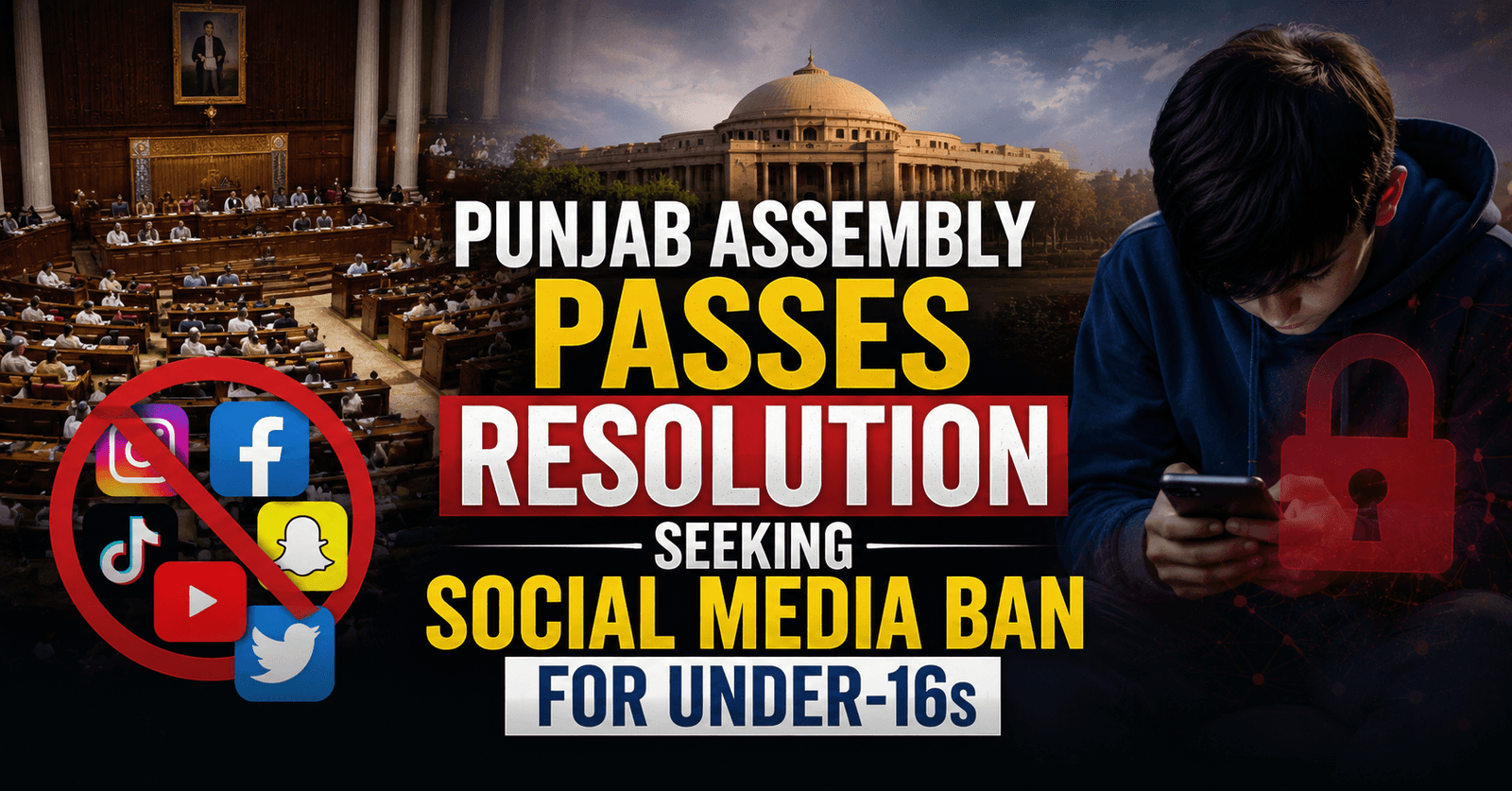

The Punjab social media ban under-16 debate has moved from talk-show panels to the floor of the provincial legislature. On Tuesday, the Punjab Assembly unanimously passed a resolution urging the federal government to impose a legal ban on social media accounts for children under 16 — a move that puts Pakistan in the same conversation as Australia, France and the European Union on youth digital protection.
The resolution isn’t law yet. It’s a formal recommendation to Islamabad. But its unanimous passage signals rare cross-party consensus on an issue that has quietly worried parents, teachers and child-safety advocates for years.
What the Punjab Assembly Resolution Actually Says
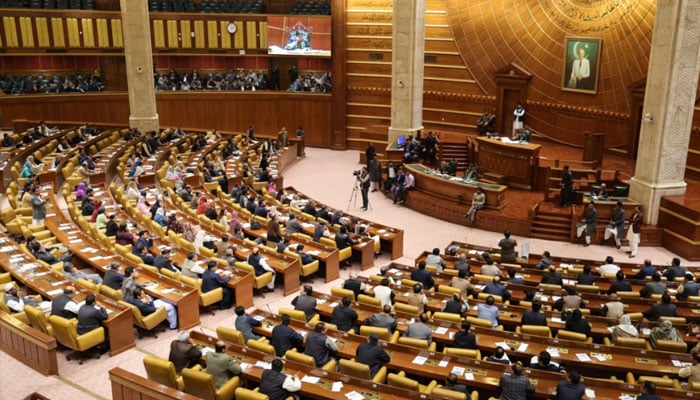
The Punjab social media ban under-16 resolution calls on the federal government to introduce “effective legal restrictions” preventing children under 16 from holding social media accounts. It frames the move not as censorship but as constitutional duty, arguing that protecting a child’s physical, mental, psychological and moral development is the state’s responsibility.
Crucially, the text doesn’t stop at prohibition. It ties the ban to parental or legal-guardian consent and “reliable age verification” — language that mirrors emerging global standards rather than a blunt, blanket lockout of every minor from the internet.
Who Moved It — And the State’s Argument
The resolution was tabled by treasury lawmaker Sarah Ahmed, chairperson of the Child Protection Bureau, who first submitted the text back in July before it cleared the House this week. Her argument centred on a simple premise: unregulated access is doing measurable harm.
- Exposure to cyberbullying and harassment
- Risk of online sexual exploitation
- Access to age-inappropriate content
- Rising mental stress linked to excessive screen time
Ahmed’s framing echoed the reasoning used by legislators abroad — that the harm isn’t hypothetical, it’s already showing up in classrooms and counselling sessions across the province.
The Risks Cited: Cyberbullying, Exploitation, Mental Health
Multiple outlets covering the session reported the same underlying concern: social media’s algorithmic design keeps children engaged longer than is healthy, often surfacing content platforms were never built to filter for a 12-year-old audience.
READ MORE: Islamabad MoU Implementation Is Only Way Forward: Dar Tells Iran
The resolution explicitly links this exposure to “serious mental and physical dangers,” a phrase lifted almost verbatim from similar legislative debates in Western Europe. Whether Pakistan’s data on youth mental health backs that claim as rigorously remains an open question — one lawmakers didn’t address with local statistics during the session.
PTA’s Expected Role in Age Verification

The House also recommended that the Pakistan Telecommunication Authority (PTA) require every social media platform operating in the country to deploy an effective age-verification system. Under the resolution, companies would additionally be expected to:
- Enforce child-protection standards on their platforms
- Restrict harmful content promptly once flagged
- Build a demonstrably safer digital environment for minors
That’s a heavy technical and regulatory lift. PTA currently has no publicly disclosed infrastructure for real-time, cross-platform age verification — a gap this resolution doesn’t resolve, only flags.
How Other Countries Are Regulating Minors Online
Pakistan wouldn’t be entering uncharted territory. The resolution itself cites Australia, France, China and several US states as precedent. Here’s how those laws actually compare:
| Country/Region | Minimum Age | Enforcement Mechanism | Status |
|---|---|---|---|
| Australia | 16 | Platforms must remove/block accounts; fines up to A$49.5 million | In force since Dec 10, 2025 |
| France | 15 (parental consent below) | Parental consent requirement | Partially enforced |
| China | Under 18 (tiered curfews) | State-mandated app-level time limits | In force |
| EU (proposed) | 16 | Minimum age for social media, video platforms, AI companions | Parliament support announced late 2025 |
| United States | Varies by state | State-level age-verification laws | Fragmented, several states active |
Australia’s rollout is the most instructive precedent, since it’s the only one attempting a full account ban rather than time limits or consent gates.
Where Pakistan’s Existing Digital Laws Stand
Pakistan already has a legal scaffold that touches this space — primarily the Prevention of Electronic Crimes Act (PECA), which addresses harassment and harmful online content but was never designed as a child-specific, age-verification framework.
This resolution effectively asks the federal government to build something new rather than amend what exists. That distinction matters: a fresh law means a fresh drafting, consultation and implementation timeline, likely stretching well beyond this legislative session.
Can Pakistan Actually Enforce a Ban? Lessons From Australia

Australia’s experience offers a preview of what enforcement actually looks like on the ground. More than a million youth accounts were affected when its ban took effect, and officials openly admitted compliance would be “difficult.” Some children reportedly bypassed age-estimation tools by drawing on fake facial hair; others used VPNs.
- Age-estimation technology remains imperfect and easy to game
- Parents and older siblings often help minors circumvent restrictions
- Regulators themselves conceded “100% universal support” was never realistic
If Pakistan pursues a similar path, PTA would need verification technology, platform cooperation and enforcement capacity none of which currently exist at scale.
What It Means for Parents, Schools and Platforms
For now, nothing changes overnight. This is a provincial recommendation, not federal legislation — Islamabad still has to draft, debate and pass an actual law before any platform is legally obligated to block underage users in Pakistan.
But the political signal is unmistakable. Provincial consensus this clean often precedes federal movement, and platforms operating in Pakistan should expect closer scrutiny of how they handle underage users regardless of whether formal legislation follows soon.