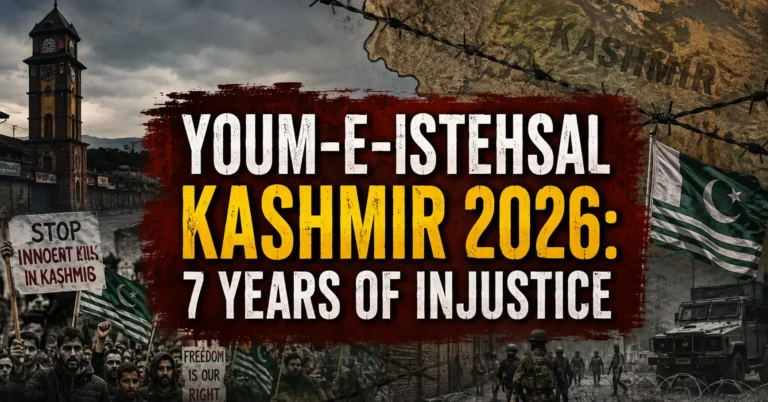

Youm-e-Istehsal Kashmir is being observed across Pakistan today, marking seven years since India stripped Jammu and Kashmir of its special constitutional status.
Rallies, seminars and moments of silence are unfolding from Islamabad to Gilgit-Baltistan, timed to a date Pakistanis have turned into an annual reckoning.
What Youm-e-Istehsal Kashmir Marks — Origin and Meaning
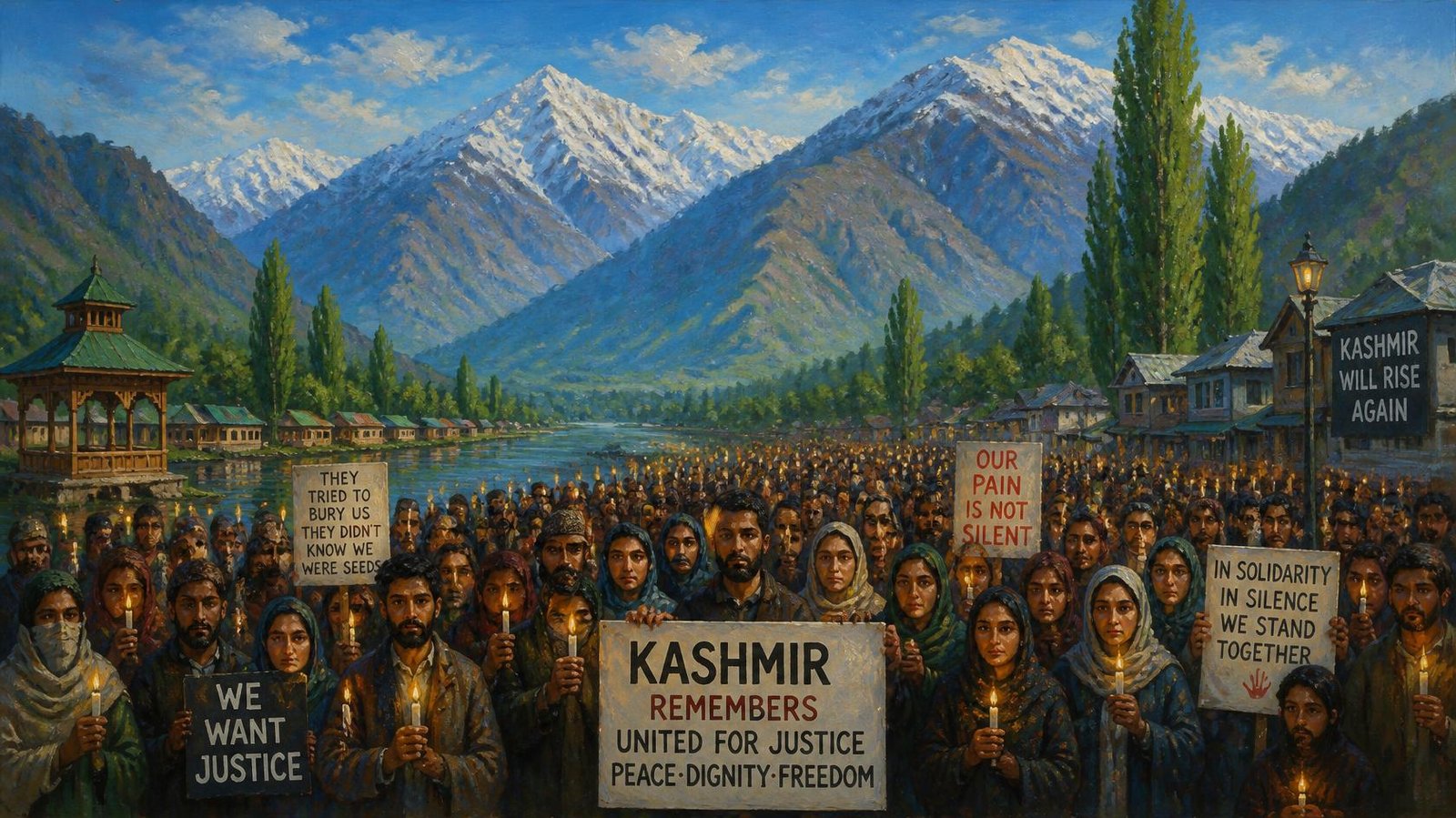
Youm-e-Istehsal Kashmir, meaning “Day of Exploitation,” was first observed by Pakistan’s government in 2020, one year after India’s move. It falls every August 5, chosen deliberately to keep the anniversary of the 2019 decision in public memory rather than let it fade into routine.
The day carries patriotic weight rather than religious or cultural origin. It exists purely as a political statement — a recurring reminder that Islamabad, and much of the Kashmiri population itself, never accepted New Delhi’s unilateral action as final or legitimate.
Pakistan Observes the Day Nationwide in 2026
This year’s observance stretched well beyond the capital. A rally moved along Islamabad’s Constitution Avenue, drawing federal ministers, parliamentarians and citizens from various walks of life into a single procession of solidarity.
READ MORE: SBP Digital Payments Petrol Pumps: New Fee Caps 2026
Sirens sounded and a nationwide moment of silence was held at 9:00 a.m. Universities across Punjab were directed by the provincial Higher Education Commission to hold their own events, while Gilgit-Baltistan’s government convened an All Parties Conference ahead of the day under Chief Minister Amjad Hussain Azar.
Seven Years Since Article 370: What Changed on the Ground
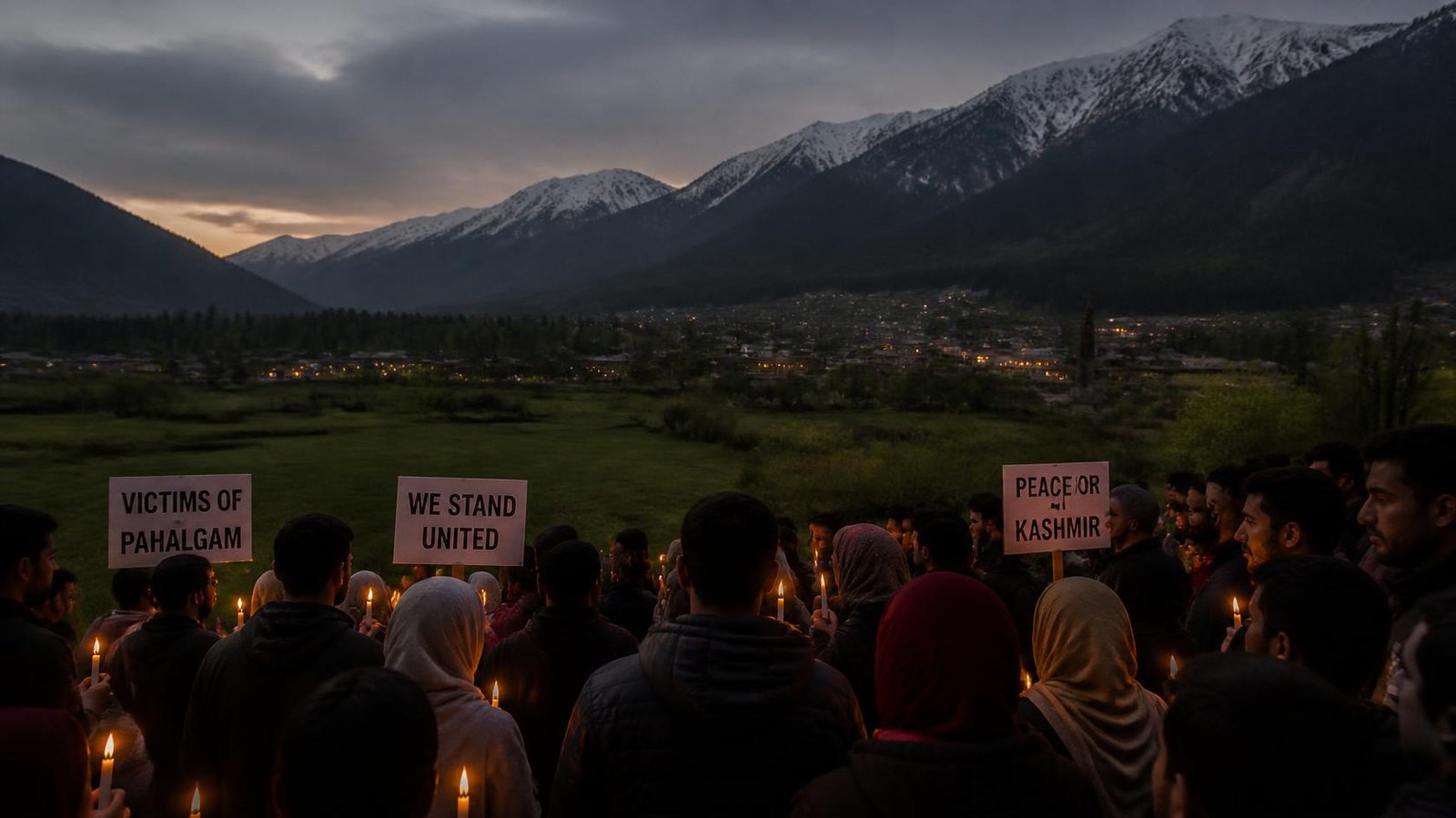
On August 5, 2019, India revoked Articles 370 and 35A, ending the special autonomous status Jammu and Kashmir had held since 1954. What followed was an extended military lockdown, communication blackouts and sweeping restrictions on movement.
Seven years later, Kashmir watchers argue little has genuinely normalized. The region remains among the most militarized in the world, with Indian troop presence estimated above one million personnel, according to figures cited by the All Parties Hurriyat Conference (APHC).
Human Rights Violations in IIOJK — 2026 Data So Far
Kashmir Media Service data shows a steady, grinding toll through 2026. The killings have not stopped, and neither has the pace of arrests — both climbing month over month as the year has progressed.
| Period (2026) | Kashmiris Martyred | Notable Trend |
|---|---|---|
| First 5 months | 16 | Fake encounter killings reported |
| First 6 months | 18 | Two additional deaths in Ramban, Shopian |
| First 7 months | 21 | 4,650 civilians arrested in the period |
- Over 4,650 civilians, including youth, students and women, were detained during the seven-month span.
- Torture-related reporting cites 97,044 Kashmiris injured by bullets, pellets, teargas and physical abuse since 2000.
- Notorious interrogation sites named in reports include Cargo, Hari Nivas, Papa-1, Papa-2 and Humhama.
Detentions, Demolitions and Property Seizures
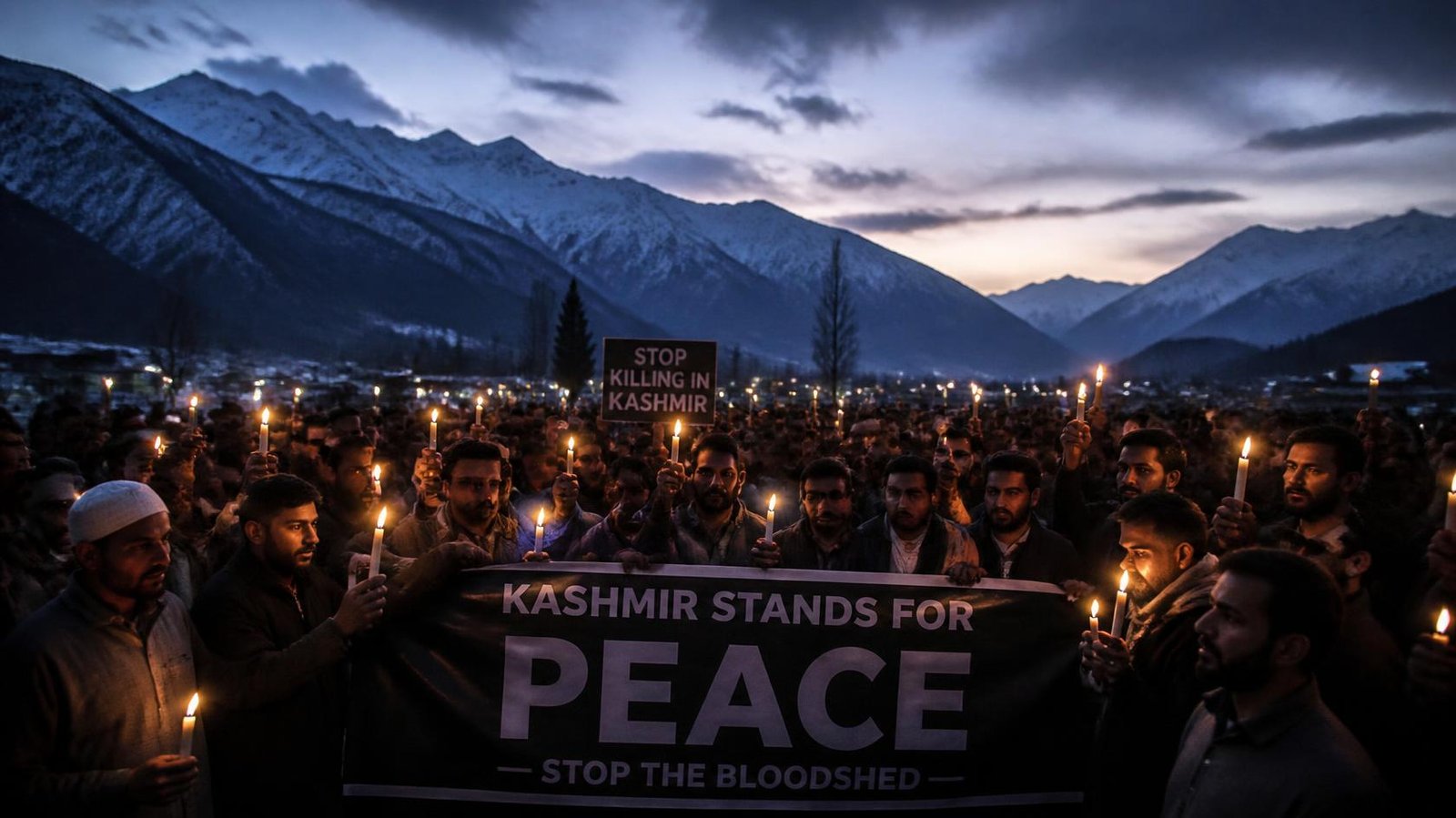
Property loss has become as central to the Kashmir narrative as the arrests themselves. Indian authorities reportedly seized 253 properties — homes, land, shops, institutions and vehicles during the first seven months of 2026 alone.
At least 52 residential properties were demolished in the same window. Analysts describe this as a deliberate strategy: weakening Kashmiris economically to suppress dissent, rather than confronting the political movement directly.
Statements From Pakistan’s Leadership and the APHC
President Asif Ali Zardari and Prime Minister Muhammad Shehbaz Sharif issued separate messages reaffirming what officials called Pakistan’s unwavering solidarity with Kashmiris. Both leaders framed the 2019 move as a violation of international law and relevant UN resolutions.
“This day is being observed to remind the world of the grave consequences of India’s illegal and unilateral actions,” the leadership’s joint messaging noted, adding that seven years have neither altered Jammu and Kashmir’s disputed legal status nor weakened residents’ aspirations for self-determination.
Separately, the APHC appealed to Kashmiris to mark the day as a “Black Day,” urging global attention toward what it called sustained repression under Lieutenant Governor Manoj Sinha’s administration.
International Silence and Pakistan’s Diplomatic Push
Pakistan’s Foreign Office has repeatedly raised concerns at international forums, though a binding global response remains absent. Spokesperson Tahir Hussain Andrabi recently criticized what he termed collective punishment — mass arrests and demolitions following isolated security incidents.
Islamabad insists it will keep the issue alive diplomatically, briefing UN human rights machinery and civil society groups. Critics counter that statements alone have produced little tangible shift in New Delhi’s approach over seven years.
What Comes Next for the Kashmir Dispute
Youm-e-Istehsal Kashmir functions less as a historical commemoration and more as an annual pressure valve — a way to keep an unresolved dispute from disappearing off the international agenda entirely.
That pressure translates into any policy movement remains uncertain. For now, the observance stays largely symbolic rallies, statements and data reports, repeated each August, while the underlying dispute sits exactly where it did seven years ago.