
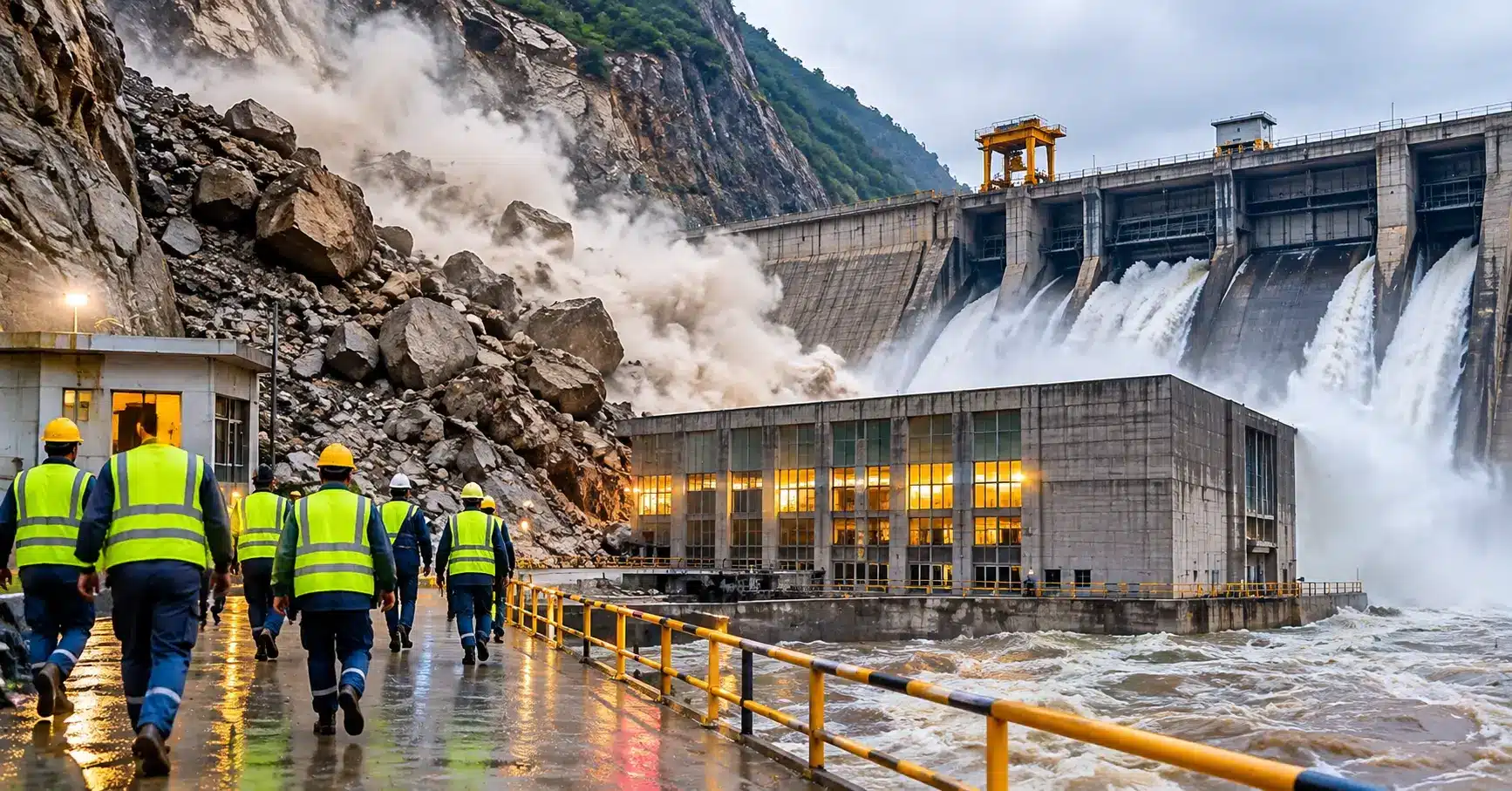

The Tarbela powerhouse incident on November 9, 2026, triggered an emergency at the Fifth Extension Hydropower Project in Haripur after a weak section of rock collapsed during underground excavation work.
The collapse allowed water from the Intake Pit to enter a connecting tunnel and the under-construction powerhouse. The Water and Power Development Authority (WAPDA) confirmed that workers were evacuated safely and that no fatalities or injuries occurred.
How the Rockfall Allowed Water to Enter the Tunnel
According to WAPDA’s statement, the incident occurred during excavation of the second bench of the Connecting Tunnel. A weak rock mass gave way, creating a route for water to flow from the Intake Pit into the construction area.
The sudden inflow affected the tunnel and powerhouse work areas, prompting an immediate evacuation. Construction activities were disrupted while officials assessed the situation and began measures to remove the accumulated water.
Key incident details:
Date: November 9, 2026
Location: Tarbela Fifth Extension Hydropower Project, Haripur
Reported cause: Collapse of a weak rock mass
Affected areas: Connecting Tunnel and under-construction powerhouse
Official casualty position: No injuries or fatalities reported
Immediate response: Worker evacuation and water removal
Were Workers Injured in the Tarbela Incident?
Worker safety became a central concern following reports that water had entered the underground construction area. WAPDA confirmed that the workforce was evacuated safely and stated that nobody was injured or killed.
However, some media reports described a local worker being submerged and subsequently rescued, while another report mentioned an injury. These accounts differ from WAPDA’s official position, and independent confirmation of an injury remains unavailable.
READ MORE: News anchor Rabia Ahsan shot dead at home in Rawalpindi
The available information does not establish the full circumstances of the reported rescue. Until authorities provide further clarification, casualty figures should remain attributed to their respective sources rather than presented as independently confirmed findings.
What WAPDA Said About the Tunnel Collapse Reports
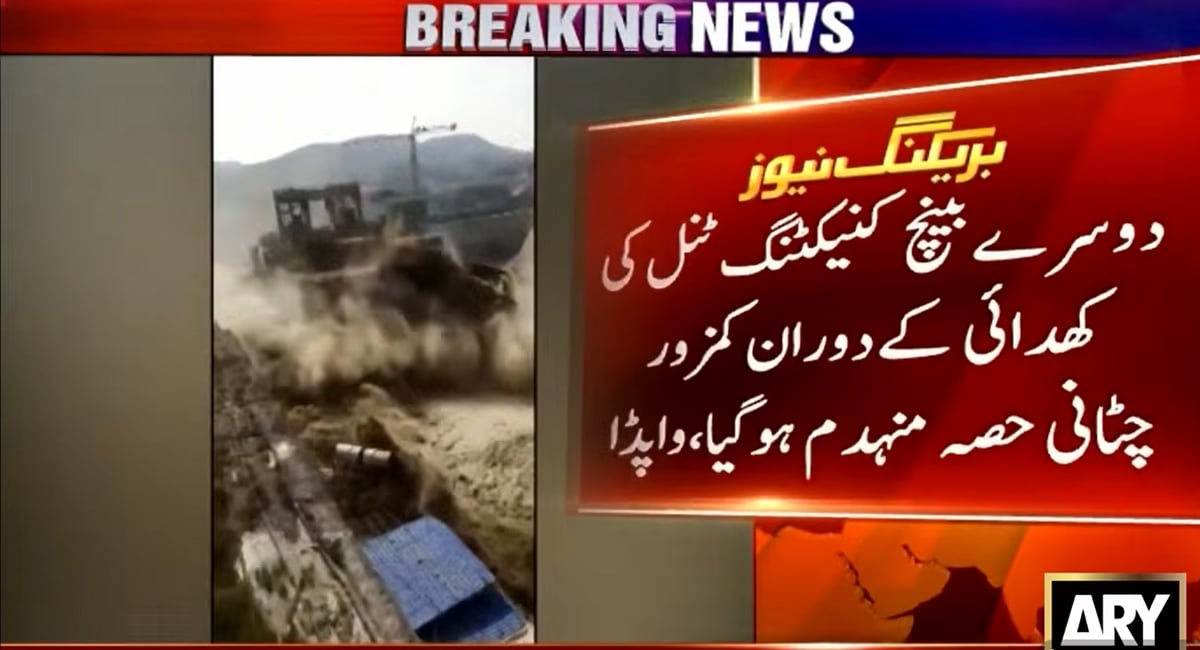
Following the incident, reports circulated suggesting that Tarbela’s main Tunnel No. 5 had collapsed. WAPDA rejected those claims and clarified that the water inflow occurred in the construction area during excavation activities.
The authority stated that the main tunnel, under-construction powerhouse, tailrace culvert and switchyard had not sustained damage. This distinction matters because the reported rockfall should not be confused with a structural failure of the operational dam.
| Project component | Officially reported position |
|---|---|
Main T-5 tunnel | No damage reported |
| Under-construction powerhouse | No damage reported |
Tailrace culvert | No damage reported |
| Switchyard | No damage reported |
Intake Pit | Water drained |
| Downstream work areas | No further water inflow reported |
What Happens During the Dewatering Process?
After the initial water inflow, WAPDA confirmed that the water accumulated in the Intake Pit had been completely drained. The authority also announced that dewatering operations had started inside the under-construction powerhouse.
Dewatering involves removing accumulated water so engineers can inspect affected areas and assess their condition. However, the completion of water removal does not automatically establish that construction can resume or that all equipment and structures are unaffected.
The next technical assessment will need to establish whether excavation areas, temporary construction arrangements and associated equipment require repairs or additional safety measures before workers return to the affected sections.
Tarbela Fifth Extension Project: Capacity and Objectives

The Tarbela Fifth Extension Hydropower Project is a major electricity-generation initiative designed to increase Pakistan’s hydropower capacity. It involves converting the existing fifth irrigation tunnel into a power tunnel and developing associated generating facilities.
According to government project information, the scheme has a planned capacity of 1,530 megawatts, divided into three generating units of 510MW each. Its completion is expected to increase Tarbela’s installed generation capacity from 4,888MW to 6,418MW.
| Project detail | Information |
|---|---|
Planned additional capacity | 1,530 MW |
| Number of generating units | 3 |
Capacity per unit | 510 MW |
| Existing Tarbela capacity | 4,888 MW |
Planned total capacity | 6,418 MW |
| Reported annual generation target | 1,347 million units |
Previous Construction Problems at Tarbela T-5
The latest incident follows an earlier major setback involving the project’s protective cofferdam in August 2025. That structure collapsed and allowed water to enter construction areas, disrupting work and creating additional challenges for the extension project.
A subsequent government inquiry examined the earlier failure and identified contractual violations, unauthorised design changes and weaknesses in supervision. The three-member committee held WAPDA, the contractor and the consultant responsible for their respective roles in the earlier incident.
The inquiry is relevant background, but it does not establish that the November 2026 rockfall resulted from the same problems. The latest incident requires its own technical investigation and documented findings.
Could the Incident Delay Pakistan’s Hydropower Plans?

The Tarbela extension is intended to provide an additional 1,530MW of generating capacity to Pakistan’s electricity system. Any prolonged interruption to construction could therefore affect the project’s implementation schedule and the expected availability of additional hydropower.
In January 2026, WAPDA reported that the first generating unit was scheduled to begin electricity production in April 2027. The November incident raises questions about whether that target remains achievable, but no revised commissioning date has been confirmed.
The potential consequences will depend on the condition of the affected construction areas, the time required for technical inspections and any corrective work. It would be premature to quantify an electricity-generation loss from this incident.
What Investigators Need to Establish
WAPDA has confirmed that senior officials, the project engineer and the contractor are assessing the situation. Their findings will be important in determining why the weak rock mass collapsed and how water reached the construction areas.
A comprehensive technical assessment should establish the extent of the rock failure, the condition of surrounding structures, the effectiveness of existing safety arrangements and whether further protective measures are necessary before excavation resumes.
The investigation should also clarify the differing accounts concerning the protective embankment, the reported worker rescue and the precise sequence of events. Publicly available information has not yet established all these details.
What Happens Next at the Tarbela Project?
For now, WAPDA’s reported response includes draining the Intake Pit, starting powerhouse dewatering and assessing the affected construction areas. The authority has not provided a confirmed timetable for the resumption of all suspended activities.
Further updates are expected to depend on the findings of the engineering assessment and decisions by the project administration. Until those findings become available, the actual effect on construction progress and the commissioning schedule remains uncertain.
Do you think repeated construction setbacks at major hydropower projects could affect Pakistan’s long-term electricity security?