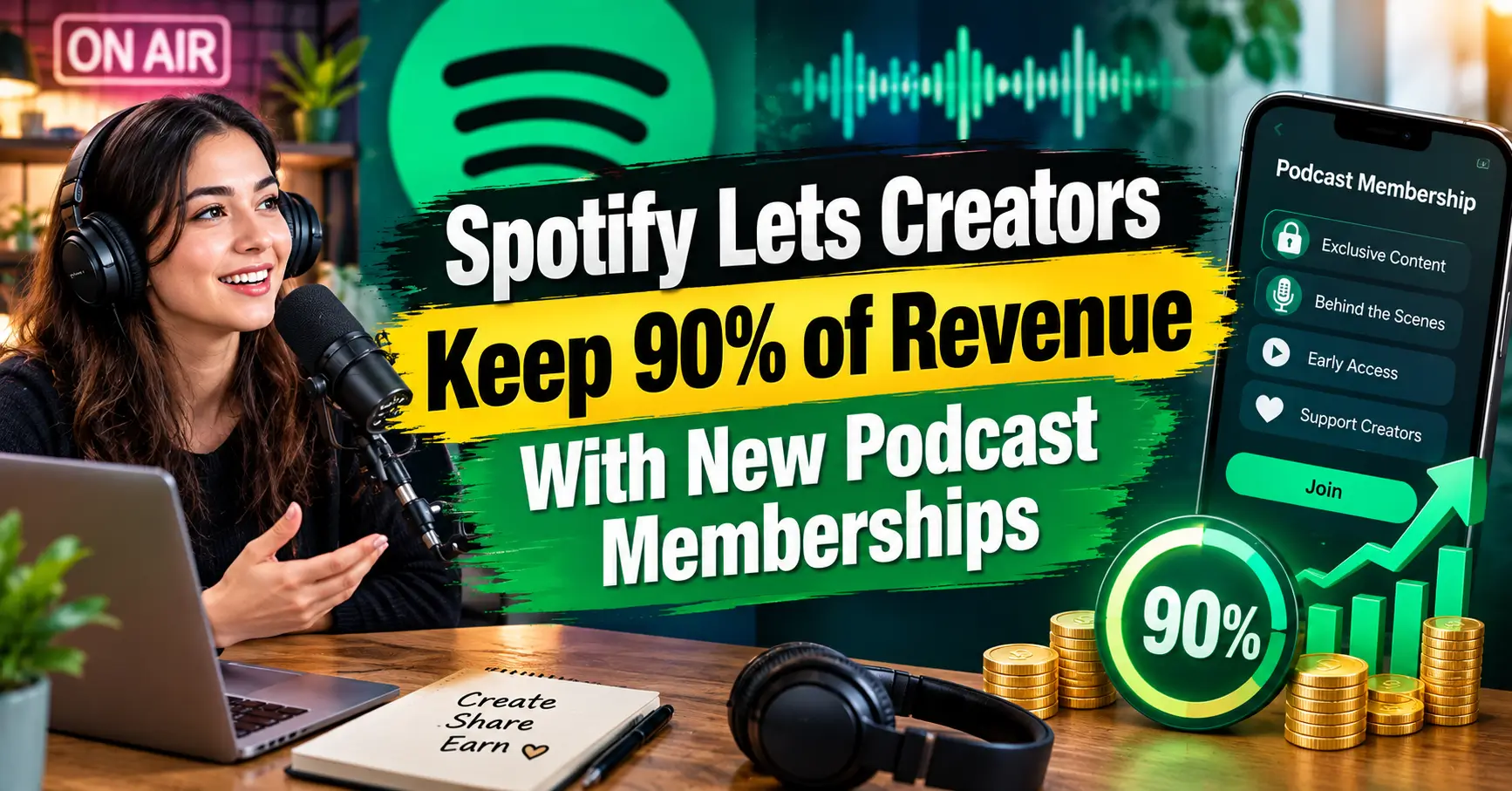

Spotify podcast memberships officially launched on October 20, 2026, giving eligible creators a new way to earn recurring income from loyal fans. The feature allows podcasters to sell exclusive content and benefits while retaining 90% of membership earnings.
The launch expands Spotify’s creator monetisation options beyond advertising, sponsorships and existing revenue programmes. However, the headline revenue share comes with eligibility restrictions, applicable taxes and platform terms that creators should understand before building a paid membership business.
Spotify Podcast Memberships Launch in 34 Markets

Spotify introduced Memberships across 34 markets, allowing eligible podcast creators to offer paid access to additional content. The feature was announced on October 20, following an earlier preview at the company’s May 2026 Investor Day.
The service allows fans to discover membership options directly through a podcast’s Spotify show page. Both Free and Premium listeners in supported markets can join eligible memberships and access exclusive material through the platform’s checkout experience.
How Creators Can Earn Through Paid Memberships
Spotify podcast memberships allow creators to decide which benefits paying fans receive. Available options include bonus episodes, exclusive audio and video, early access, fewer advertisements and access to a show’s archive, giving podcasters flexibility when designing paid offerings.
Creators can package benefits into multiple membership tiers and pricing options. This enables established shows and smaller podcasts to experiment with different offers rather than relying exclusively on advertising revenue, although actual earnings will depend on audience demand and subscription conversions.
Key features include:
- Exclusive audio and video episodes.
- Bonus content and early access.
- Reduced Spotify-inserted advertising for eligible memberships.
- Promotional tools, free trials and conversion analytics.
- Exportable member information from fans who choose to share it.
Who Qualifies for Spotify Podcast Memberships?

The new programme has measurable eligibility requirements. According to Spotify’s published guidance, eligible shows must be hosted on Spotify for Creators or Megaphone, have at least three published episodes, and meet minimum audience and listening thresholds.
For shows created under the updated rules, the requirements include at least 100 listeners or viewers and 100 consumption hours on Spotify during the previous 30 days. Meeting these thresholds does not remove the requirement to operate in a supported market.
| Eligibility requirement | Minimum |
|---|---|
Published episodes | 3 |
Listeners or viewers | 100 in the previous 30 days |
| Consumption hours | 100 in the previous 30 days |
Hosting platform | Spotify for Creators or Megaphone |
| Creator location | Supported market |
Why Keeping 90% Does Not Mean a Guaranteed Payout
Spotify says creators retain 90% of membership revenue, but its fee documentation specifies a 10% platform fee deducted from net earnings. Applicable taxes can also affect payouts, so the advertised share should not be interpreted as an unconditional 90% of every fan’s checkout payment.
The company’s published examples illustrate how taxes and currency conversion affect the final amount. Membership earnings are paid through Stripe on a rolling 30-day schedule, subject to account verification, required information and a minimum payout threshold of US$10 or its local-currency equivalent.
Creators should distinguish between the amount a subscriber pays, the revenue used to calculate the platform fee and the final payout. Currency fluctuations and regional tax rules can produce different results, meaning two creators may receive different amounts from similarly priced memberships.
Which Countries Can Access the New Feature?

The initial rollout includes the United States, Canada, the United Kingdom, Australia, New Zealand, Singapore, Hong Kong and multiple European markets. The official list contains 34 markets, but availability should always be checked against Spotify’s current eligibility guidance.
Pakistan is not included in the published launch list. Pakistani podcasters should therefore not assume they can directly activate the new Memberships feature simply because they meet the audience thresholds. Availability may change, but an expansion to Pakistan has not been confirmed in the cited launch announcement.
How Memberships Could Change Podcast Monetisation
The feature gives podcasters another way to generate recurring income without depending entirely on advertising sales or sponsorship agreements. Creators with loyal audiences may be able to offer additional value through exclusive episodes, behind-the-scenes material and early access to new releases.
However, a large audience does not automatically translate into paying members. Creators must persuade listeners that premium benefits justify an ongoing fee, while maintaining enough free content to attract new audiences and sustain the show’s visibility.
What the Launch Means for Independent Podcasters
The relatively modest audience thresholds could make paid memberships accessible to smaller eligible shows that have not yet qualified for more demanding monetisation programmes. This creates an additional route to test whether a dedicated community is willing to support a podcast financially.
Still, creators need to consider production costs, membership pricing, subscriber retention and the time required to produce exclusive material. Offering fewer advertisements could also affect advertising inventory, making it important to compare potential membership income with revenue from existing arrangements.
What Creators Should Check Before Joining
Before activating a membership, podcasters should review the applicable creator terms, confirm market eligibility and calculate realistic earnings after taxes and currency conversion. They should also decide what exclusive benefits they can deliver consistently without reducing the quality of their free episodes.
Spotify’s launch establishes the availability of a new monetisation tool, not proof that creators will earn more. Its long-term value will depend on audience conversion, retention and the practical economics of producing paid content alongside a regular podcast.