
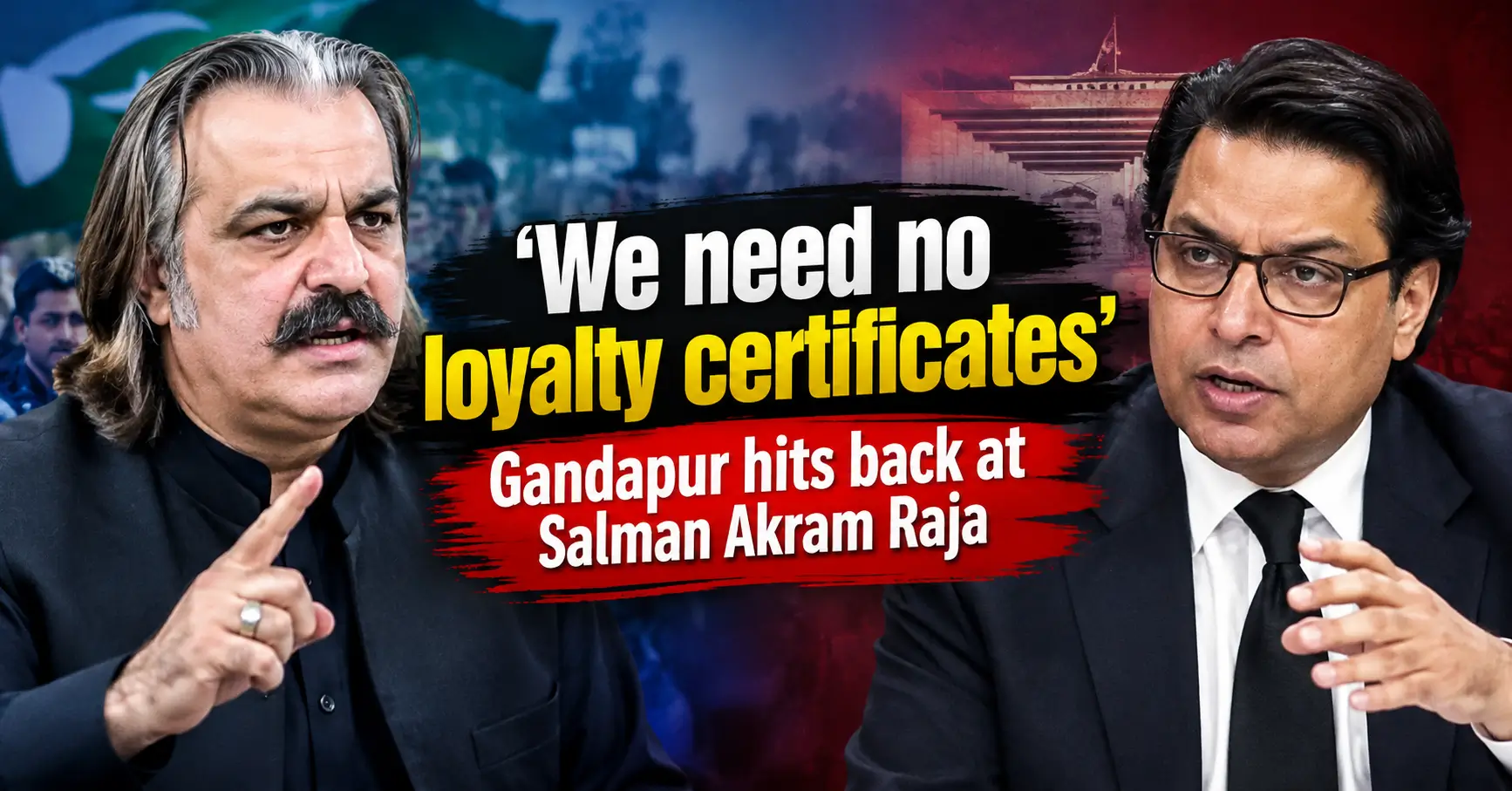

Salman Akram Raja is facing sharp criticism from former Khyber Pakhtunkhwa chief minister Ali Amin Gandapur after a public disagreement exposed tensions within Pakistan Tehreek-e-Insaf (PTI) over party loyalty, provincial leadership and allegations of internal manoeuvring.
In statements reported on October 21, 2026, Gandapur demanded evidence for the allegations and questioned the authority behind a reported party investigation. The dispute has raised fresh questions about internal consultation, leadership appointments and how disagreements are managed.
What Triggered the Salman Akram Raja Controversy?

The controversy followed remarks by Salman Akram Raja about alleged attempts by a group within PTI to undermine internal consensus. Raja urged party workers not to accept conspiracy claims before an investigation was completed, while defending the existing provincial leadership arrangements.
Gandapur responded by challenging the people allegedly involved to be identified and the accusations substantiated. He described the remarks as damaging to party unity, arguing that elected representatives should not face questions about their commitment without clear evidence or an authorised process.
Why Gandapur Rejected the Loyalty Allegations
Gandapur’s central argument was that party loyalty should be assessed through years of political struggle, sacrifices and practical contributions rather than declarations by individual office-holders. He stressed that PTI belonged to its founder, Imran Khan, and rejected what he considered unilateral judgements.
“We do not need loyalty certificates from anyone,” Gandapur said, according to the published report. His response framed the disagreement as a question of authority and accountability, not simply a personal exchange between two senior figures within the same political party.
PTI Investigation Claims and the Demand for Evidence

Gandapur questioned whether an investigation into the alleged internal dispute had been formally authorised. He asked who had ordered it, which party forum was overseeing the process and why elected representatives were reportedly unaware of its existence.
The distinction matters because an allegation and a verified finding are not equivalent. No independently verified investigation order or completed findings were established in the material reviewed. Until documentation becomes available, claims about the inquiry should remain attributed rather than presented as confirmed wrongdoing.
Dispute Over Khyber Pakhtunkhwa Party Leadership
The disagreement also concerns leadership arrangements in Khyber Pakhtunkhwa, where PTI’s provincial organisation and its elected lawmakers have a direct stake in political decisions. Gandapur questioned the reported appointment of Ali Asghar Khan as acting provincial president during Junaid Akbar’s absence.
READ MORE: CM Murad Proposes Huawei Flood Warning System for Karachi
Raja’s reported position was that Akbar had been appointed provincial president by Imran Khan and that Ali Asghar was performing acting duties in his absence. Gandapur, however, asked where the formal notification was and who had exercised the authority to make the appointment.
Junaid Akbar’s Absence and Ali Asghar Khan’s Role
Gandapur referred to Junaid Akbar respectfully and expressed hope for his recovery, while questioning the procedural basis for the acting appointment. The available reports do not establish that the appointment was invalid; they establish that its documentation and authority were disputed publicly.
The outstanding questions are straightforward: whether a formal notification exists, what party rules govern temporary appointments, and whether the arrangement received approval from the authorised leadership. Publishing the relevant notification would help distinguish a procedural disagreement from an actual breach of party rules.
What the Reported Audio Adds to the Dispute

Separate reporting on October 21 described an alleged audio recording in which Gandapur criticised Raja’s planning and demanded that he explain his remarks, withdraw a social media post and apologise. The recording adds another dimension to the publicly reported disagreement.
However, the material reviewed does not independently authenticate the recording or establish its complete context. Its contents should therefore be treated as allegations attributed to a reported audio leak, not as conclusive proof of private conversations, motives or responsibility for political developments.
PTI’s Internal Divisions and Political Implications
The dispute places pressure on PTI to demonstrate that internal disagreements can be addressed through transparent procedures. Public accusations involving provincial lawmakers, party appointments and alleged conspiracies risk deepening mistrust if the leadership cannot clarify its decisions and provide supporting evidence.
Gandapur also argued that Khyber Pakhtunkhwa’s elected representatives and workers had remained committed to Imran Khan despite arrests, political pressure and difficult circumstances. His remarks underscored a wider disagreement over who should shape party decisions and how contributions by provincial lawmakers should be recognised.
The dispute centres on three connected issues:
- Evidence: Whether allegations against unnamed party members can be substantiated.
- Authority: Which leadership forum can order investigations and approve provincial appointments.
- Consultation: How elected representatives should participate in decisions affecting the provincial organisation.
What Remains Unverified in the PTI Dispute
The published accounts establish that senior figures exchanged criticism, but they do not settle the substantive accusations. No independently verified evidence reviewed here establishes that lawmakers conspired to replace the chief minister, deliberately severed contact with his team or sought to facilitate emergency rule.
Likewise, the precise status of the reported investigation remains unclear. Confirmation would require an official party statement, the investigation’s terms of reference, a notification concerning provincial appointments and a response addressing Gandapur’s specific questions rather than general assurances about unity.
What Happens Next for PTI Leadership?
The next significant development will be whether PTI’s leadership provides a documented explanation of the disputed appointments and investigation. A clear account of the relevant procedures could help resolve competing claims and establish whether the disagreement reflects administrative confusion or deeper organisational tensions.
For now, Salman Akram Raja and Gandapur remain at the centre of a public dispute over party authority, political loyalty and provincial representation. The available evidence supports reporting their competing positions, but any conclusion about misconduct must await independently verifiable documentation.