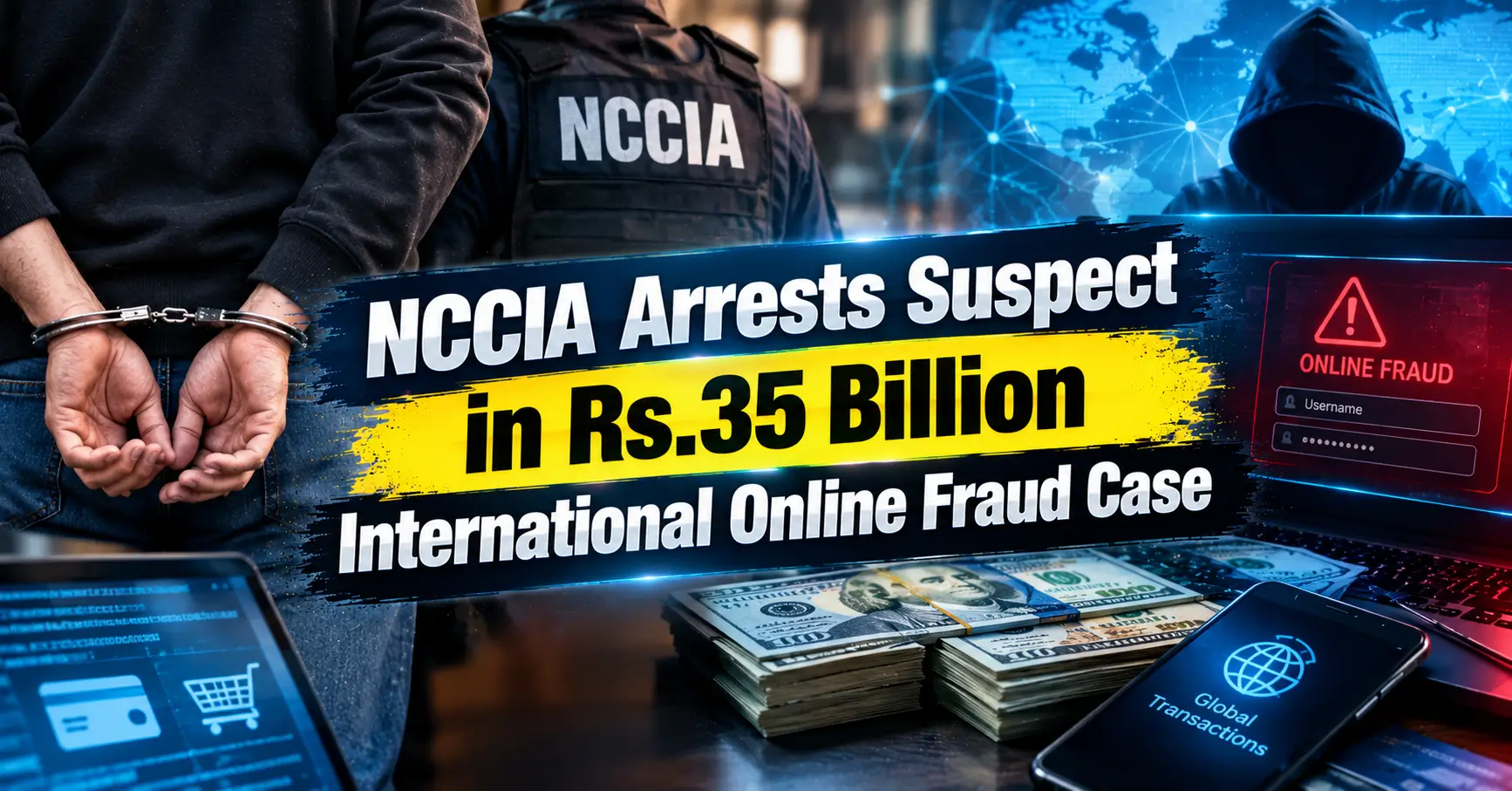

The NCCIA Rs 35 billion fraud case has drawn attention after Pakistani cybercrime investigators arrested a suspect accused of running an international counterfeit postage stamp operation. Authorities say the alleged scheme involved millions of fake US stamps sold through a website.
The arrest, announced on October 20, 2026, followed searches across Punjab, Islamabad and Sindh. Investigators are examining the alleged sales operation, associated financial transactions and potential involvement of other individuals. The accusations remain subject to legal proceedings.
What the NCCIA Says About the Rs35 Billion Fraud
The National Cyber Crime Investigation Agency arrested Faheem Akram, identified in reporting as the alleged mastermind. Additional Director Lahore Zone Atif Amir disclosed the arrest at a press conference. Investigators estimate the alleged fraud at approximately Rs35 billion.
The case concerns counterfeit US postage stamps allegedly marketed to American customers. Authorities say more than five million stamps were sold through the operation. However, the reported total should be treated as an investigative estimate, not a court-established finding of guilt or verified net loss.
How the Alleged Counterfeit Stamp Scheme Worked
Investigators reportedly traced the alleged operation to LabelsBank.com, a website said to have operated from August 2023 until September 2026. According to the available reporting, the website offered counterfeit US postage stamps for approximately two dollars each.
The central allegation is that customers purchased stamps represented as genuine but received counterfeit products. The reporting does not independently establish how many buyers complained, how many transactions were completed successfully, or whether all reported sales generated proceeds retained by the suspect. Those questions require further verification.
Timeline of the Investigation

The reported website operating period began in August 2023 and ended in September 2026. Investigators subsequently pursued the suspect through a tracking operation reportedly lasting ten days before announcing the arrest on October 20, 2026.
Authorities said eight special teams were formed and raids were conducted at 35 locations across Punjab, Islamabad and Sindh. Investigators also questioned 47 people. These figures describe the reported scope of the operation, not the number of people charged or convicted.
| Investigative detail | Reported figure |
|---|---|
Alleged fraud value | Rs35 billion |
| Counterfeit stamps reportedly sold | More than 5 million |
Reported price per stamp | US$2 |
| Locations raided | 35 |
People questioned | 47 |
| Bank accounts allegedly used | 16 |
Special investigation teams | 8 |
| Website operating period | August 2023–September 2026 |
Source: published reporting on the NCCIA investigation. These are reported allegations and investigative figures, not independently adjudicated findings.
What Investigators Found in the Financial Trail
Investigators reportedly identified 16 bank accounts allegedly used in connection with the operation. The accounts were said to include those belonging to the suspect and several relatives. Their precise roles, transaction histories and knowledge of the alleged activity have not been independently established.
READ MORE: CAP Urges Islamabad Administration to Clarify Confusion Over PET Bottle Restrictions
The reported investigation also involved 122 call data records, 50 IMEI tracking reports and audio and video recordings from 120 cameras. These materials may help establish connections and movements, but their evidentiary significance depends on forensic analysis and corroboration.
Why the Rs35 Billion Estimate Needs Context

The NCCIA Rs 35 billion fraud case raises an important accounting question: how was the headline amount calculated? Reports connect the estimate to sales of more than five million stamps priced at about US$2 each, but the full calculation is not publicly documented in the material reviewed.
Five million units multiplied by US$2 would equal US$10 million in gross sales if every unit was sold at that price. That arithmetic alone does not establish the reported dollar valuation, the exchange-rate assumptions, actual receipts, buyer losses or the amount ultimately recovered.
The following details remain important to establishing the financial scale:
- Verified transaction totals and payment records.
- The number of confirmed purchases and affected customers.
- Evidence that the stamps were counterfeit.
- The value of any assets frozen, seized or recovered.
- The methodology used to calculate the Rs35 billion estimate.
International Implications of the Alleged Fraud
The alleged scheme has an international dimension because the products were purportedly marketed as US postage stamps to American customers. If substantiated, the case could involve cross-border consumer harm, payment processing and cooperation between Pakistani investigators and relevant US authorities.
Reporting also states that US authorities had announced a $100,000 reward for information leading to the suspect’s arrest. The precise issuing authority, reward conditions and relationship to the Pakistani investigation should be confirmed through an official statement before being presented as independently verified.
What the Case Means for Online Buyers
The allegations highlight the risks of buying official-looking products through unfamiliar websites. Buyers should verify the seller, check whether the issuing authority recognises the product and avoid relying solely on professional website design, online advertisements or unusually attractive prices when judging authenticity.
For financial safety, the NCCIA’s public guidance advises people to verify recipients before transferring money, protect passwords and one-time passcodes, avoid suspicious links and monitor accounts for unauthorised transactions. These precautions apply broadly to online fraud, although they do not establish the facts of this particular case.
What Happens Next in the NCCIA Investigation
Investigators will need to establish the authenticity of the stamps, trace the proceeds, examine the digital evidence and determine whether other people knowingly participated. The reported formation of a joint investigation team indicates that the financial trail and possible additional involvement remain areas of inquiry.
The arrest itself does not settle criminal liability. Any prosecution must rely on admissible evidence, and allegations against the suspect or account holders should not be treated as proven until established through the applicable legal process. No final court verdict or confirmed recovery total was established in the sources reviewed.