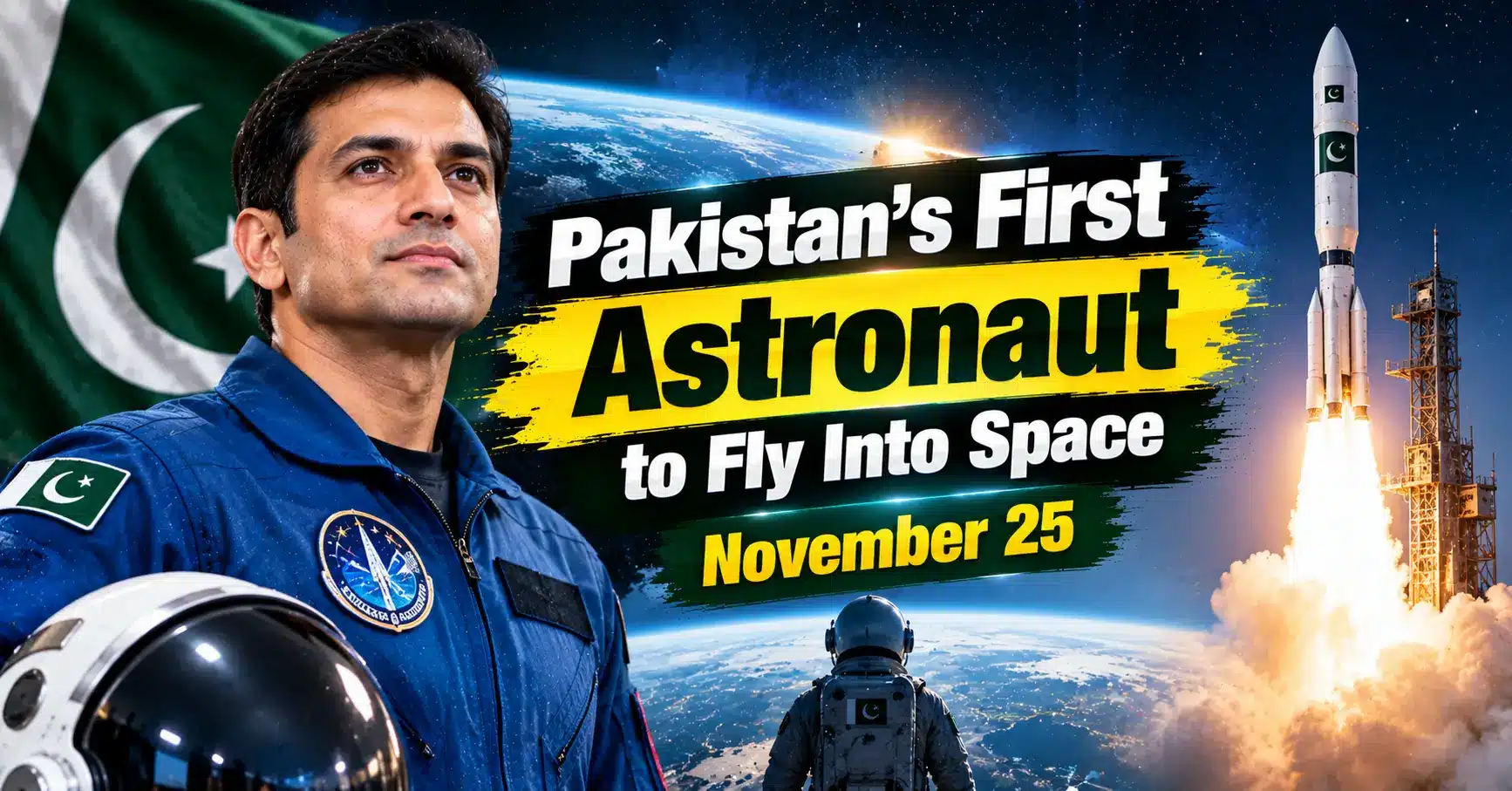

Astronaut history is set to be made on November 25, when Pakistan plans to send its first-ever astronaut into space aboard China’s Tiangong space station, marking the country’s biggest human spaceflight milestone since the creation of SUPARCO.
The announcement came from Federal Minister for Planning Ahsan Iqbal during the closing ceremony of World Space Week in Narowal on October 18, where he described the mission as a breakthrough for Pakistan’s scientific ambitions and a symbol of expanding cooperation with China.
November 25 Mission Marks a Historic First
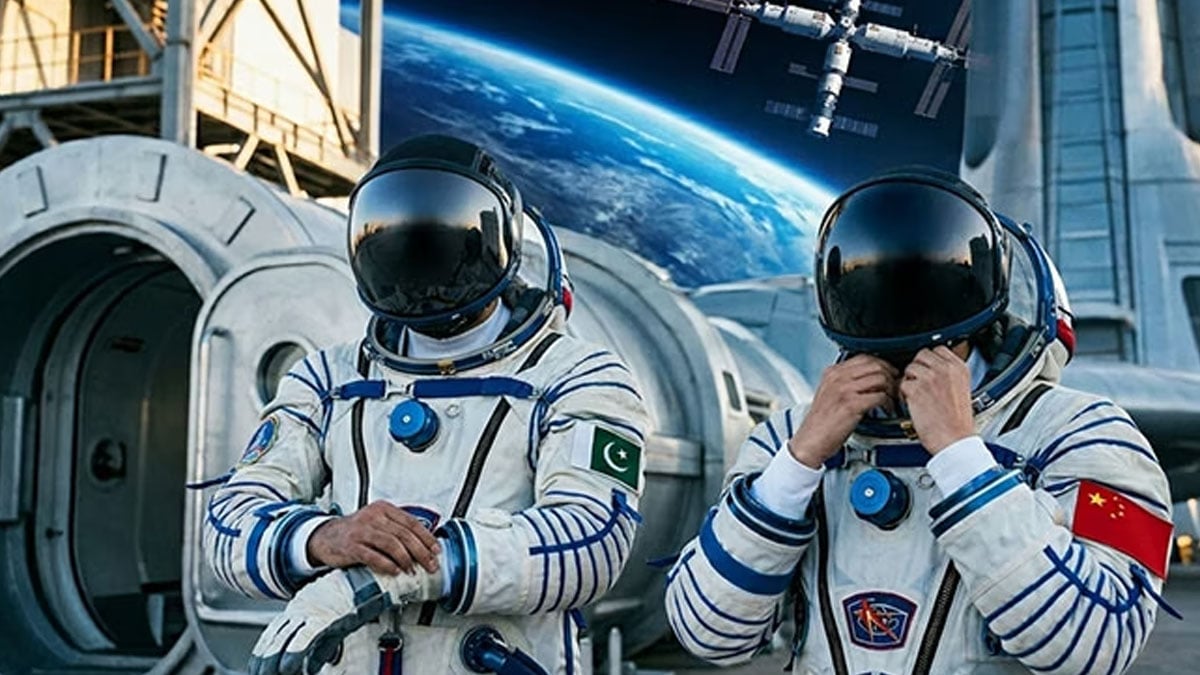
Pakistan’s maiden human spaceflight will launch from a Chinese space centre under an agreement between SUPARCO and the China Manned Space Agency, making the country one of the few nations to place a citizen aboard an operational space station.
Officials have confirmed the mission date but have not yet officially identified which astronaut will fly, making the upcoming final selection one of the last major steps before launch preparations enter their concluding phase.
Mission at a Glance
| Detail | Verified Information |
|---|---|
Mission date | November 25, 2026 |
Destination | Tiangong Space Station |
| Partner agency | China Manned Space Agency |
Pakistani agency | SUPARCO |
| Mission role | Payload Specialist |
Expected stay | About one week |
| Officially named astronaut | Not yet confirmed |
How Pakistan’s Astronaut Programme Reached This Milestone

The journey began in February 2025 when Pakistan and China signed a landmark cooperation agreement covering astronaut training, scientific research, and future human spaceflight cooperation through the Tiangong programme.
Under the agreement, two Pakistani candidates would undergo intensive training before one becomes the country’s first astronaut, while the mission itself focuses on scientific research rather than tourism or symbolic participation.
Key milestones
- February 2025 agreement signed
- Two Pakistani candidates selected
- Training conducted in Beijing
- Final astronaut selection expected before launch
- Mission scheduled for November 25
Training in China and the Final Selection Process
The two finalists identified through international reporting are Zeeshan Ali and Khurram Daud, both Pakistani pilots who entered advanced astronaut training after emerging from an initial pool of around twenty candidates.
READ MORE: Scientists Just Found the First-Ever Walking Trail Left by a Tyrannosaurus
Their preparation included Chinese-language instruction, spacecraft systems, microgravity adaptation, and high-G launch training, although officials have deliberately withheld the identity of the final crew member until the formal selection process concludes.
What the Payload Specialist Will Do in Space

Unlike a mission commander or spacecraft pilot, Pakistan’s first astronaut will serve as a payload specialist, responsible for conducting scientific experiments designed by Pakistani researchers aboard the Tiangong laboratory in orbit.
According to Reuters, the mission includes four biotechnology experiments selected from more than 300 university proposals, focusing on food security, climate resilience, and research that could produce practical benefits for life on Earth.
Why Pakistan-China Space Cooperation Matters
The November mission reflects a broader partnership that has already produced satellite launches, technology transfers, astronaut training, and preparations for Pakistan’s future participation in China’s lunar exploration initiatives.
Government officials argue that cooperation with China strengthens Pakistan’s scientific capabilities even though the country currently lacks its own crewed spacecraft, relying entirely on Chinese launch infrastructure for this pioneering human spaceflight mission.
What’s Next for Pakistan’s Space Ambitions
The astronaut mission forms part of a wider national roadmap that includes a Pakistani-built lunar rover for China’s Chang’e 8 mission around 2028 and an ambitious long-term target of reaching the Moon by 2035.
During the Narowal ceremony, Ahsan Iqbal also announced Pakistan’s first Space Museum at the University of Narowal, presenting the initiative as a way to inspire future scientists, engineers, and researchers across the country.
“With China’s cooperation, Pakistan will reach new heights in the field of space research,” Ahsan Iqbal said while announcing the November 25 mission.
Pakistan’s first astronaut will therefore represent more than a single spaceflight. The mission marks the country’s first direct participation in human space research and could become the foundation for a broader national programme built around scientific collaboration rather than independent launch capability.