

A juvenile identity card provides official identification for Pakistani children under 18, helping establish their identity and relationship with their parents or legal guardian. NADRA explains the eligibility criteria, required birth documentation and biometric procedures for first-time applicants.
Unlike an adult Computerised National Identity Card (CNIC), a juvenile card is intended for minors. Parents and guardians should check the child’s registration records, prepare the necessary documents and follow the applicable application procedure before visiting a registration centre.
Who Is Eligible for a Juvenile Identity Card?
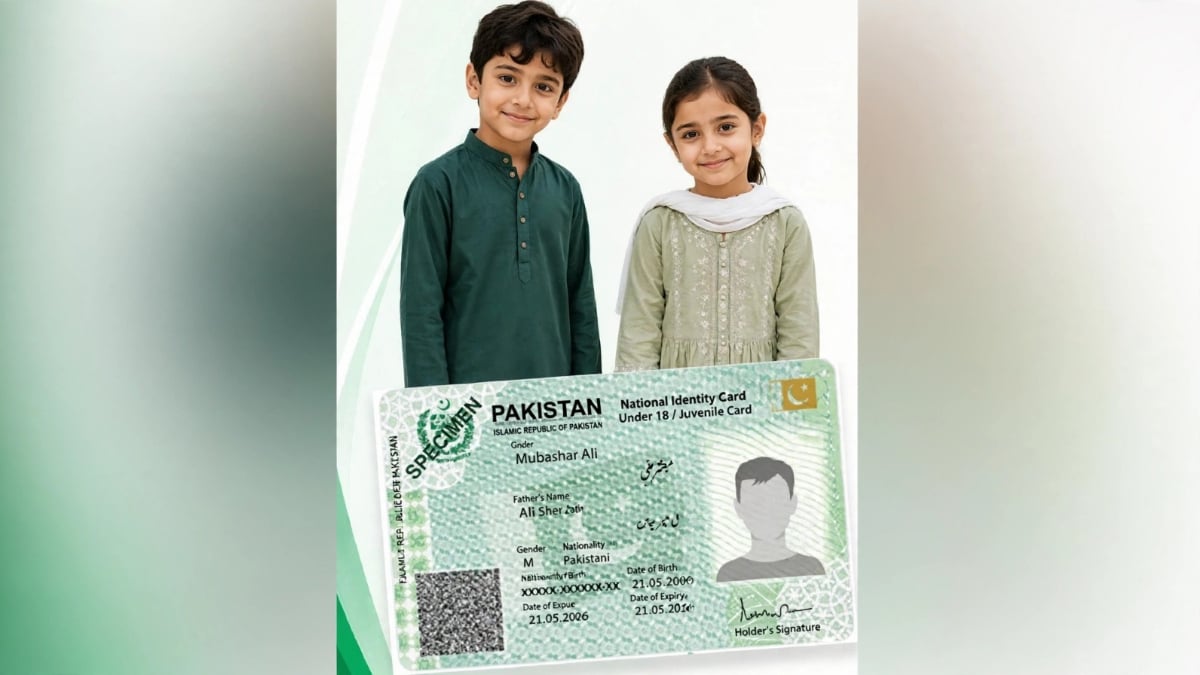
Under Rule 18 of the NADRA (NIC) Rules, 2002, Pakistani citizens who have not reached their eighteenth birthday are eligible for a Child Registration Certificate (CRC) or juvenile identity card. These documents provide official registration within NADRA’s national database.
The juvenile card is separate from the CRC, commonly known as Form B, although both documents serve children under 18. Families should identify which document they need before applying because the requirements and intended uses are not identical.
Documents Required for a First-Time Juvenile Card
NADRA identifies a computerised birth registration certificate issued by the relevant Union Council, Municipal Committee or Cantonment authority as the required document for children born in Pakistan. Applicants should ensure the birth record contains accurate details before beginning registration.
For children born abroad, NADRA specifies a detailed birth certificate or S-1 Form. Additional verification may be necessary depending on the applicant’s circumstances, so families should confirm their individual case with NADRA rather than assume that every application follows an identical process.
Essential documents and preparations

Applicants should prepare the following before starting:
- The child’s computerised birth registration certificate, where applicable.
- The detailed birth certificate or S-1 Form for a child born abroad.
- Relevant parent or guardian identification and supporting records, if requested during verification.
- A working mobile number and email address for digital application access and updates.
NADRA’s online guidance identifies the birth documentation and age-related requirements; applicants should confirm any additional supporting documents for their specific case.
How to Apply for a Juvenile Identity Card Through NADRA
Parents or guardians can begin the application process through a NADRA Registration Centre or the official PakID mobile application. The correct route depends on the applicant’s circumstances and whether additional in-person verification is required.
READ MORE: NADRA Explains How to Replace a Lost B-Form in 2026
Before submitting an application, check the child’s name, date of birth and family information against the supporting records. Incorrect or inconsistent details can require clarification and may delay processing, so resolving discrepancies early is a practical precaution.
Applying at a NADRA Registration Centre

Families choosing an in-person application should visit a NADRA Registration Centre with the child and the required birth documentation. NADRA states that a child’s presence is mandatory for a juvenile-card application, allowing the authority to capture the necessary identification data.
At the centre, follow the staff’s instructions for document review, information entry, photograph capture and biometric verification. Ask the registration officer to explain any missing evidence or additional verification before completing the application and paying the applicable fee.
Applying through the PakID mobile app
PakID is NADRA’s official mobile application for identity-related services. Its published juvenile-card process allows applicants to sign in, select the new juvenile-card service, enter the required information, upload documents and track the application’s progress.
However, an online application does not necessarily eliminate the need for an office visit. NADRA states that biometric verification and photograph capture may require attendance at a registration centre, so applicants should follow the instructions issued for their specific case.
Juvenile Identity Card Biometric Requirements by Age
NADRA’s published guidance divides juvenile-card biometric requirements into two age groups. Children up to 10 years require a photograph and iris capture, while applicants aged 10 to under 18 require a photograph, fingerprints and iris capture.
These requirements help establish the child’s identity within the national registration system. The relevant age bracket also determines the card’s stated expiry milestone, making the applicant’s recorded date of birth important throughout the registration and verification process.
| Child’s age | Required biometrics | Juvenile card expiry |
|---|---|---|
Up to 10 years | Photograph and iris | On attaining age 10 |
| 10 to under 18 years | Photograph, fingerprints and iris | On attaining age 18 |
Source: NADRA’s official juvenile-card guidance.
Juvenile Identity Card Fees and Processing Time
NADRA’s official juvenile-card page directs applicants to its fee and processing information but does not display the specific juvenile-card charges in the retrieved guidance. Therefore, a fee should not be treated as confirmed solely because it appears in an unofficial report or an older article.
Applicants should check the current amount and service category through NADRA’s official fee structure or the payment instructions provided during application. Confirm the applicable delivery period before paying, because processing timelines begin after fee payment under NADRA’s published PakID notice.
How Long Is a Juvenile Identity Card Valid?
A juvenile identity card is not intended to remain valid indefinitely. NADRA’s published table identifies age 10 and age 18 as expiry milestones, depending on the child’s age when the card is issued.
Parents should check the expiry details associated with the issued document and arrange the appropriate registration or renewal when required. The applicable procedure depends on the child’s age and registration status, so families should confirm the next step with NADRA.
What Happens When a Child Turns 18?
When a Pakistani citizen reaches 18, the individual becomes eligible for an adult CNIC under NADRA’s published eligibility rules. The adult card serves as the principal national identity document for eligible Pakistani citizens who have reached the required age.
Young adults should check the documents required for their first CNIC and ensure their identity and family records are accurate. NADRA provides a separate application process for new CNICs, and applicants should follow those instructions rather than continue using the juvenile-card procedure.
Why Accurate Child Registration Matters
Accurate registration helps establish a child’s identity and documented relationship with their parents or legal guardian. These records also support later identity-document applications, making consistent names, birth dates and family information important throughout the registration process.
Parents should use official NADRA channels to resolve discrepancies instead of relying on unverified online advice. Where birth records are incomplete or details conflict, asking the relevant registration authority for clarification can help prevent avoidable application problems.
Final Checklist Before Applying
Before submitting a first-time juvenile-card application, parents should verify the child’s eligibility, prepare the appropriate birth documentation and confirm whether the application requires an in-person visit. They should also review the current official fee and service timeline before payment.
Keep the application receipt and any tracking details provided during submission. If the application requires further evidence or verification, follow the instructions issued by NADRA and confirm that the final card’s personal information is accurate when received.
For official information, visit the NADRA juvenile-card guidance page or consult the official fee structure