
Saudi Arabia woke up to fear on Saturday morning. For the first time since fighting between the Houthis and Saudi Arabia escalated this year, an air raid alert sounded over Riyadh itself. A ballistic missile came in at dawn. The Saudi led coalition says its defence systems caught it and blew it apart before it could land.
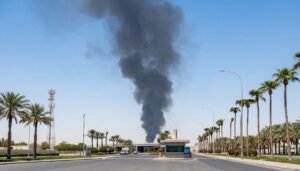
Hours before dawn, residents in the city’s Olaya district heard loud booms. Phones buzzed across Riyadh and the nearby town of Al-Kharj with civil defence warnings about possible aerial danger. By morning, another massive column of black smoke rose near King Khalid International Airport, right around its fuel storage tanks.
What The Houthis Say They Did
Yemen’s Houthi military spokesman, Yahya Saree, announced that fighters had struck what he called sensitive targets inside Riyadh. He also said an Aramco facility in the Red Sea city of Yanbu came under fire. According to Saree, the group used a mix of weapons this time, cruise missiles, ballistic missiles, and drones, all launched together.
Saree framed the whole operation as retaliation. He said it came in direct response to an earlier attack on Sanaa, Yemen’s Houthi held capital.
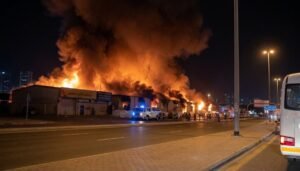
Saudi Arabia pushed back on the scale of the claims. A coalition spokesperson, Major General Turki al-Maliki, confirmed only that one missile had actually reached Riyadh’s airspace, and that it never landed. Writing on social media platform, he said something important: “The Houthis also attempted to target civilians and civilian infrastructure in Bisha, Taif, Farasan and Yanbu.” But all of those attempts were defeated by Saudi air defences.
A Pattern That did not Start Overnight
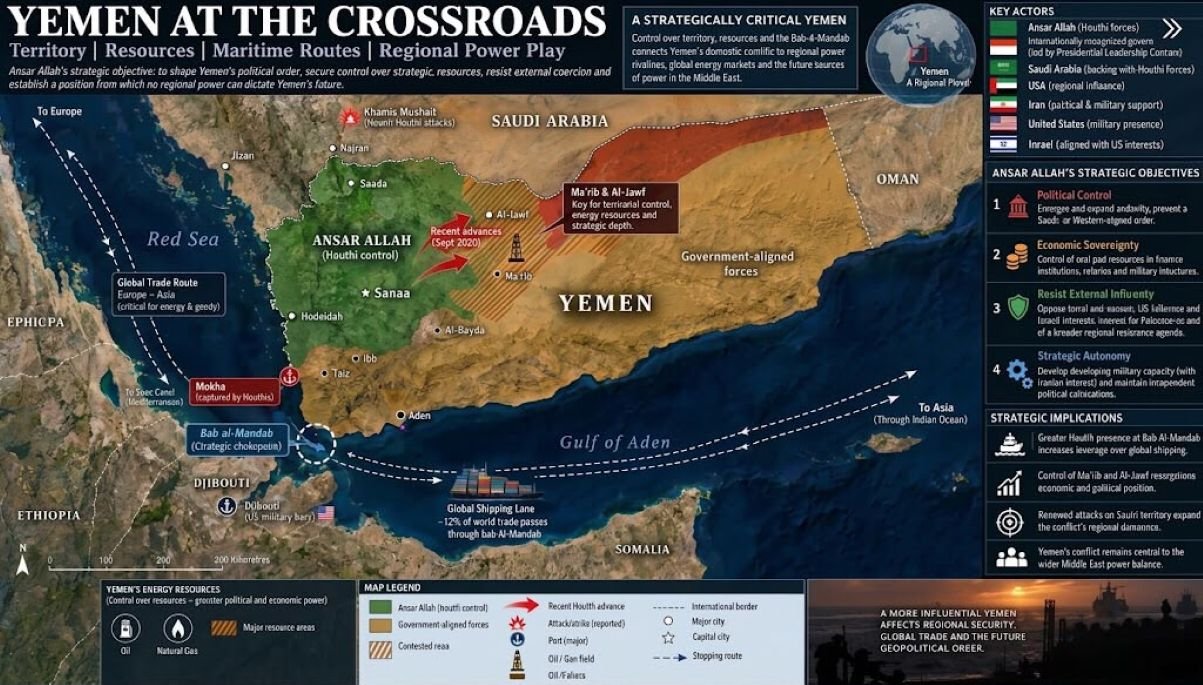
Back on September 8, just eleven days earlier, Houthi missiles and drones tore through several Saudi cities at once. Abha, Jazan, Najran, and Khamis Mushait all took hits. More than seventy people were wounded, and fires broke out at oil facilities and utility sites.
Coalition spokesman al-Malki described the September 8 targets bluntly at the time, saying the rebels had struck “civilian and economic facilities,” including a major industrial hub called Jazan City and Aramco sites near Najran and Abha.
Saree from the Houthi side, warned that “every aggression against our country and people will be met with a firm response.” Riyadh seems to be that response.
Since July, the Houthis have declared a blockade on Saudi ports near the Bab-el-Mandeb strait. They have claimed hits on Saudi oil tankers in the Red Sea. Saudi Arabia, meanwhile has accused Iran linked Iraqi militias of sending drones toward its own oil facilities and even Riyadh.
Global Stakes And Growing Alarm
The Saudi cities Riyadh and Yanbu are not just random spots on a map, they hold key importance. Yanbu handles a key pipeline that carries Saudi crude to the Red Sea, feeding tankers that avoid the increasingly risky Strait of Hormuz.
The UN Security Council also issued a statement condemning that continued Houthi attacks against the Kingdom of Saudi Arabia have affected civilian areas.
An analyst Yasmeen al-Eryani, who studies the region at Yemen’s Sanaa Center said, “You could see that the Houthis are determining the timelines and the levels of the escalation.” She added, “So, depending on the current situation, it seems that the Houthis are the ones in control.” That is a striking thing to hear, given how much military hardware and money Saudi Arabia has poured into its defence systems over the years.
What Could Happen in the Next Days
Diplomatic channels and mediators from Qatar and Pakistan are involved on the back hand, trying to manage tensions tied to the wider Iran situation, with Washington reportedly waiting on a response through those same back channels.
For ordinary people in Riyadh, though, the immediate reality is simpler and far less abstract. Whether Saturday’s missile marks a single scare or the start of a more direct phase in this fight is something only the coming weeks will show.
What is already clear is that the war once contained largely to Yemen’s borders has now reached Saudi Arabia’s own capital, and that alone changes the calculation for everyone watching this conflict unfold.