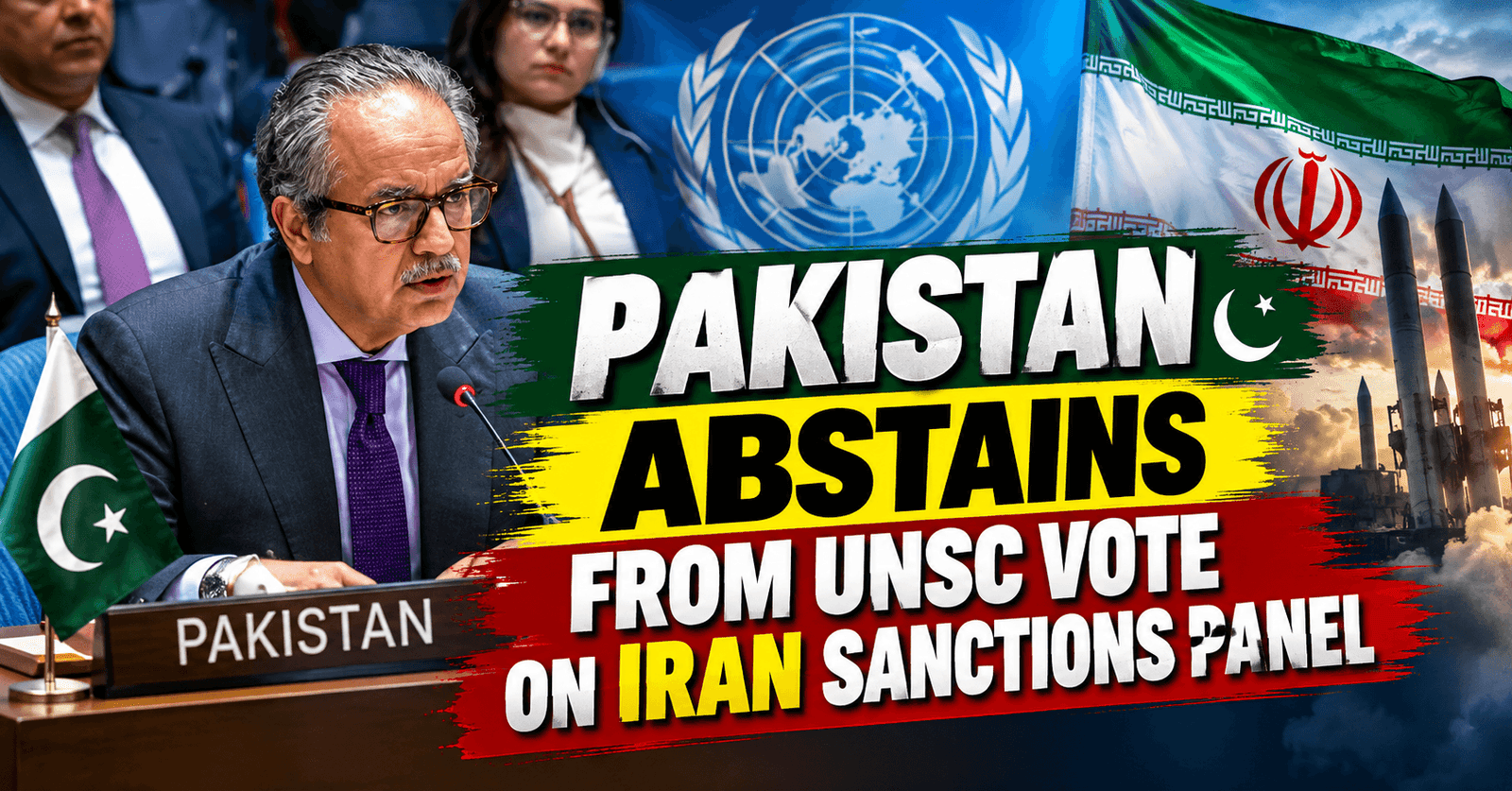

Pakistan abstains from UNSC vote on Iran sanctions panel, leaving the mandate of a key monitoring body in limbo after Russia and China blocked its renewal. The vote, held Thursday at UN headquarters in New York, exposed fresh cracks in the Security Council’s already fractured approach to Iran’s nuclear file — and put Islamabad’s careful non-alignment on full display once again.
Pakistan Abstains from UNSC Vote on Iran Sanctions Panel: What Happened

Pakistan abstains from UNSC vote on Iran sanctions panel as the 15-member council took up a US-drafted resolution to extend the mandate of the Panel of Experts supporting the Iran sanctions committee. Eleven members voted in favour.
Russia and China, both permanent members, cast the two negative votes — a veto that killed the resolution outright. Pakistan and Somalia chose abstention instead of aligning with either bloc, keeping their positions deliberately ambiguous.
Why Islamabad Chose to Abstain
The UNSC vote on Iran sanctions panel drew a pointed explanation from Pakistan’s Permanent Representative, Ambassador Asim Iftikhar Ahmad, who addressed the council directly after the vote was recorded.
READ MORE: Ahsan Iqbal proposes SCO digital governance and AI capacity-building network
He said Islamabad remained troubled that the Iran nuclear file had grown “increasingly complicated,” arguing the council had strayed from the cooperative spirit that shaped the original 2015 framework nearly a decade ago.
- Cited the erosion of trust since Resolution 2231’s 2015 adoption
- Called for renewed reliance on diplomacy over confrontation
- Avoided endorsing either the US-led draft or the Russia-China objection
“Diplomacy and dialogue remain the guiding principle” for resolving outstanding issues concerning Iran’s nuclear programme, Ambassador Ahmad told the council.
Russia and China Veto the US-Backed Resolution

This latest sanctions panel vote on Iran ended in deadlock once Moscow and Beijing exercised their veto power, reviving a long-standing argument that predates Thursday’s session by more than a year.
Both powers maintain that UN sanctions on Iran were effectively nullified once the original 2015 nuclear deal took effect, making any renewed monitoring mechanism legally unnecessary in their view.
- Russia and China argue the sanctions regime lost legal standing after the 2015 deal
- The US draft sought to extend the panel’s mandate to September 2027
- The draft also asked for quarterly working reports and an annual council briefing
The Iran Sanctions Panel and Resolution 1929
Understanding why this Iran sanctions panel vote matters requires looking back to 2010, when the Security Council first created the monitoring body under Resolution 1929 to track compliance with sanctions.
That panel was tasked with assessing violations, briefing the council on enforcement gaps, and recommending further measures. Its mandate has been renewed periodically — until this latest attempt collapsed at the veto stage.
The panel’s job was never purely technical. It shaped how the council understood Iran’s nuclear trajectory for over a decade, feeding assessments into nearly every major decision on the file since 2010.
A Year Without Oversight: The Snapback Sanctions Timeline

The abstention vote on Iran sanctions panel didn’t emerge in isolation — it follows a full year in which the council has operated without any functioning expert oversight mechanism at all.
All UN sanctions on Iran were reimposed roughly a year earlier, after France, Britain and Germany accused Tehran of violating its obligations under the 2015 nuclear pact, triggering the so-called snapback mechanism.
Since then, appointing a new panel chair or membership has required consensus the council simply hasn’t been able to reach, leaving oversight of the sanctions regime effectively frozen even as tensions with Iran deepened. Iran continues to deny it is pursuing nuclear weapons.
What This Means for Pakistan’s Diplomatic Balancing Act
Pakistan’s UNSC vote on the Iran sanctions panel fits a pattern Islamabad has followed through several Iran-related votes this year, consistently declining to side firmly with either Western powers or the Russia-China bloc.
That positioning reflects Pakistan’s own regional calculus: close economic and border ties with Iran, a broader relationship with Gulf states, and a wish to avoid being drawn into a dispute it has limited leverage to influence.
- Pakistan shares a long, sensitive border with Iran
- Islamabad has previously called opposing an Iran-related meeting an “unjustified” pressure tactic
- Analysts see the repeated abstentions as a hedge against alienating any single bloc
What Happens Next at the Security Council
With the resolution defeated, the Security Council now faces the same unresolved question it has carried for a year: how to restore any credible monitoring mechanism on Iran’s nuclear programme.
Diplomats say further attempts at compromise language are likely before the panel’s original mandate window closes later this month, though Thursday’s veto suggests any near-term consensus remains distant.
For now, the sanctions committee continues without a chair, without an active panel, and without the quarterly reporting structure the failed draft had proposed a gap critics argue leaves enforcement essentially unverifiable.