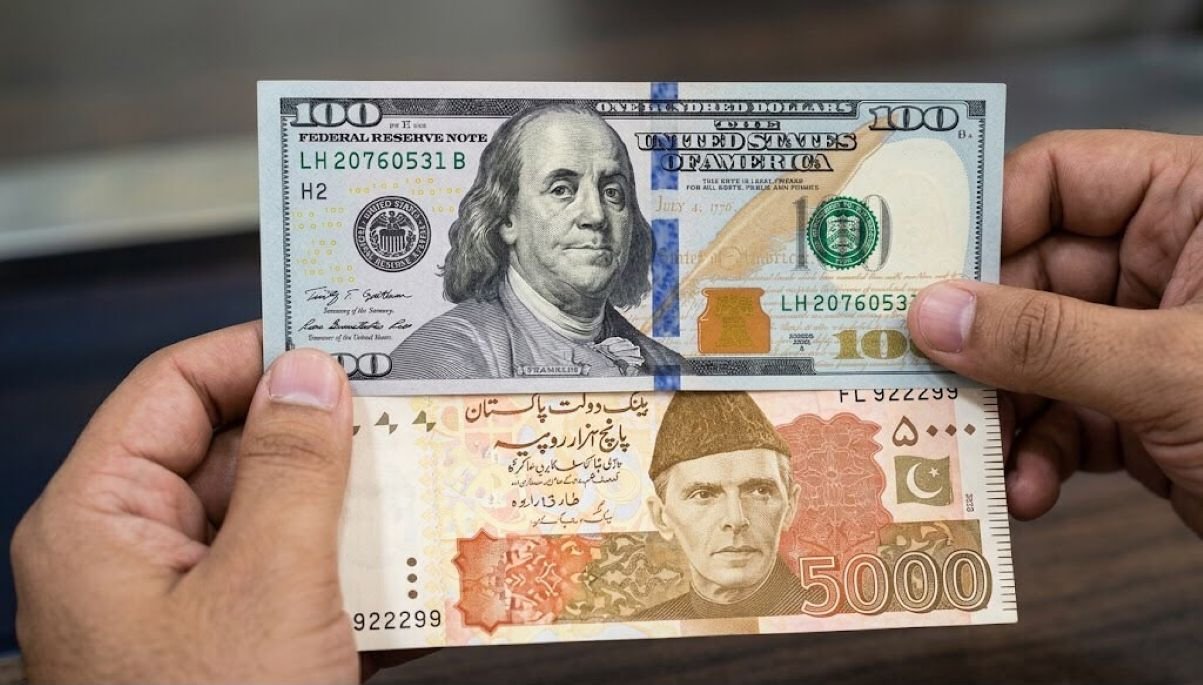

Pakistan’s currency has quietly put together one of its steadiest stretches in months. The rupee has strengthened against the US dollar on multiple trading days throughout September, closing around Rs277.30 in the interbank market this week. It is not a dramatic swing by any means. But in a currency market that has seen its share of turbulence lately, steady, consistent gains are exactly what officials have been hoping for.
Behind these small daily moves sits one genuinely significant piece of news that has been quietly reshaping investor confidence.
What is Actually Driving This Gain
The single biggest factor behind the rupee’s recent stability traces back to a successful $3 billion Eurobond sale. According to a statement from the Finance Division, Pakistan raised the money through a dual tranche structure that attracted nearly $6 billion worth of investor orders, almost double what the government was actually seeking.
The breakdown itself tells an encouraging story. Pakistan raised $1.75 billion through a 5.5 year bond carrying a 7.5% coupon rate, alongside a separate tranche for the remaining amount. Strong demand like this typically signals renewed international investor confidence in Pakistan’s economic trajectory, something that has been in short supply for much of the past few years.
Foreign currency inflows from a bond sale of this size tend to ease pressure on the local currency almost immediately, since it strengthens the country’s reserve position without requiring the central bank to intervene directly in the open market. That is precisely the kind of structural support that has been keeping the rupee’s daily movements consistently in positive territory throughout September.
A Daily Look at the Trend
Tracking the rupee’s actual movement day by day reveals just how consistent this pattern has been. On September 2, the currency closed at 277.45. By September 8, it had edged up further to 277.37. September 9 brought another small gain, settling at 277.37 as well, according to figures from the Forex Association of Pakistan.
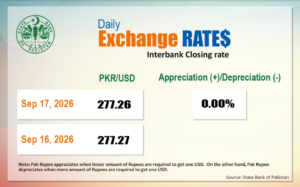
The trend continued through the following week too. September 11 saw the rupee tick up to 277.35, and by September 15, it had strengthened further still to 277.30 in interbank trading. Each individual move might only amount to a paisa or two, but stacked together across two weeks, they tell the sustained stability rather than a one-off blip.
It is worth being upfront about scale here. These are not the kind of dramatic currency swings that make headlines through sheer size. What makes this stretch notable is precisely the opposite, a rare period of predictable, gradual appreciation in a market that is often defined by sudden shocks.
Global Pressures Working Against the Rupee
None of this stability has come easily, though. Global currency markets have faced genuine turbulence throughout this same period, driven largely by the ongoing US-Israeli conflict with Iran, now stretching past six months. That conflict has pushed oil prices well above the $100 per barrel mark, complicating the picture for oil-importing countries like Pakistan considerably.
Rising oil prices typically translate into higher import bills, which usually puts downward pressure on any currency reliant on energy imports. That the rupee has managed modest gains despite this backdrop suggests the Eurobond proceeds and broader reserve management have been doing real work behind the scenes to offset that external pressure.
Adding further complexity, the Japanese yen has been climbing to multi-month highs against the dollar recently, as global traders increasingly bet on a Bank of Japan interest rate hike. Meanwhile, expectations around potential Federal Reserve rate moves have kept the broader dollar index somewhat volatile too, creating a genuinely uncertain backdrop for emerging market currencies generally.
What This Means for Ordinary Pakistanis
For everyday citizens, small paisa level movements in the exchange rate rarely translate into immediate, noticeable changes at the grocery store or petrol pump. Where this stability matters more is in the broader economic picture it helps paint, one of a central bank and finance ministry managing to maintain currency confidence even amid a genuinely turbulent global environment.
Open market rates have remained fairly steady too, with the dollar hovering around Rs277.9 for buying and Rs278.45 for selling as of this past weekend, according to currency exchange data tracked across major Pakistani cities. For workers and families receiving remittances from the Gulf specifically, rates for the UAE dirham and Saudi riyal have remained similarly stable throughout this period.
Looking ahead, much will depend on whether global oil prices ease and whether the broader Iran conflict shows any signs of resolution. For now, Pakistan’s currency managers appear to be navigating a difficult external environment about as well as could realistically be expected, keeping the rupee on a slow but steady upward path rather than letting external shocks translate into sudden depreciation.