

Rawalpindi floods have been the biggest disaster this week. Torrential rain hit the city before dawn on Tuesday and within hours, streets turned into rivers. Homes, markets, and hospitals all felt the damage as the rain continued pouring down non-stop for hours.
The Met Office called it the heaviest rainfall in three years. Nearby city Islamabad was hit just as hard. Together, the twin cities came to a complete standstill.
How Bad Was the Rain?
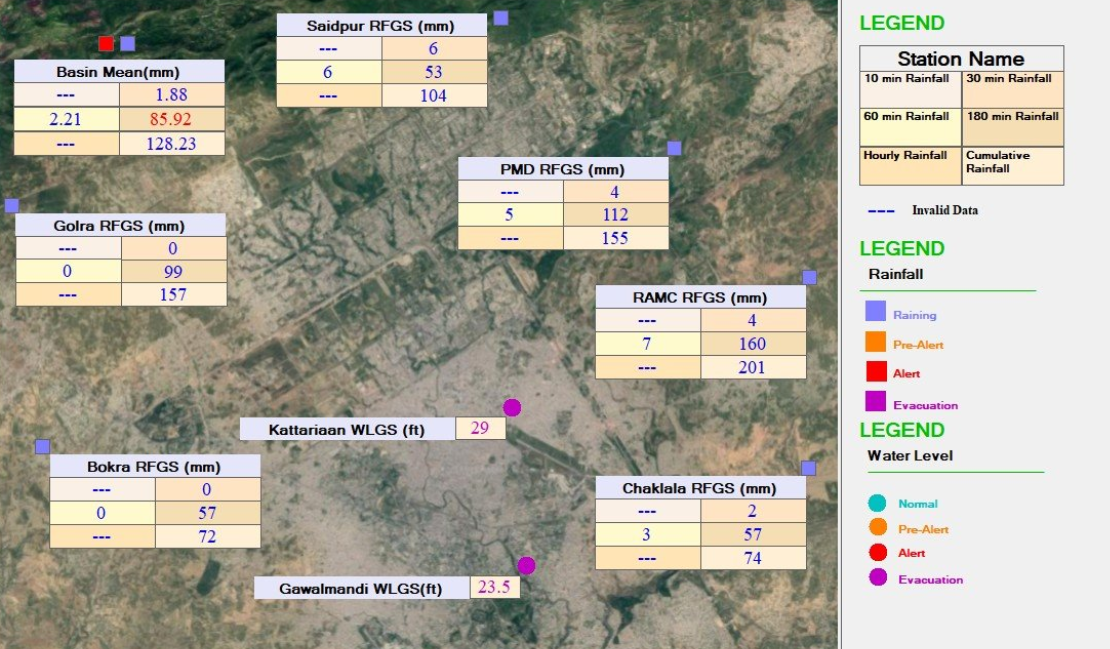
The numbers alone tell a frightening story. Shamsabad recorded a staggering 201 millimeters of rain. Chaklala received 191mm, while New Kattarian saw 187mm. Even areas that in previous years were never affected, this time they got affected too by the spell like Golra, got 157mm of rainfall.
The Nullah Lai Rawalpindi’s main drainage channel, rose dangerously fast. It reached 29.5 feet at Kattarian Bridge by morning causing an emergency situation.
At Gowalmandi Bridge, the water level touched 20 feet. Officials sounded flood sirens, warning residents to move to safer ground. Rawal Dam also filled up early, forcing authorities to open its floodways. Water levels there climbed to 1,751.90 feet before the release.
Daily life activities also got disrupted for days because of this flood. Offices, schools, and colleges all remained closed on the rain day. Traffic also came to a halt on major roads, including Murree Road.
Internet services were suspended in several areas for hours resulting in a chaos across the twin cities.
Lives Lost and Families Shattered
Sadly, this was not just about flooded streets. Three people lost their lives in rain related incidents. In G-14, a house roof caved in under the weight of rain. Twenty year old Faizan Ashraf was killed, and another man was critically injured.
A teenager who was just 17 years old also got drowned in rainwater near Esa Nagri. In Rawalpindi’s local area a tragedy happened in a different way. An education department employee, Sohail Asghar died from electric shock.
The scale of destruction after Rawalpindi floods became clear as water continued growing. More than 210 streets and neighborhoods were affected across the city. Around 35 markets were swallowed by floodwater too.
Raja Bazaar, Bohar Bazaar, and Kohati Bazaar all went under. Old Airport Road, Rahimabad Bridge, and Murree Road saw major flooding.
Cars were seen abondoned, with children sitting on rooftops to stay dry. Even the local residents reported that their streets had never seen anything like this. This time the situation was different, and was clearly much more alarming.
Hospitals and Homes Under Water
Hospitals were also not spared from the Rawalpindi floods. The officer ward at Benazir Bhutto Hospital was badly affected by the flood. Patients had to be shifted to other wards quickly. At Holy Family Hospital, the basement gynae and paediatric units flooded too. Staff rushed to move sensitive machinery to higher floors. ordinary homes suffered just as badly.
Water levels inside houses ranged from five to twelve feet in places. Many families lost furniture, appliances, and years of belongings overnight. Power and gas supply were also cut in more than half of the city.
University going students were also disturbed by the floods. As all roads were flooded with water, and it was not possible to drive in that flood. Several videos also came across social media where university students were in the middle of the road, because the water rushed into the buses as well.
What Officials Are Saying
Rawalpindi’s Deputy Commissioner, Nadeem Nasir, addressed the emergency directly. He confirmed the army stayed on standby throughout the crisis. “The army was not called but put on alert to deal with any emergency,” he told the reporters.
Read More: Monsoon 2026 Heavy Rains Bring Relief And Risk Across Pakistan
He also explained why schools were shut so suddenly almost across both twin cities. The scale of the rainfall left no other option as the Rawalpindi floods kept on increasing, he said.
The Islamabad district administration issued its own statement about the flooding. It confirmed “water entering the road and some basements” in the E-11 sector. Traffic police also urged caution across the twin cities. “Citizens should leave with extra time for their journeys,” they advised the public.
Rescue Efforts on the Ground
Emergency teams worked non-stop through the worst of the storm. Rescue 1122 evacuated 60 people from different flooded areas.
Thirty passengers were pulled from a bus stuck at Rahimabad Bridge during the Rawalpindi floods. Eight more were rescued from Kuri Road and Dhoke Kala Khan each. Six women were also evacuated safely from Darulaman.
WASA, Civil Defense, and health departments remained on high alert throughout.
A Warning for the Future
The Met Office has forecast more rain in the coming days of September. Areas like Swat, Kohistan, and Murree remain at risk of landslides.
For now, after the Rawalpindi floods residents are left counting losses and demanding answers. Many say better drainage systems could have prevented this disaster.
Until real changes are made, experts warn this type of story could repeat itself anytime soon. The next heavy monsoon spell may already be on its way.