
Punjab Overhauls Driving Licence Delivery With New Tracking System
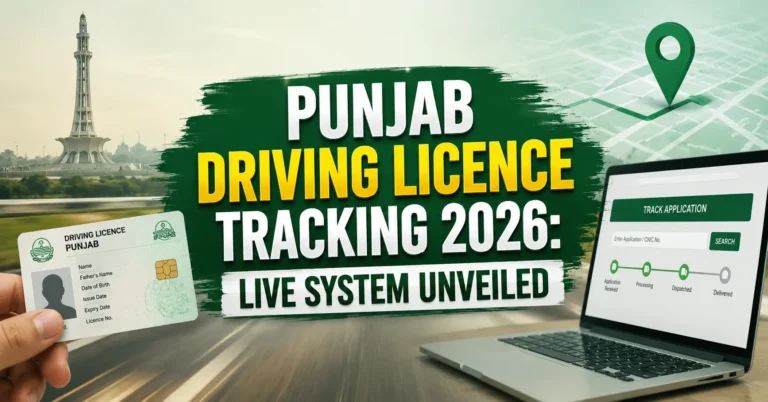
Punjab driving licence tracking is about to get a long-overdue upgrade. The provincial government and Traffic Police have decided to integrate the postal delivery network directly with the Licence Information Management System, giving applicants visibility they’ve never had before.
What the New Punjab Driving Licence Tracking System Means

For years, Punjab driving licence tracking meant knowing only whether your card was printed — nothing about where it physically was. That’s changing under a new integration plan announced this week.
Once live, applicants will see their card’s full journey: handover from Traffic Police to the post office, transit status, and current location, all inside the same DLIMS portal they already use.
Why DLIMS Currently Falls Short on Delivery Visibility
The existing DLIMS portal only tracks two stages — processing and printing. After that, the card effectively disappears from view until it lands at an applicant’s doorstep, often weeks later.
READ MORE: Naqvi leads drive to make Islamabad encroachment-free
Traffic Police officials have acknowledged this blind spot themselves. They say they’ve struggled to verify and monitor delivery-related data internally, which has made it difficult to spot delays before applicants start complaining.
Inside the Pakistan Post–PITB Integration Plan
The fix involves linking two separate government systems that have never talked to each other: the postal service’s delivery records and DLIMS. The Punjab Information Technology Board has been brought in to handle the technical integration work.
This isn’t PITB’s first involvement with licensing infrastructure — the board built DLIMS itself and is separately preparing a DLIMS 2.0 rollout to replace the platform’s aging Oracle backend, transferring existing records to the new system.
How the Live Tracking Process Will Work

Officials describe a straightforward, stage-by-stage visibility model once integration is complete. Applicants will reportedly be able to follow their card through each checkpoint rather than waiting blind for a courier knock.
Based on how the system is expected to function, the tracking chain will likely include:
- Card printed — confirms the physical smart card has been produced
- Handed to Pakistan Post — marks the official start of the delivery leg
- In transit — shows the card is moving through the postal network
- Delivered — confirms receipt at the applicant’s registered address
Each stage would update automatically inside the same portal used for the application itself, removing the need to contact separate offices for status updates.
Licence Fees and Delivery Timelines at a Glance
Delivery visibility matters more when applicants are already paying for courier service as part of their licence fee. Current renewal costs include a fixed courier charge on top of the category fee.
| Licence Category | Courier Fee | Late Renewal Penalty (1–3 months) |
|---|---|---|
| Motorcycle | Rs 480 | Rs 225 |
| Light Transport Vehicle (LTV) | Rs 480 | Category-specific |
| Heavy Transport Vehicle (HTV) | Rs 480 | Category-specific |
Penalties escalate further for longer delays — up to Rs 1,125 for lapses beyond a year — which makes real-time tracking especially useful for applicants trying to avoid late fees on renewals still in transit.
Punjab’s Wider Digital Governance Push

This upgrade fits a pattern rather than standing alone. Punjab driving licence tracking is one piece of a broader push by PITB to digitise citizen-facing services, from Police Khidmat Markaz centres to online learner-licence applications.
The DLIMS 2.0 migration, still in progress, points to a system-wide modernisation effort. Analysts tracking Pakistan’s provincial e-governance rollout note that data-sharing between departments — postal, police, and IT — has historically been the weakest link, making this integration a meaningful test case.
What Applicants Should Do Until the System Goes Live
No firm launch date has been announced, so applicants currently mid-process still rely on the older, more limited status checks. Anyone whose card has already entered the delivery chain should keep their existing tracking or reference number handy.
Until the integration is confirmed as active, checking directly with Pakistan Post using any available consignment number — alongside the DLIMS processing status — remains the most reliable way to follow up on a delayed card.