

Islamabad has a new five-year bet on American classrooms. The Fulbright-HEC partnership between Pakistan’s Higher Education Commission and the United States Educational Foundation in Pakistan has just been renewed, extending a scholarship pipeline that has sent thousands of Pakistani students to US universities since 2005.
The timing is notable. This isn’t a quiet bureaucratic rollover — it comes after a turbulent stretch for the Fulbright program in Pakistan, one that briefly left scholars uncertain whether their stipends would even arrive.
What the New Fulbright-HEC Agreement Covers

The renewed Fulbright-HEC partnership runs from Financial Year 2026-27 through Financial Year 2031-32, according to the Ministry of Education and Professional Training. It formally links HEC and USEFP for another six-year stretch of joint scholarship funding.
The agreement isn’t limited to PhD study alone. It folds in the Fulbright Master’s and PhD programs, the Visiting Scholar Program for post-doctoral researchers, the Foreign Language Teaching Assistant (FLTA) Program, and the Hubert H. Humphrey Fellowship Program — bundling several exchange tracks under one renewed framework.
Funding and Payment Schedule Breakdown
Government financing for the program follows a staggered release rather than a lump sum, a detail most coverage has skipped over. The structure looks like this:
| Payment Tranche | Amount | Deadline |
|---|---|---|
| First installment | $2 million | By June 30 |
| Second installment | $2 million | By January 31 |
| Final installment | Remaining balance | By April 30 |
- All tranches are subject to timely release of government funds — a caveat that has mattered before, given past delays in federal disbursements to HEC programs.
- The phased structure mirrors how the original 2016 agreement was also funded incrementally rather than upfront.
Programs Included Under the Fulbright-HEC Partnership

Beyond scholarships, the deal opens the door to broader academic cooperation. HEC and USEFP have committed to joint visibility and awareness campaigns across Pakistan, using HEC’s network of universities to reach more prospective applicants.
- Fulbright Master’s and PhD Program
- Visiting Scholar Program (post-doctoral)
- Foreign Language Teaching Assistant (FLTA) Program
- Hubert H. Humphrey Fellowship Program
- Future scope for faculty and administrator exchange initiatives
From 2016 to 2026: How the Partnership Has Evolved
The original Fulbright-HEC PhD partnership was signed in February 2016, committing $25.786 million to support 125 Pakistani scholars between FY2016 and FY2020 — 25 PhD candidates a year.
READ MORE: Fourth Wall Studios English Theatre PNCA August 2026
The new agreement sets a target of 66 PhD scholars over five years, roughly 13 per year. That’s a scaled-back pace compared to the 2016 cohort, even as the overall partnership widens to cover more program categories than before.
Why the Timing Matters: Fulbright’s Rocky Recent History
This renewal lands against a backdrop worth remembering. In 2025, the Fulbright program in Pakistan was thrown into uncertainty when the US State Department froze “non-essential” federal funding, disrupting stipends for scholars already studying in America and casting doubt on the undergraduate exchange track known as UGRAD-Pakistan.
- USEFP kept accepting 2026-cycle applications through that freeze, betting the program would recover.
- It did: the 2026 cycle saw 85 Pakistani students and researchers awarded scholarships — 71 for master’s degrees, 14 for PhDs, and 6 FLTA fellows.
- That recovery, and now this fresh six-year commitment, signals the program has moved past the disruption rather than merely surviving it.
Since 2005, more than 3,000 Pakistani students have received Fulbright scholarships, and Pakistan has run one of the largest Fulbright programs anywhere in the world.
Official Reactions and Statements
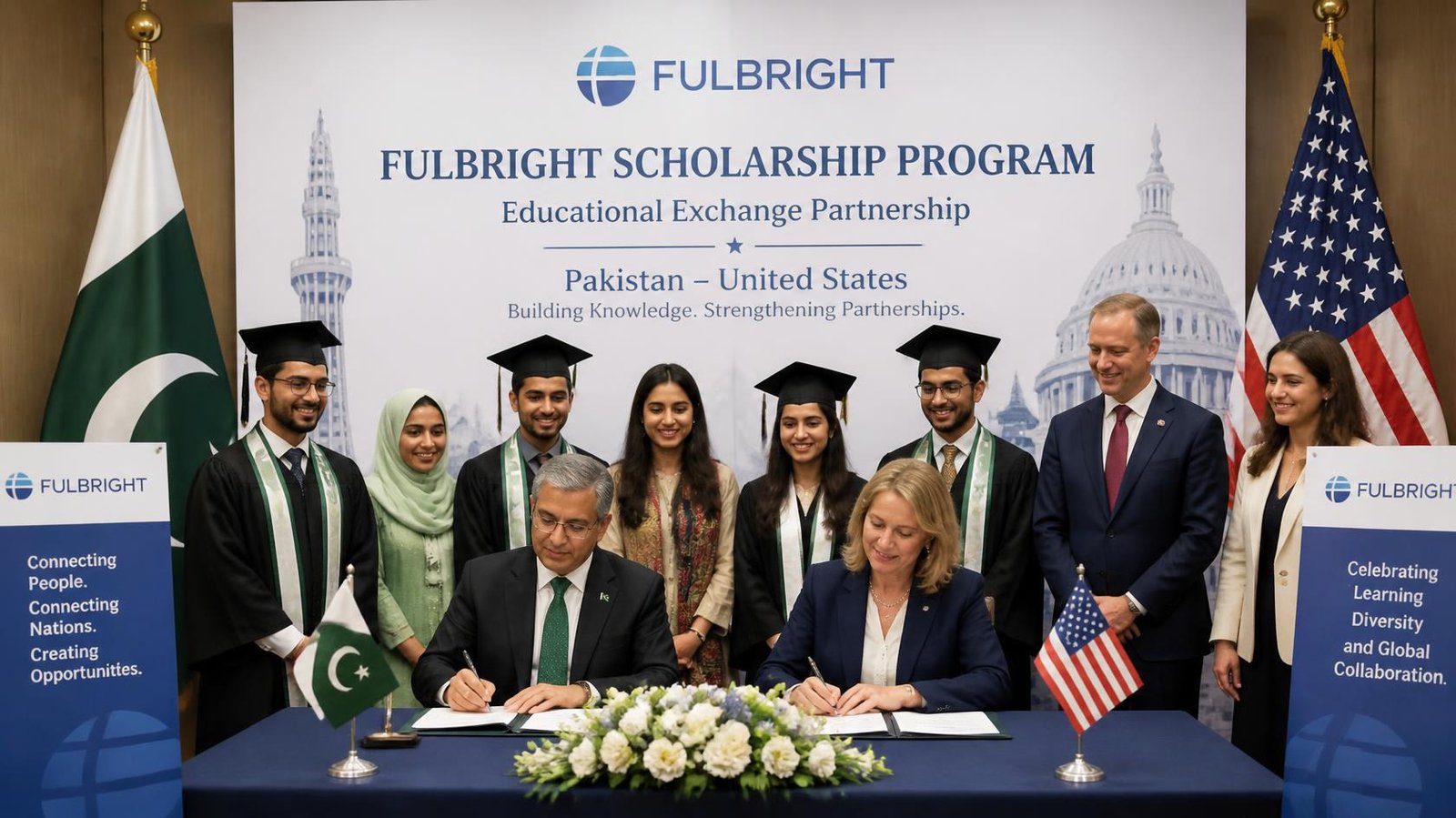
USEFP Executive Director Dr. Peter Moran and HEC Executive Director Professor Dr. Zia Ul Haq signed the renewed agreement in Islamabad. Zia Ul Haq described the Fulbright-HEC relationship as a long-running example of educational cooperation that would help empower Pakistani scholars and strengthen the country’s higher education institutions.
David Moyer, Acting Minister Counselor for Public Diplomacy at the US Embassy in Islamabad, also welcomed the renewed partnership. At an earlier pre-departure orientation for this year’s cohort, Chargé d’Affaires Andy Halus called educational exchange one of the most powerful forms of diplomacy available between the two countries.
What This Means for Pakistani Scholars
For students eyeing US graduate study, the renewal is a signal of continuity rather than an immediate change in application mechanics. The application portal remains at usefp.org, and recent cycles have closed around April 1 for the following intake.
- Expect continued coverage of tuition, travel, living stipends, and health insurance under standard Fulbright terms.
- The narrower PhD target (66 versus the earlier 125) suggests competition for doctoral slots may tighten even as overall program categories expand.
- Broader HEC-USEFP outreach efforts could widen awareness beyond the students who already know about Fulbright, particularly outside major cities.
A Partnership Still Finding Its Footing
Six years is a long runway, and Islamabad and Washington have used it before to send thousands of Pakistani academics into American classrooms and labs. Whether the scaled-down PhD target reflects tighter US education budgets, shifting priorities, or simple recalibration after last year’s funding scare isn’t spelled out in either government’s public statements.
What is clear: the mechanism survived a real scare in 2025 and is now locked in through 2032, with funding tranches, program categories, and outreach commitments all on paper.