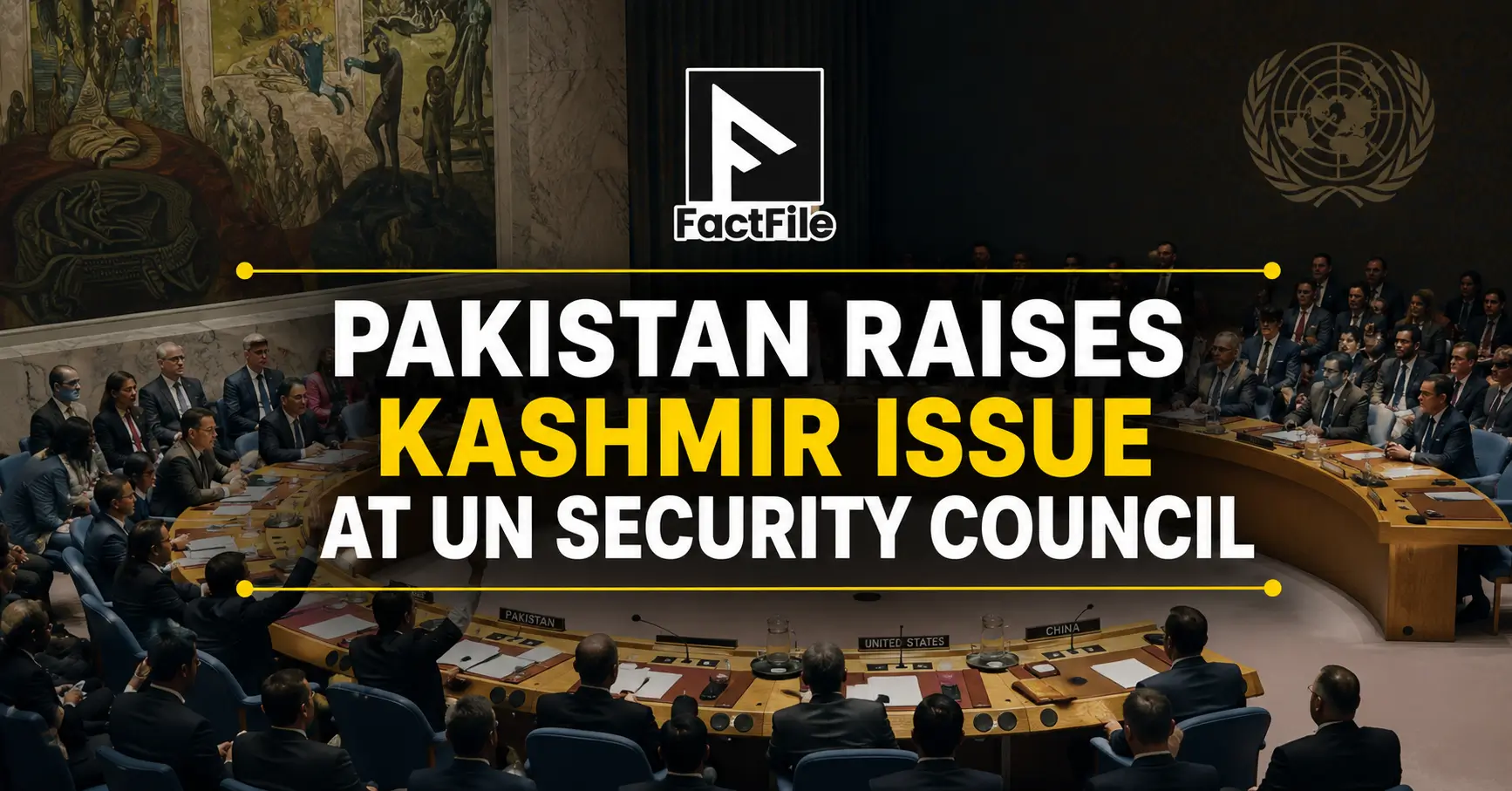

Pakistan raises Kashmir issue at UN Security Council once again, reviving a decades-old diplomatic standoff during a high-level debate this week. The exchange, held on July 23, 2026, saw Islamabad’s envoy invoke Security Council resolutions on Jammu and Kashmir, prompting an immediate rebuttal from New Delhi.
The remarks came during a UNSC open debate themed “Natural Resources Governance: the Foundation of Peace, Security and Prosperity.” Pakistan’s Permanent Representative, Ambassador Asim Iftikhar Ahmad, called for systematic Council follow-up on unimplemented resolutions a clear reference to the Kashmir dispute, though he stopped short of naming India directly in that specific segment.
Key Facts and Diplomatic Exchange

Pakistan raises Kashmir issue at UN Security Council through both formal statements and its right-of-reply mechanism, a pattern that has repeated at least three times since June 2026 alone. Each instance follows a near-identical script: Islamabad references unresolved UN resolutions, and New Delhi calls the move a distraction.
India’s Permanent Representative, Ambassador Parvathaneni Harish, delivered a pointed rebuttal, accusing Pakistan of using cross-border terrorism “as an instrument of state policy” and pushing a false narrative. He reiterated that Jammu and Kashmir “has always been, is, and will remain” part of India — language New Delhi has used consistently across multiple UN forums this year.
Key points from the exchange:
- Ambassador Asim Iftikhar Ahmad called for periodic Council assessments on unresolved disputes
- He urged confidence-building steps, including hotlines and de-confliction arrangements
- Ambassador Harish accused Pakistan of politicising UN forums
- India described the matter as strictly internal and bilateral
- Neither statement produced any formal Council action or resolution
How the Kashmir Dispute Resurfaced at the UN in 2026

The July 23 exchange was not an isolated event. Pakistan raises Kashmir issue at UN Security Council forums repeatedly through the year, using General Assembly debates, informal consultations, and open sessions to keep the dispute visible internationally.
| Date | Forum | Pakistani Representative | Indian Response |
|---|---|---|---|
| June 5, 2026 | UNGA debate on UNSC annual report | Gul Qaiser Sarwani | Rejected as “obfuscation” |
| June 23, 2026 | Informal UNSC meeting (Pak-China organised) | Asim Iftikhar Ahmad | Harish called it “politicised” |
| July 23, 2026 | UNSC open debate on natural resources | Asim Iftikhar Ahmad | Harish reiterated bilateral stance |
The recurrence shows a deliberate Pakistani strategy of raising Kashmir at nearly every available UN platform, regardless of the session’s official agenda — a pattern India has repeatedly flagged as procedurally irrelevant.
Background: Why Kashmir Remains on the UNSC Agenda
Pakistan raises Kashmir issue at UN Security Council sessions by pointing to Resolution 47, adopted in 1948, which called for a UN-supervised plebiscite in Jammu and Kashmir. Islamabad argues this resolution — and subsequent ones — remains technically unimplemented and legally binding.
India counters that the plebiscite framework was contingent on conditions, including Pakistani troop withdrawal, that were never fulfilled, rendering the resolution moot. New Delhi has also pointed to bilateral agreements like the Simla Accord as superseding earlier UN mechanisms, a position it has held since the 1970s.
India’s Response and Counter-Narrative

India’s rebuttal strategy has sharpened in tone through 2026. Ambassador Harish’s July remarks accused Pakistan of exploiting UN platforms while ignoring what New Delhi calls its own record on cross-border militancy — a charge Islamabad rejects entirely.
- India insists Jammu and Kashmir’s status is constitutionally settled and non-negotiable
- New Delhi frames Pakistan’s UN interventions as attempts to internationalise a bilateral matter
- Indian officials have separately criticised China for backing Pakistan’s procedural moves at the Council
- The rhetoric on both sides has remained largely consistent in substance since 2019
The Domestic Backdrop: Unrest Ahead of AJK Elections
Pakistan raises Kashmir issue at UN Security Council debates against a tense domestic backdrop. Azad Jammu and Kashmir was scheduled to hold legislative elections on July 27, 2026, following weeks of unrest linked to a dispute over refugee seats in the assembly.
READ MORE: China presents gifts to PM Shehbaz, Ishaq Dar during official visit
The unrest reportedly left around 30 people dead and triggered a major security deployment across the region, raising questions over whether polling could proceed smoothly. President Asif Ali Zardari and Prime Minister Shehbaz Sharif both issued Accession Day statements this month reaffirming support for Kashmiri self-determination under UN resolutions.
Expert and Diplomatic Angle
Diplomatic observers note that repeated UN interventions rarely shift the substantive deadlock, since the Security Council has taken no binding action on Kashmir in decades. Pakistan raises Kashmir issue at UN Security Council sessions primarily to sustain international visibility rather than expecting immediate Council intervention.
Ambassador Asim Iftikhar Ahmad’s call for “hotlines and de-confliction arrangements” signals a shift toward risk-management language rather than plebiscite demands — a subtle change some analysts read as an acknowledgment that outright resolution remains distant. India, meanwhile, continues to treat every mention as procedurally out of order.
What This Means Going Forward
The pattern suggests Kashmir will keep surfacing at UN forums whenever Pakistan and India share a diplomatic stage, regardless of the session’s formal subject. With AJK elections concluding and unrest still fresh, Islamabad has additional domestic incentive to keep the issue visible internationally.
For now, neither side shows any sign of shifting position. The Security Council itself has not scheduled any formal session specifically on Kashmir, leaving the dispute confined to right-of-reply statements and side debates rather than substantive deliberation.