
The iPhone 18 Pro is the clearest example yet of where Apple’s mobile work is headed, built on the same foundation the company is known for which is devices that work together.
Apple started its journey in 1976 in a California garage by Steve Jobs, Steve Wozniak. and Ronald Wayne. It’s very first product was a computer, not a phone. Decades later, the iPhone has become the product Apple is best known for, with a new version arriving almost every year. It includes MacBooks, iPads, the Apple Watch, AirPods, Apple TV, and the HomePod all followed, but the iPhone still leads on the top.
Steve Jobs once explained that the lowercase “i” was meant to point to the internet, since the device was built around fast, easy web access. From the original iPhone through the 2G, the 3G, and every generation since, each release has pushed the hardware further, and the upcoming iPhone 18 is no exception. Although, it is different from iPhone Fold, the regular 18 version is expected to bring about some interesting features.
The iPhone 18 Pro is the clearest example yet of where Apple’s mobile work is headed, built on the same foundation the company is known for which is devices that work together, hardware that feels premium, and privacy features that go further than most competitors offer.
How iPhone 18 Pro Compares to Earlier Models
Set an iPhone 18 Pro next to an older model and the Dynamic Island is the first thing you would notice as it is noticeably smaller, since the Face ID hardware has been tucked under the glass.
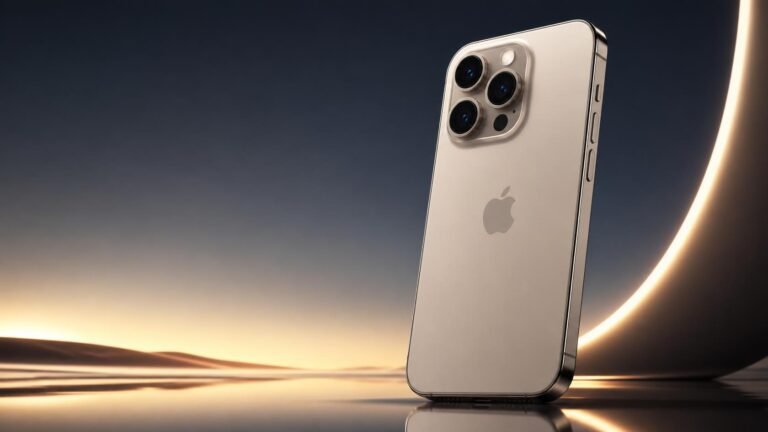
Flip it over and the back is a single-tone panel instead of the two-tone look Apple has used recently, alongside color options that go further than the iPhone 17’s simple silver-or-orange choice. Look closer at the camera housing and there’s a real mechanical iris on the main lens now, replacing the fixed aperture every previous model used.
The body itself is a bit thicker and heavier than before, which comes down to a larger 5,567 mAh battery and a vapor-chamber cooling system built to sustain performance rather than throttle under load. Apple is also expected to add an anti-reflective LTPO+ display hitting 2,500 nits at peak brightness, plus 25W Qi2.2 magnetic charging.
Pricing is still a guess at this point because Apple has not confirmed anything, and these figures come from industry analysts factoring in the higher cost of 2nm chip production and ongoing memory shortages:
- IPhone 18 Pro: likely to start between $1,299 and $1,399 for the base 256 GB model.
- IPhone 18 Pro Max: expected to start around $1,399 to $1,499 for 256 GB, climbing to roughly $1,849 at the top storage tier.
- IPhone Ultra (foldable): positioned well above the rest, likely starting somewhere between $1,999 and $2,399 depending on configuration.
Some Leaked Specs Worth Knowing
There are some leaks to iPhone 18 Pro and we are sharing it for you.
Memory
The standard iPhone 18 and 18e are said to be moving up to 9 GB or 12 GB of RAM, a jump from 8 GB, mainly to keep up with more demanding on-device processing. The Pro, Pro Max, and Ultra are expected to standardize on 12 GB of LPDDR5 RAM across the board.
Storage
The base iPhone 18 is expected to start at 256 GB, with a 512 GB option above it also a 128 GB is reportedly being dropped entirely. The Pro and Pro Max would also start at 256 GB but scale up to 512 GB, 1 TB, and 2 TB.
Chips and Connectivity
The A20 and A20 Pro chips are expected to be built on TSMC’s 2-nanometer process, which reportedly brings around a 15% speed increase and cuts power draw by up to 30% compared to the current 3nm A19 chips. Apple’s own C2 modem is also expected to replace third-party 5G modems, with better signal retention and support for expanded satellite connectivity. On top of that, Wi-Fi 7, Bluetooth 6.0, Ultra-Wideband, and USB-C are all expected across the lineup, though only the Pro models are said to get full USB 3.2 speeds while the standard models would stay at USB 2.0.
Cameras
The front camera is expected to move to 24 MP across every model, aimed at sharper selfies and clearer video calls. On the back, the standard iPhone 18 is rumored to keep a dual-camera setup having a 48 MP main wide sensor and a 48 MP ultra-wide. The Pro and Pro Max step up to a triple-camera system: a 48 MP main sensor with a mechanical variable aperture, a 48 MP ultra-wide, and a 48 MP periscope telephoto capable of 5x to 10x optical zoom. All three are said to use a new three-layer stacked sensor design meant to cut noise and improve low-light detail while processing shots faster.
Design
The Dynamic Island is expected to shrink, since some of the infrared sensors used for Face ID are reportedly moving underneath the display glass instead of sitting in the cutout. Screen sizes stay put to 6.3 inches on the Pro and 6.9 on the Pro Max but the phones themselves are expected to be a little thicker and heavier, mainly to fit larger batteries and a vapor-chamber cooling system. On color, Apple is said to be retiring Cosmic Orange in favor of a Dark Cherry (or Deep Wine), along with silver, dark gray, and light blue options.
What Apple Is Known For
- Handoff and Universal Clipboard lets you start something on one device for example an email, a webpage, a bit of copied text and pick it up right where you left off on another Mac or iPad. It saves the small, repetitive work of starting over on each device.
- AirDrop moves files, photos, and documents between Apple devices instantly, without needing an extra cable or even an internet connection which is something most other phones still can’t do as smoothly.
- Universal Control and Sidecar let one mouse and keyboard work across several Macs and iPads, or turn an iPad into a second screen for your computer.
- Auto-switching AirPods move audio between your devices on their own, so a call or a video keeps playing wherever you happen to be listening.
- Apple’s own chips the M-series and A-series are built for efficiency as much as raw speed, which is a big part of why battery life on Apple devices tends to hold up so well.
- Build quality is another differentiator: thin profiles, recycled aluminum and titanium frames, and high-resolution Retina displays are standard rather than reserved for the priciest models.
- Apple Intelligence brings AI features into iOS and macOS directly smarter Siri responses, photo cleanup tools, and writing suggestions built into the system rather than bolted on.
- Software support runs long. Older devices keep getting updates for years, which keep them secure and current without forcing an upgrade.
- Privacy controls are unusually transparent the App Privacy Control lets users decide, app by app, whether their activity can be tracked across other companies’ apps and sites.
- The Secure Enclave is a dedicated piece of hardware built into the chip that keeps sensitive data such as Face ID, Touch ID, encryption keys isolated from the rest of the system.
- And beyond the technical side, the range of colors, styles, and storage options gives buyers a lot of room to pick a phone that actually fits them.
When the iPhone 18 Pro Is Expected
Apple has not held its launch event yet, so everything below comes from supply-chain leaks, regulatory filings, and reporting from people who track the industry closely but not from an official announcement. The current expectation is a launch in early September 2026, with pre-orders following about a week or two later.
What’s different this time is the release structure itself: rather than launching the full lineup together, Apple is expected to split it. September would be reserved for the high-end models which are the iPhone 18 Pro, the iPhone 18 Pro Max, and possibly a foldable device referred to as the iPhone Ultra or iPhone Fold would be a departure from how recent launches have worked.