
Meta held its biggest hardware event of the year this week. The stage was Menlo Park, California. Mark Zuckerberg once again put smart glasses front and center. This was not a small update, Meta unveiled four entirely new hardware lines. Prices span from $249 all the way to $1,299.
Zuckerberg claimed boldly during his keynote that, “Delivering personal superintelligence is now within reach,” to the crowd. He described a future where everyone gets a truly capable personal assistant.
From Simple Sunglasses to a Full AI Platform
The original Ray-Ban Meta launched a few years back. Back then, most people saw them as a new item. That perception has clearly shifted now. Zuckerberg revealed that glasses sales tripled over the past year alone. He called them “some of the fastest growing consumer electronics in history.”
His confidence in this category runs deep. Earlier this year, he made a striking comparison. “It is hard to imagine a world in several years where most glasses that people wear are not AI glasses,” Zuckerberg said. That belief clearly shaped this year’s announcements.
Meta now offers glasses in over 100 different styles. Ray-Ban, Oakley, and Meta’s own house brands are all included.
What’s New This Year
The Ray-Ban Meta Gen 3 leads the lineup. It packs a 12-megapixel camera capable of 3K video recording. A six-microphone array now cuts background noise by over 90 percent. Battery life stretches to nine hours on a single charge. New Aviator and Zena frame shapes join the classic Wayfarer design.
Then there is something completely different. Meta introduced its first-ever camera-free glasses, called Ray-Ban Meta Audio. These weigh just 43 grams, remarkably light for daily wear. Battery life reaches 12 hours on their own. They are built purely for music, calls, and hands-free Meta AI access.
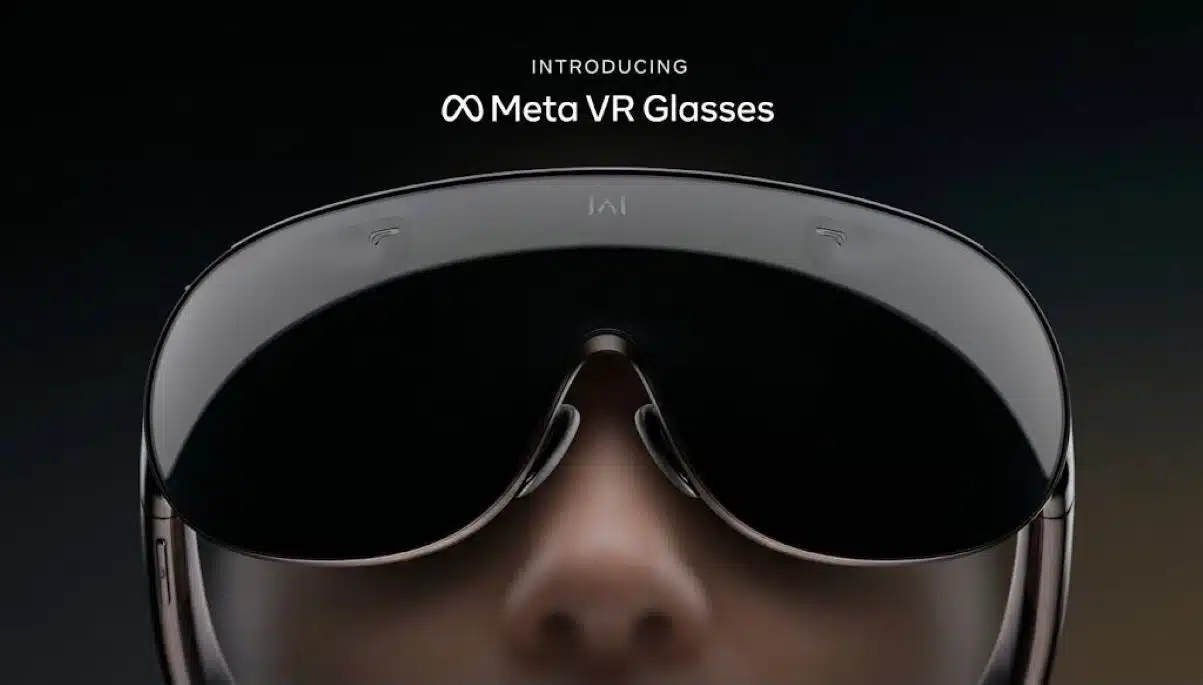
Meta did not stop at smart glasses, though. A brand-new VR headset called Meta VR Glasses also debuted. At just 100 grams, it is far lighter than Apple’s Vision Pro.
Software Gets Smarter Too
Meta’s Ray-Ban Display glasses received several meaningful software upgrades too. These glasses already feature a small display built into one lens. Hands-free navigation now supports cycling and public transit directions. Users can simply ask aloud and get real-time transit information instantly.
Instead of naming streets, the glasses reference nearby landmarks directly. “Turn left at the yellow house” replaces robotic, street name like instructions.
A new feature called Hologram also caught plenty of attention online. Users record a short self-capture using the Meta AI app first. That creates a photorealistic digital version of their face for calls.

Meta also introduced a Muse Charm, a small pendant-style AI device. It houses Meta’s newer conversational assistant, appropriately named Muse. Users can rename their Muse and speak to it directly through their glasses.
Hearing Support and Privacy Questions
Meta introduced an FDA-cleared hearing enhancement feature for select glasses. It targets adults with mild to moderate hearing loss specifically. Setup reportedly takes just minutes at home, with no prescription required. The feature will cost $149 yearly, or come bundled with Meta One subscriptions.
Smart glasses have also faced growing privacy criticism throughout the past year. Concerns mostly center around always on cameras and constant environmental listening. Mark Zuckerberg in an event remained focused instead on his long-term vision for wearable computing. In an earlier blog post, he had written something quite telling.
“Personal devices like glasses that see what we see, hear what we hear, and interact with us throughout the day will become our primary computing devices,” Zuckerberg wrote. That sentence explains Meta’s entire strategic direction right now.
What This Means Going Forward
Meta clearly is not treating smart glasses as a side project anymore. It is becoming the company’s central hardware bet for years ahead. Four distinct product tiers now cover very different customer needs. Casual users might prefer the lightweight, camera-free Ray-Ban Meta Audio option.
But content creators will likely go towards the camera-packed Gen 3 model instead. Meanwhile, the new VR Glasses target immersive entertainment and gaming enthusiasts. Its availability will roll out gradually over the coming months. For now, Meta genuinely believes glasses, represent computing’s next major chapter.