
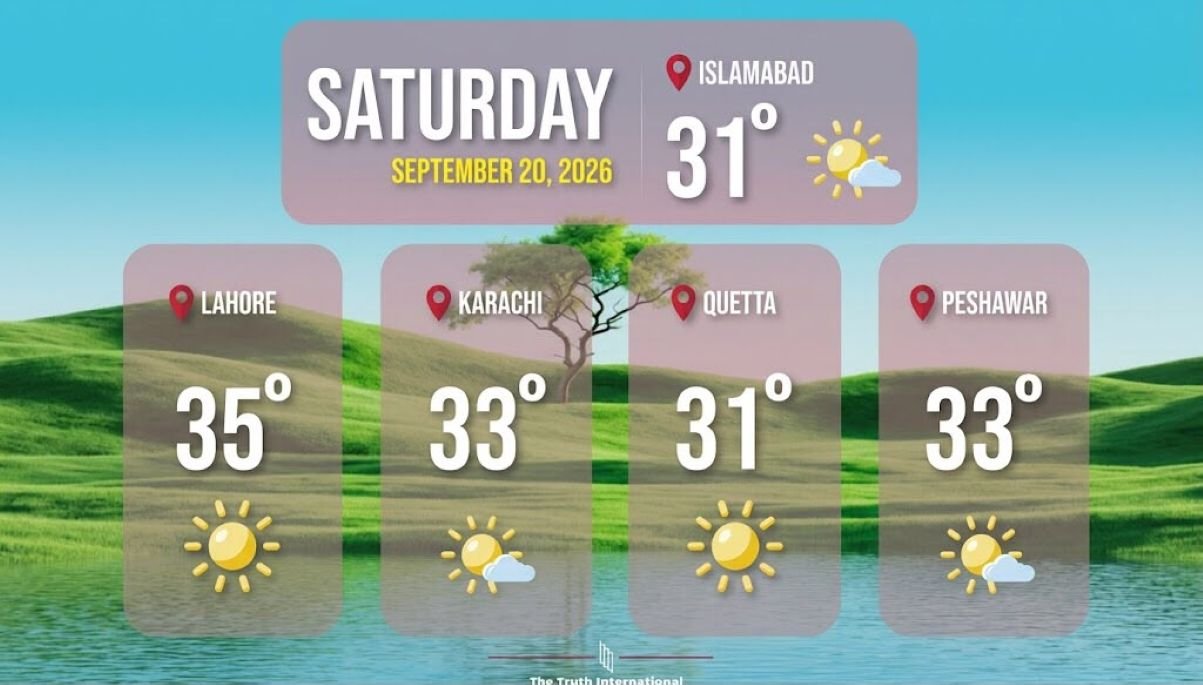

Pakistan’s weather has been swinging between two extremes this month, and residents across the country are feeling it. One week brings thunderstorms and flash flood warnings. The next brings blistering heat pushing well past 40 degrees in the plains.
For a nation still recovering from a difficult monsoon season, this back and forth pattern has made planning anything outdoors a guessing game. The Pakistan Meteorological Department has been keeping a close eye on both fronts, issuing fresh advisories as conditions shift from one extreme to the other.
What the Latest Forecast Actually Shows
Earlier this month, PMD flagged a fresh spell of rain and hailstorms sweeping across large parts of the country between September 14 and 17. Islamabad and Rawalpindi were placed on alert for further thunderstorms, while Murree and the Galiyat region braced for heavier downpours capable of triggering landslides on mountain roads.
Peshawar, Swat, and Chitral in Khyber Pakhtunkhwa all featured in the same advisory, alongside intermittent showers weather forecast for Gilgit-Baltistan and Azad Kashmir. Karachi, Hyderabad, Sukkur, and Larkana all were expecting showers during that same window too.
Balochistan rounded out the list, with rainfall expected in Zhob, Barkhan, and Musa Khel. By September 15 through 17, the advisory extended further into Punjab, naming Lahore, Sialkot, Gujranwala, and several surrounding districts as likely to see rain moving through the region.
Why Temperatures Keep Swinging So Dramatically
Behind these mixed signals sits a genuinely complicated seasonal picture. PMD’s official outlook for September, issued at the start of the month, weather forecast below normal rainfall across most of the country, with the sharpest negative anomalies expected over central and southern Pakistan, particularly southern Sindh.
That does not mean the danger has passed, though. A dry month punctuated by sudden, violent rain spells is exactly how flash flooding happens, and PMD’s own documentation made that connection directly rather than leaving it to guesswork.
Temperature wise, most of the country has been running consistently hot this September. Plain areas like Nawabshah, Dadu, and Sukkur have regularly touched the low-to-mid 40s, while cities like Karachi and Lahore have hovered in the low to mid 30s with noticeably high humidity levels.
Northern hill stations like Murree and Chitral, have stayed refreshingly cool, a reminder of just how much variation exists across Pakistan’s diverse terrain at any given moment.
What PMD Officials Have Said About the Pattern
PMD’s broader seasonal analysis pointed to specific climate drivers behind this year’s unpredictable weather. According to the department’s own report, “current projections suggest that these warming conditions are likely to persist throughout the July-September 2026 period, with a tendency to strengthen further as the season progresses.”
The report also touched on the Indian Ocean Dipole, a climate pattern that influences monsoon behavior across South Asia. PMD noted that positive phase of this pattern is associated with slightly above normal monsoon rainfall, its late development this year meant the effect would likely stay limited.
In the department’s own words, “its influence on the overall monsoon rainfall over the country may remain limited.” That combination of warming trends layered on top of a weaker monsoon boost, helps explain why so many regions have swung between dry heat and sudden sharp rain spells.
What to Expect in the Coming Weeks
Looking ahead, forecasters expect this north-south contrast to continue for the remainder of September. Northern areas, including Gilgit-Baltistan and northern Khyber Pakhtunkhwa, are more likely to see rainfall, while eastern parts of the country face a higher chance of staying drier than usual.
PMD has repeatedly urged people in flood prone and mountainous areas to stay alert to updated advisories rather than relying purely on general seasonal expectations, since isolated heavy spells can develop quickly even during officially dry stretches.
For now, keep half an eye on PMD’s daily updates, especially if you are anywhere near Murree, Galiyat, or the flood prone lowlands of Sindh and southern Punjab. As Pakistan’s weather this year simply is not following a predictable pattern.