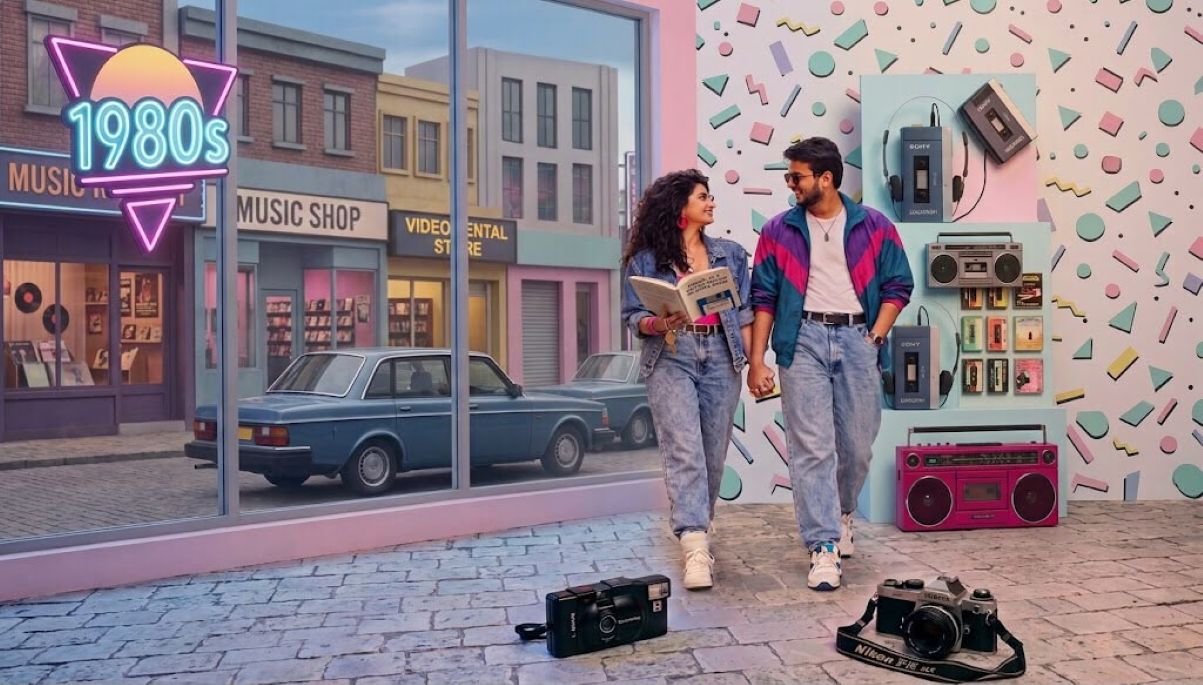

Scroll through social media and especially Instagram stories this week, and you would feel to be living in the 1980s calendar timeline. Big hair, disco lighting, grainy film textures, and warmly lit studio portraits are suddenly everywhere. The idea is refreshingly simple. Upload a photo and describe the retro look you want, and let AI handle the rest.
How the Trend Actually Works
At its core, this trend asks people to upload a personal photo to ChatGPT, then request a transformation into an authentic looking 1980s portrait. The key instruction that makes it work involves asking the AI to preserve facial features, skin tone, and expression, while changing everything else around the person, clothing, hairstyle, lighting, and background included.
One popular prompt style circulating online is like this: turn the photo into a realistic 80s movie portrait, keeping identifiable facial features and natural skin tone intact, while adding voluminous hair, colourful clothing, statement jewellery, warm studio lighting, and subtle film grain. People want something that genuinely looks like it could have come out of a photo album from four decades ago.
Users are not limited to plain portraits either. Some are requesting glamorous studio shots, others are going for candid family album snapshots, and plenty are recreating disco era party portraits complete with shimmering outfits and coloured stage lighting.
The format has already jumped beyond Instagram too, spreading quickly onto TikTok, and Google’s Gemini is now also being used to create similar retro style images for anyone who prefers it over ChatGPT.
Why Pakistanis Are Loving This So Much
There is something deeply personal about this trend that separates it from earlier AI photo crazes. The previous viral formats such as Studio Ghibli style portraits or figurine makeovers were just cartoonish recreations and were not connected to the memories. But this one taps directly into real memory and nostalgia rather than pure fantasy or fiction.
For many Pakistani users, the appeal connects strongly to Bollywood and regional pop culture from that era, since the 1980s aesthetic overlaps heavily with the fashion and cinema both countries shared during that time.
Part of the fun clearly comes from seeing familiar faces reimagined in an unfamiliar era. Friends are tagging each other under retro portraits, commenting on which decade appropriate hairstyle suits them best, and comparing their AI creations to actual photos of their parents from that time period. It has turned into something closer to a shared, playful memory exercise than a simple filter trend.
There is also a generational layer worth mentioning. Younger users who never lived through the actual 1980s are experiencing that decade’s visual style for the first time through this trend. Mostly out of pure curiosity about what an era they have only seen in old family photographs actually looked like closely.
A Nostalgic Bridge Between Generations
Conversations around this trend have gone beyond just posting pictures too. Several users have described comparing their AI-generated portraits directly against real photographs of their parents or grandparents from that decade. Noticing similarities in expression or styling. That kind of unexpected connection seems to be exactly what is fueling the trend.
One important thing worth remembering is that uploading personal photos to any AI tool comes with its own considerations. Coverage of the trend has reminded users to stay mindful about where their images end up once processed, especially given how much personal detail a clear facial photo can carry. Enjoying the nostalgia is one thing, but a little awareness about data and privacy is important too.
For now, the Instagram feeds across Pakistan continue filling up with warmly lit, grainy portraits featuring big hair, bold prints, and unmistakably retro backdrops. For a brief moment, everyone seems happy pretending it is 1986 again.