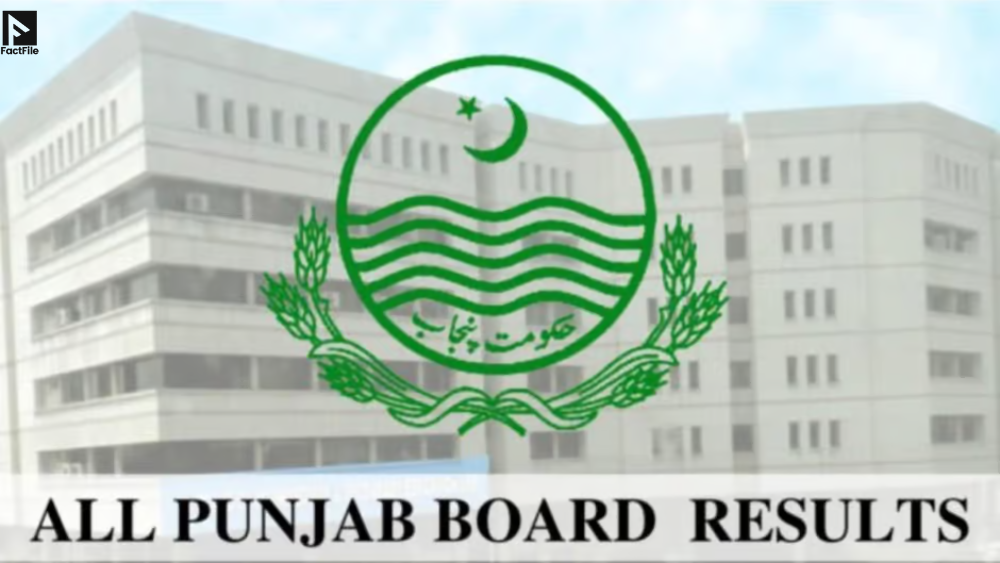

Result day finally arrived for thousands of intermediate students across Pakistan. The Federal Board of Intermediate and Secondary Education FBISE announced its HSSC results on Wednesday, September 9. Some students celebrated with their families. Others quietly refreshed the FBISE website, hoping for better news on a second attempt.
This Year’s Results at a Glance
FBISE announced results for both HSSC Part I and Part II together. For HSSC Part II, meaning second-year intermediate students, the overall pass percentage came in at a strong 85.95%. Out of 104,838 enrolled candidates 87,364 students successfully passed their exams.
First-year students had a noticeably tougher time. HSSC Part I recorded an overall pass rate of 65.31%, with 67,848 students clearing all their papers out of 105,108 who actually appeared. That leaves roughly 35,566 first-year students who could not clear one or more subjects this time around.
Girls once again outperformed boys across nearly every major group. Female regular candidates in Part II achieved a pass percentage of 91.65%, compared to 78.96% among male candidates. That gap has become something of a consistent pattern in FBISE results over recent years, and this year was no exception.
Students who could not pass, or who want to improve their scores, are not completely out of options either. According to FBISE regulations, both failing and absent candidates remain eligible to appear in the upcoming Second Annual Examination, giving them another chance without losing a full academic year.
Who Are the Toppers This Year?
In the Pre-Medical group, Amara Azhar of Army Public School and College Girls, Rawalpindi Cantonment, claimed the top spot with an impressive 1,079 marks. Muhammad Jahanzeb followed closely in second place with 1,078 marks, while Syeda Iman Fatima secured third position.
The Pre-Engineering group saw Eman Arjumand take first position with 1,075 marks, and Abdullah Azhar topped the Science General group with 1,063 marks. Over in Commerce, Aqsa Farooq led the pack with 1,051 marks. The Humanities group crowned Emaan Fatima of Army Public Degree College, Malir Cantt, Karachi, as its topper with 1,007 marks, with Aamna Azhar close behind in second place.
What stood out most this year was just how dominant female students were among the position holders. Girls captured the majority of top spots across the five major academic groups, a trend that education officials and parents alike have been noticing grow stronger with each passing year.
Addressing the result announcement ceremony, FBISE Chairman Dr Ikram Ali Malik briefed Federal Education Minister Dr Khalid Maqbool Siddiqui on how the board’s examination system had performed this cycle, and personally congratulated each of the position holders on stage.
Comparing This Year With Last Year’s Results
Numbers only really mean something when you compare them, and this year’s comparison actually paints a fairly encouraging picture. Last year in 2025 the HSSC Part I pass percentage stood at around 58.75%. This year’s jump to 65.31% represents a solid improvement of nearly 6.5 percentage points, a meaningful shift for first-year students specifically.
Part II results improved too, by a smaller margin. Regular candidates in 2025 posted an overall pass rate of roughly 83.19%, according to board records from that year. This year’s figure of 85.95% shows continued, steady progress rather than a dramatic leap, suggesting the board’s teaching and examination standards are gradually stabilizing rather than swinging wildly year to year.
Education Minister Dr Khalid Maqbool Siddiqui spoke about the bigger picture behind these numbers during the ceremony. He congratulated the successful students, noting that talented Pakistani youth had “earned recognition around the world.” He also stressed something worth remembering beyond just grades, saying the country’s young population needed to focus on acquiring practical skills alongside formal education to truly contribute to national development.
Prize Distribution
FBISE held its formal prize distribution ceremony at the board’s headquarters in Islamabad, where top scorers from each group received recognition in front of teachers, parents, and board officials. These ceremonies tend to carry real weight for students, turning months of exam stress into a proud, public moment shared with family.
For students who did not clear all their subjects this time, the road ahead is not closed. The Second Annual Examination gives them a genuine second chance to retake specific papers without repeating an entire academic year. Many students use this window seriously, often returning with noticeably stronger results the second time around.
One thing seems clear from the numbers and passing rates. Pakistani students, particularly young women, are steadily pushing pass rates upward year after year, even as the overall system continues working through its usual mix of challenges and improvements.