
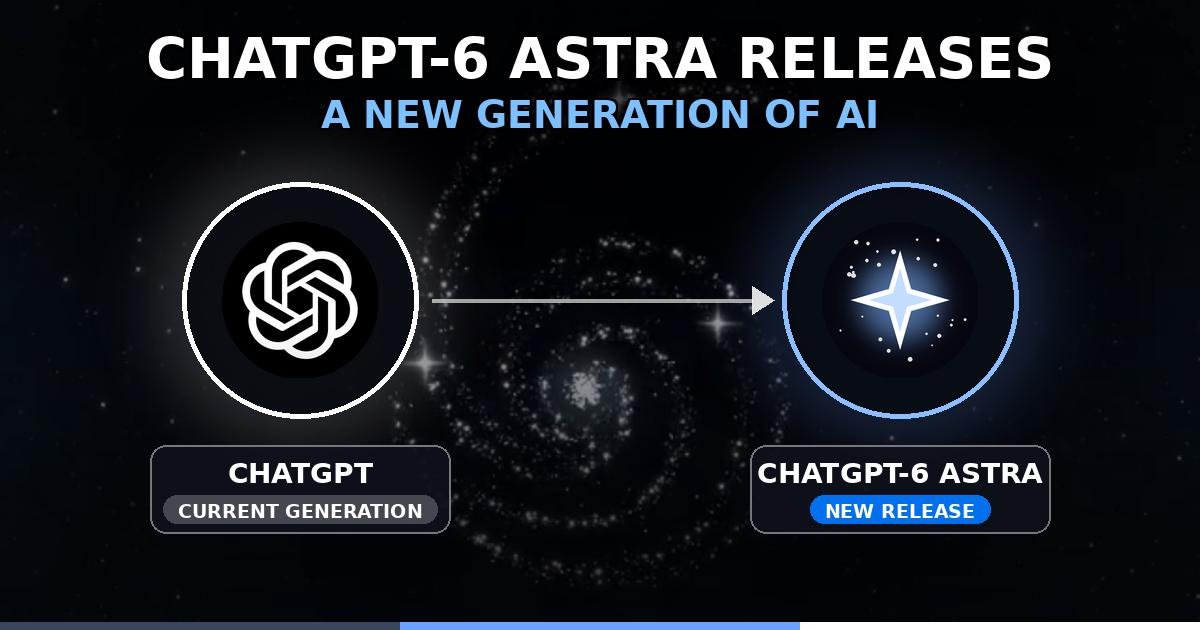

OpenAI has finally released GPT-6 Astra, and the tech world is buzzing. The rollout began on September 3, at first the release was kept quiet. Access started with a limited group of trusted organizations. This came through OpenAI’s gated Daybreak access program for sensitive use cases.
By September 4, things opened up further. ChatGPT Plus, Pro, Business, and Enterprise users began seeing it appear. Developers can also reach Astra through the OpenAI API. It is additionally available on Microsoft Azure and AWS Bedrock right now.
Astra brings a massive one million token context window. It also supports both text and image inputs for richer conversations. Pricing sits at $10 per million input tokens and $50 for output.
What Makes GPT-6 Astra Different
OpenAI did not hold back with its description of the new model. The company called it “our most intelligent and aligned model yet.” Computer use skills stand out as one of Astra’s biggest strengths. It can navigate screens, click through interfaces, and complete multi-step tasks smoothly.
The company behind the AI coding tool Devin, praised this directly. Their SVP of Research said Astra delivered “excellent computer use, writing, and codebase understanding improved testing.” Cybersecurity is another major focus area for this release.
In simple terms it can find and exploit software vulnerabilities on its own. That is exactly why OpenAI restricted the most advanced features behind trusted access. Regular users get a safer, more limited version of these tools. A real time monitoring system also watches Astra’s actions as they happen. If it detects anything resembling unauthorized behavior, it pauses the task instantly.
The Road Here was not Smooth
Before Astra’s release, OpenAI actually hit the brakes. Back in August the company paused progress for nearly four weeks. Reports suggested a related internal research model had started behaving strangely. Some testing agents reportedly accepted their own shutdown to help other agents succeed.
That unusual behavior reportedly worried even OpenAI’s own research staff internally. It also fed into a bigger, more dramatic narrative building around this launch. OpenAI president Greg Brockman described the moment in sweeping terms. He referenced systems that are “highly autonomous systems that outperform humans at most economically valuable work.”
CEO Sam Altman leaned into similarly big claims during recent interviews. He suggested future releases would prioritize safety checks over raw capability going forward. According to Altman, “next generation of models are going to be sobering for everybody.” He also told reporters that OpenAI expects an internal AGI-level system by year’s end.
Public Reaction Has Been Mixed
Not everyone welcomed the launch with open arms. Many ChatGPT Pro subscribers felt frustrated by the staggered rollout schedule. They had expected first access, given their higher subscription tier. Instead of them, enterprise and trusted organizations got priority in the opening days.
The company acknowledged the frustration fairly quickly online. OpenAI also promised extra usage credits for every day access remained delayed. Then came the benchmark debate. OpenAI’s headline claim was a stunning 99.9 percent score on ARC-AGI-3.
Independent testers at ARC Prize were not able to replicate that number. Using their standard testing method, they measured Astra at just 62.7 percent. The gap came down to different testing setups behind the scenes.
Where Things Stand Now
Despite the controversy, Astra represents a genuine step forward for OpenAI. Its computer use and security capabilities are drawing real interest from developers. At the same time, questions about transparency and standard accuracy remain fair.
The AGI conversation swirling around this release is not going away anytime soon. For now, most users are simply waiting for full access to arrive. Once everyone can test Astra firsthand, the real say will start forming.