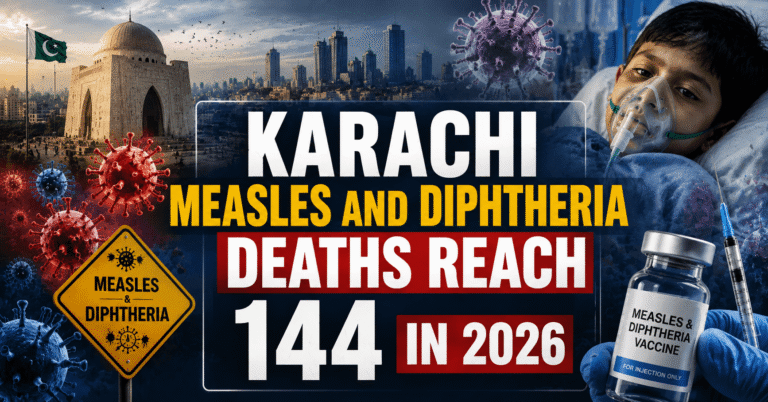

Measles and diphtheria deaths in Karachi have crossed a grim milestone, with at least 144 children dead from two entirely vaccine-preventable diseases in just seven months.
The toll, drawn from four of the city’s major children’s hospitals, is forcing uncomfortable questions about why a preventable illness is still filling paediatric wards in 2026.
144 Children Lost to Measles and Diphtheria in Karachi This Year

Measles and diphtheria deaths in Karachi have now reached 144 between January 1 and late July, according to hospital records compiled from four tertiary care facilities.
The number reflects only confirmed hospital cases — the real toll among children never brought in for treatment is likely higher.
Combined, the four hospitals logged 1,915 measles cases and roughly 170 diphtheria cases in the same window. Doctors say many of these children arrived only after home remedies or missed diagnoses at smaller clinics had already let the disease progress.
Hospital-Wise Breakdown of Measles and Diphtheria Deaths
The data shows a wide spread across facilities, painting a citywide rather than isolated picture. Here’s how the numbers stack up:
- Sindh Infectious Diseases Hospital & Research Centre: 575 measles cases, 36 deaths; 81 diphtheria cases, 18 deaths
- Indus Hospital: roughly 850 measles cases, 17 deaths; 8 diphtheria cases, 1 death
- Sindh Institute of Child Health and Neonatology: 484 measles cases, 65 deaths
- National Institute of Child Health: at least 7 measles deaths in recent weeks (full case data unreleased)
These four facilities alone account for a death rate that outpaces the citywide comparisons drawn from earlier in the year, when overall child measles fatalities in Sindh were running lower per capita.
Why Vaccine-Preventable Diseases Are Still Killing Children

Paediatricians point to a stark contradiction: vaccine coverage at birth sits around 90 percent nationally, yet that number collapses as children age. Roughly 20 to 25 percent of Pakistani children never complete the full immunisation schedule.
READ MORE: Sound Waves Are Now Killing Breast Cancer — No Knife Needed 2026
Measles requires two shots one at nine months, another at 15 months to build the herd immunity needed to stop transmission. When coverage falls below 95 percent, outbreaks resurface, and parental hesitancy, myths around the vaccine, and reliance on traditional remedies compound the gap.
Karachi’s 2025 vs 2026 Death Toll: A Side-by-Side Look
Provincial-level figures show a mixed trend — falling case counts in some categories, but persistent or rising fatalities in others:
| Indicator | Jan–Jul 2025 | Jan–Jul 2026 |
|---|---|---|
| Diphtheria cases (Sindh) | 148 | 46 |
| Diphtheria deaths (Sindh) | 14 | 10 |
| Measles cases (Sindh) | 4,626 | 3,025 |
| Measles deaths (Sindh) | 57 | 59 |
Provincial officials point to the drop in raw case numbers as progress, calling it a roughly 35 percent decline in measles cases year-on-year. Critics counter that deaths have barely moved, meaning the disease is hitting fewer children but killing a similar share of those it infects.
How Measles Turns Deadly: Complications Explained
Measles itself is rarely the direct killer — it’s the complications that follow. Once the virus takes hold in an unvaccinated or partially protected child, secondary infections can escalate quickly.
- Pneumonia is the most common complication and the leading cause of measles-related child deaths
- Encephalitis, a dangerous brain inflammation, carries high mortality and long-term disability risk
- Late-stage referrals to major hospitals often arrive after complications have already set in, following mismanagement at smaller clinics
“We get complicated cases after the patient has already been mismanaged at multiple health facilities,” one paediatric doctor explained, noting that by that stage the disease has often turned into encephalitis or pneumonia — the point where survival odds drop sharply.
The Health Department’s Response to Rising Cases

Provincial immunisation officials maintain that surveillance and outreach have expanded, even as fatalities persist. An additional 970 vaccinators have reportedly been recruited to address staffing shortfalls in high-risk districts.
- Nationwide vaccination drives are relaunched every four years for children aged six months to five years
- Hospital-linked surveillance units now feed case data back to provincial health authorities
- Officials attribute part of the case decline to expanded outreach, while acknowledging pockets of unvaccinated children remain the core driver of new infections
What Parents and Health Workers Can Do Now
Health experts are direct about where responsibility lies: vaccination is free under the government’s immunisation programme, yet completion rates fall as children grow older. Closing that gap requires action on both sides.
- Parents should track both measles doses — at nine months and 15 months — rather than assuming the first shot is sufficient
- Any child with fever, rash, or persistent cough should be seen at a proper facility early, not treated at home with folk remedies
- Healthcare providers are being urged to actively ask about vaccination history whenever a child presents with any illness, not just suspected measles or diphtheria
The Road Ahead for Sindh’s Immunisation Drive
The pattern is familiar from earlier outbreaks in the province, where earlier-year alerts flagged rising child deaths well before the toll reached current levels. Each cycle exposes the same structural gap vaccines exist, but reach doesn’t match need.
The newly recruited vaccinators and renewed outreach campaigns can close that gap before the next disease season will determine if 2026’s toll becomes a turning point or another entry in a repeating pattern.
Measles and diphtheria deaths in Karachi are, by every account, preventable so what will it take to make sure the next count doesn’t climb even higher?