
Gold Prices are a concern for everyone. Anyone who has walked into a Sarafa market in the last few weeks has probably done a double take at the rate board. As Karachi’s Sarafa Bazaar sets the daily benchmark that other cities, including Rawalpindi and Islamabad generally follow, though small city-to-city variations are common and come down to local demand and dealer margins.
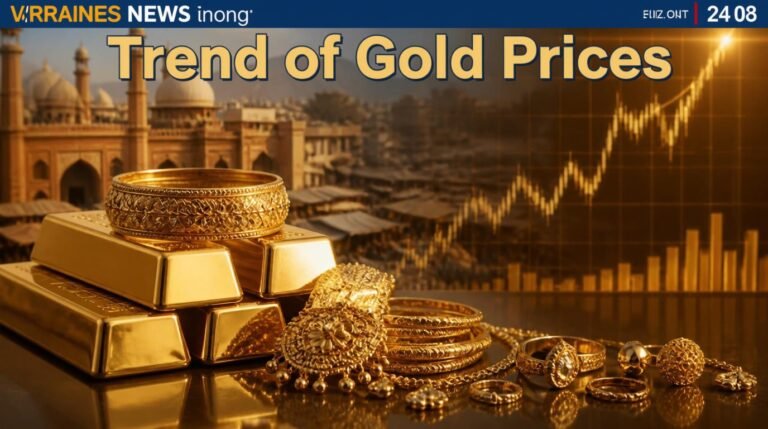
As of the second week of August 2026, 24-karat gold in Pakistan is trading close to Rs460, 000–464,000 per tola, with the price having pushed past Rs450, 000 for the first time only days earlier. Gold Prices saw a sharp decline in June this year.
Just to put that in perspective, the rate was sitting closer to Rs427, 000–430,000 in the first days of the month, which means gold has moved by roughly Rs30, 000 per tola in under two weeks which is a huge jump that even seasoned bullion dealers describe as unusually fast.
For 10 grams of 24K gold, the rate is currently hovering around Rs385, 000–391,000, while 22-karat, the purity most commonly used in local jewellery, is priced somewhat lower at around Rs400, 000–415,000 per tola depending on the city and dealer.
A Look Back: How Far Prices Have Come
Zooming out gives a much clearer picture of just how dramatically gold has repriced in Pakistan over the last decade. Back in 2016, a tola of 24K gold could be bought for under Rs50, 000. By 2020 that same tola cost over Rs160, 000, and the climb has barely paused since, save for a brief cooling-off period in 2021 and 2022.
| Year | 24K Gold PKR per Tola | Approx. Annual Change |
| 2016 | 49,800 | — |
| 2018 | 90,000 | +81% (2 years) |
| 2020 | 160,000 | +78% (2 years) |
| 2022 | 155,000 | Slight fall |
| 2023 | 250,000 | +61% |
| 2024 | 282,300 | +22% |
| 2025 | 371,000 | +31% |
| 2026 (Aug, current) | About 460,000–464,000 | +24% (year to date) |
A few points stand out from that table. The jump between 2022 and 2023 lines up almost exactly with Pakistan’s currency crisis when the rupee fell from around 178 to over 300 against the dollar within a matter of months, and gold, priced internationally in dollars, followed that devaluation upward almost rupee for rupee.
2024, by contrast, was a calmer year for the rupee, yet gold still returned over 20%, purely because international prices themselves were surging. And 2025 into 2026 has been the most aggressive stretch of all, with global gold shattering one record after another and Pakistan’s local rate rising in step.
What has Been Driving the Recent Swings and Pushing Prices
A few different forces are behind the sharp moves seen this year, and they tend to overlap rather than act alone.
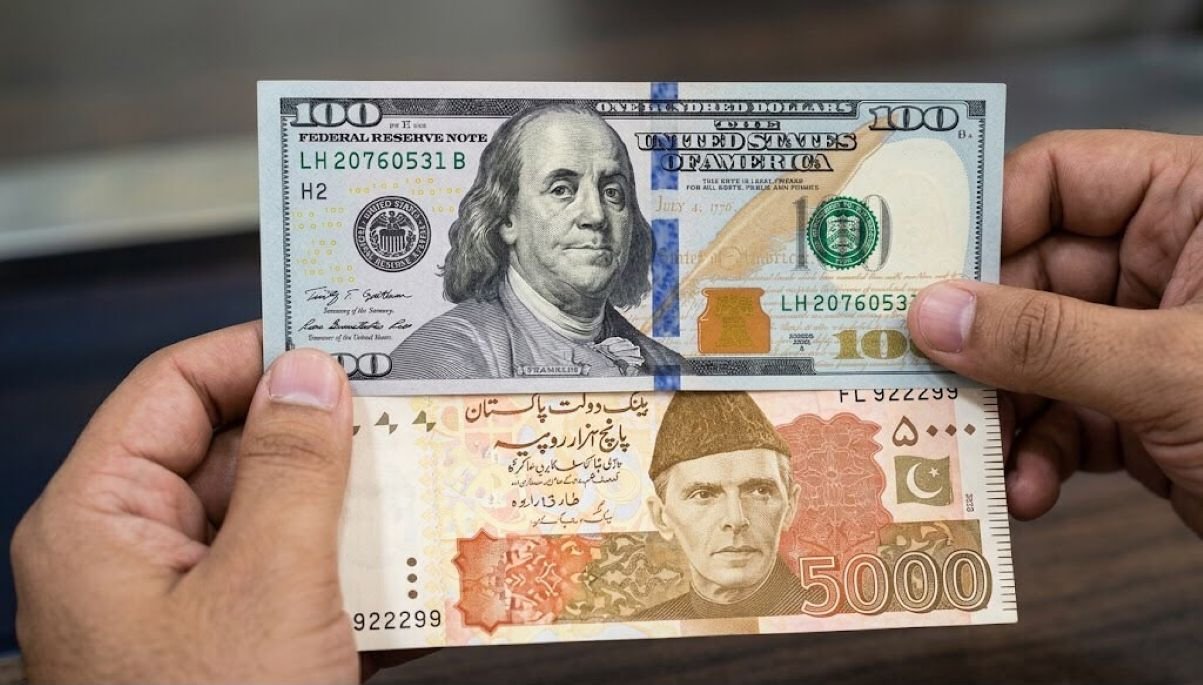
The rupee-dollar exchange rate is usually the first thing bullion traders point to. Since Pakistan imports almost all of its gold, a weaker rupee makes every ounce more expensive in local currency even if the international dollar price doesn’t move at all. Any fresh bout of currency pressure, whether from import bills, external debt repayments, or IMF-related developments, tends to show up in the gold rate within days.
International gold prices matter just as much, and this year they’ve been doing the heavy lifting. Global gold has been on one of its strongest runs in decades, and that rally on its own explains a large chunk of the local increase, independent of anything happening to the rupee.
Local demand plays its part too, particularly around wedding season and festivals, when jewellery buying picks up and pushes dealer premiums slightly higher. On top of that, speculative buying tends to spike whenever there is a political or economic uncertainty investors treat gold as a safe parking spot for their money, and that rush of buying itself becomes a price driver, sometimes creating short bursts of movement that have little to do with the metal’s actual global value that day.
Import duties, taxes, and the cost of smuggling controls also feed into the final retail price, though these tend to shift gradually rather than in the sharp daily jumps seen in currency and international pricing.
How High Gold Prices Ripple Through Pakistan’s Economy
Gold is not just jewellery in Pakistan it is savings, collateral, and a cultural safety net all rolled into one, so its price swings reach further into the economy than they might elsewhere.
On the household side, rising gold prices are often read as a warning sign rather than good news, even though people who already own gold technically get wealthier on paper. Weddings, where gold jewellery is a near mandatory part of the dowry and gift giving tradition, become significantly more expensive to plan for, and many families end up scaling back the amount of gold they buy or opting for lighter, less pure pieces.
Small jewelers, in turn see their sales volumes shrink even when the rupee value of their business appears to be growing, since fewer grams are changing hands at higher prices.
There is also a trade and reserves angle. Pakistan imports the overwhelming majority of the gold sold domestically, so a rising international price widens the import bill and puts extra strain on foreign exchange reserves at a time when the country can least afford it.
This is part of why the State Bank keeps a close eye on gold imports and occasionally tightens the rules around them during periods of external pressure.
On the other side, gold does function as something of an inflation shield for ordinary savers. In an economy where the rupee has lost value fairly consistently, many households treat gold as a more reliable long-term store of wealth than a bank account, which keeps demand fairly resilient even during price spikes. This same dynamic also affects the informal economy, since gold is widely used as collateral for loans between individuals and small lenders as its value rises, that informal credit becomes both more common and, at the same time, riskier if prices later correct.
Put together, a wave like the one Pakistan is seeing this August tends to squeeze household budgets and import bills in the short run, while quietly reinforcing why gold remains such a trusted asset for people trying to protect their savings from a currency that doesn’t always cooperate.
Gold Prices Around the World
None of what is happening in Pakistan exists in isolation. It is really a local reflection of what has been an extraordinary run for gold globally.
International prices of gold touched an all-time high of roughly $5,589 per ounce in late January 2026, a level that would have sounded far-fetched just a few years earlier, and even after cooling off somewhat, gold has continued trading at historically elevated levels through the middle of the year, recently sitting in the $4,300–4,600 range per ounce.
Central banks have been the standout force behind this rally. Institutions such as the People’s Bank of China, the Reserve Bank of India, and several others bought gold in 2025 and 2026 at a pace well above their historical norms, with quarterly purchases at times running into tens of billions of dollars.
Much of this buying is described by analysts as a deliberate move to diversify national reserves away from heavy reliance on the US dollar, a trend that is picked up noticeably since 2022.
Beyond central banks, gold-backed investment funds (ETFs) have also pulled in record amounts of money, geopolitical tensions in multiple regions have kept safe demand elevated, and expectations around US interest rate policy continue to sway prices from week to week. Taken together, these forces explain why gold has not just risen, it has risen faster and further than most analysts expected even a year or two ago, and why Pakistan’s local rates, tied as they are to that international benchmark, have been swept along with it.